VO: Puss in Boots has arrived, unannounced, at Panto House. The Ugly Sisters are not impressed. Puss has been lounging on the sofa eating sugar mice, and to make things worse, his boots stink. Really stink.
Angular: Ooh. Ooh, you bad, bad, bad pussy cat. You should be ashamed of yourself.
VO: Oh, nothing’s working. They need a cunning plan.
Angular: We'll get that moggie's boots.
VO: The sisters mean business.
VO: Oh, those boots stink worse than the acting.
There are six unusual washing options. It’s on the maximum setting. The red one. That should do the job.
Angular: That should do the job.
Angular: Oh, what's it. Oh. Graphica! Me machine's on the blink! Oh.
VO: That Super Stinky wash has sent the machine into overdrive.
Angular: Oh, spring meadow.
VO: Well the boots may be clean, but the dial is stuck.
Look at the dial. Remember, there are three hundred and sixty degrees in a circle. The dial has six settings on it equally spaced.
How many degrees are there on each setting?
How many degrees did the pointer turn from Off to Super Stinky?
Estimate how many degrees the pointer has moved on from Super Stinky. And what type of triangle is the pointer?
Video summary
The Ugly Sisters are not happy because Puss in Boots has very dirty and stinky boots.
They pull them off his feet and put them in the washing machine.
The machine has six settings (including the 'off' setting) on the dial, equally spaced.
There is a reminder that there are 360 degrees in a circle and then three angle-related questions of increasing difficulty are asked, working on sixths of 360 degrees.
This is from the series: Let's Do Maths
Teacher Notes
Working with the fact that there are 360 degrees in a full circle and that angles are degrees of turn, the washing machine dial sets a real life context for working out fractions of a circle and angle learning.
This clip will be relevant for teaching Maths at KS2 in England and Wales, Early and First Level and Second Level in Scotland and KS1 and KS2 in Northern Ireland.
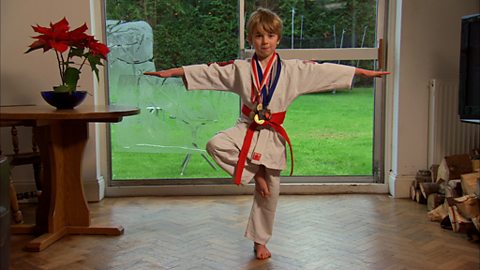
Maths KS2: Finding lines of symmetry. video
The Measures find the line or lines of symmetry and chop along them to win the medal.
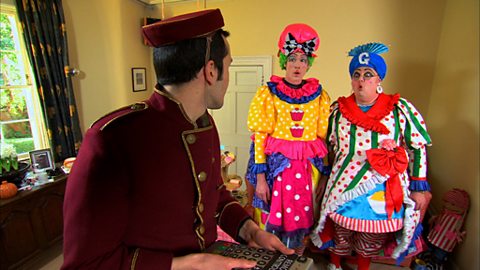
Maths KS2: Measuring distance. video
Measuring distance round a rectangle and devising routes in the Panto House.
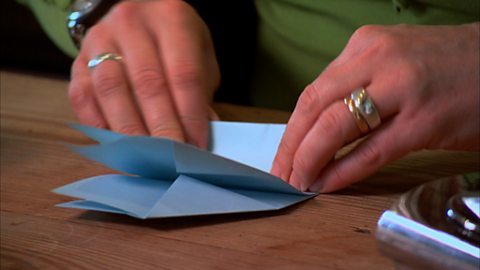
Maths KS2: Playing with polygons. video
The Measures face an origami challenge which explores the properties of pentagons.
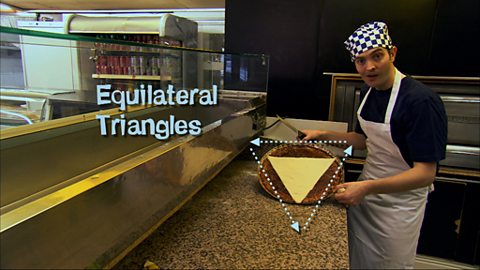
Maths KS2: Problem-solving with equilateral triangles. video
Problems with equilateral triangles and tessellation are posed in the Pizza Parlour.
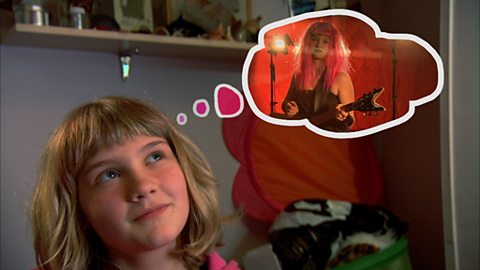
Maths KS2: Problem solving with money. video
Problem solving with money is explored as Abi Measure saves up to buy a new guitar.
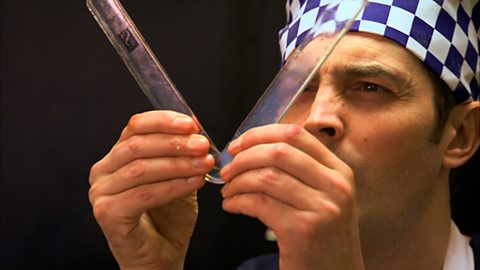
Maths KS2: Understanding angles. video
The context of angles using unusual pizza toppings in the Pizza Parlour.
Maths KS2: Understanding area and perimeter. video
The pizza parlour provides a real life context to solve area and perimeter problems.
Maths KS2: Understanding radius and diameter. video
The concepts of radius and diameter using pizza toppings in the Pizza Parlour.
Maths KS2: Units of time. video
The concept of measuring and converting time is explored in the Panto House.
Maths KS2: Using a calendar. video
Exploring time, dates and calendars in the Panto House.
Maths KS2: Using a compass and reading maps. video
An old map helps the Measures to learn about compass points, scale and directions.
Maths KS2: Using grams and kilograms. video
Washing day at the Panto House provides a problem involving weight and using scales.
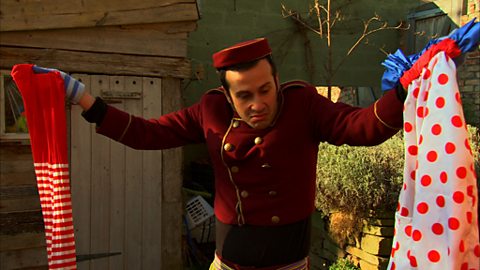
Maths KS2: Using timetables and the 24 hour clock. video
Pizza delivery boy Ambrose fills in a timetable of his journey times using 24 hour clocks.
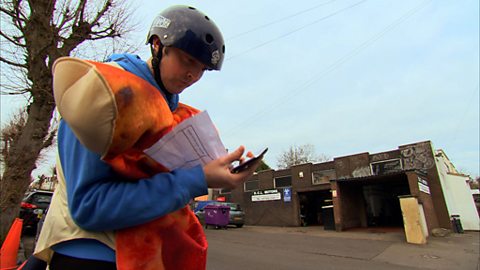
Maths KS2: Using weights and measures. video
A pancake recipe challenges Mr Measure to adapt quantities to make enough for more people.
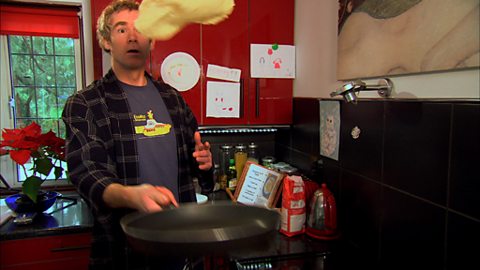
Maths KS2: Capacity and measure. video
Jack and Jill visit Buttons to fill a bucket with water, and explore relative capacity.