A retelling of the Ancient Greek creation myth - about Gaia, Ouranos, Kronos, Zeus, and the battle between the Titans and the Olympians.
The video
6: The Olympians
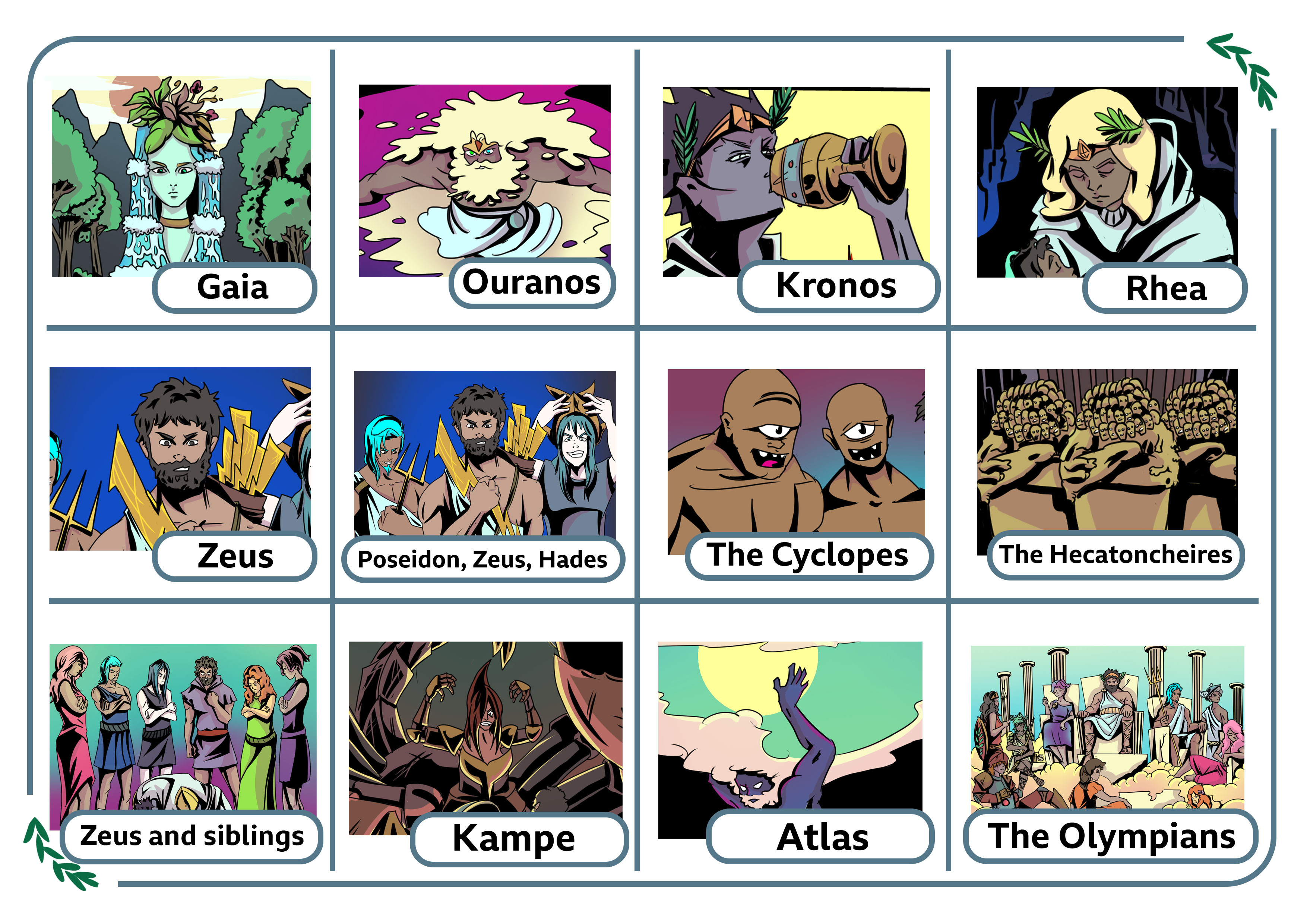
Before the world began there was only chaos. Out of this swirling void the first beings emerged. The most powerful of these beings was Gaia - the Earth mother. She created the land, the seas, the mountains and trees. She fell in love with the God of the stars and planets - Ouranos.
Ouranos and Gaia ruled as king and queen of the universe. They had many weird and wonderful children: 12 gods, called the Titans; three one-eyed giants, called the Cyclopes; and three creatures called the Hecatoncheires, each with 50 heads and 100 hands.
Gaia loved all of her strange offspring, but Ouranos felt a little differently.
‘They’re all monsters!’ he screamed. He banished the Cyclopes and the Hecatoncheires to Tartarus - the Underworld.
Gaia was horrified. She asked her Titan son, Kronos, to fight Ouranos and take the throne.
Kronos chased Ouranos down with a scythe and then made himself King in place of his mean father.
Gaia asked Kronos to release her children from the Underworld. But Kronos was scared of them, just like his father had been. So Gaia cursed Kronos to be overthrown by one of his own children.
Kronos and his wife Rhea became king and queen. They had six children of their own, all gods and goddesses. But Kronos had heard Gaia’s curse that one of his children would overthrow him. So, naturally, he decided to eat each child at birth. He swallowed the first five babies whole, but his wife Rhea switched their youngest child - Zeus - for a rock. Kronos didn’t notice and swallowed the rock whole.
Rhea hid Zeus away in the caves of Mount Ida. Over the years the young god Zeus grew strong, clever, brave - and a big bushy beard! He and his mother Rhea plotted to get rid of Kronos.
Zeus, disguised as a servant, gave Kronos a poisoned glass of wine. Kronos was sick, and out popped Zeus’ five brothers and sisters - now fully grown - having lived for years in Kronos’ tummy. They were immortal after all!
Zeus was as angry as a lightning bolt. He and his brothers and sisters declared war on Kronos and the Titans.The world shook for ten years as gods and goddesses fought.
Gaia wanted peace and told Zeus that if he travelled to Tartarus - the Underworld - and freed the Cyclopes and the Hecatoncheires he could win the war with their help.
Zeus did just that, freeing them by battling past Kampe, the guardian of Tartarus - a monster with a female head and the body of a scorpion.
The Cyclopes were so grateful they gave Zeus and his two brothers gifts to help them defeat Kronos and the Titans. Poseidon was given a powerful trident; Hades was given a special invisibility helmet; and Zeus was given thunderbolts to throw.
With their new weapons - and joined by the Hecatoncheires and the Cyclopes - they fought one last mighty battle. Kronos and the Titans were defeated. Most were imprisoned in the Underworld, to be guarded by the Hecatoncheires. Those that fought against Zeus and his army were punished. The Titan, Atlas, was forced to hold up the skies on his shoulders for eternity, to stop them from falling to Earth.
Zeus and his brothers and sisters settled on Mount Olympus where they became rulers of the universe, known as the Olympians. They sat back and began to think about what they should do with the world and what sort of creatures they should fill it with…but that’s another story for another day.

The Olympians
Please note that the animation includes depictions of violence from Greek mythology. We advise watching before sharing with your class.
Synopsis
We learn how Gaia - Mother of the Earth - and Ouranos - God of the Sky - gave birth to the Titans, the Cyclopes and the Hecatoncheires. Ouranos is deposed by his son, Kronos, who then eats his own children whole to prevent them one day doing the same to him. Only one child - Zeus - escapes.
Zeus returns as an adult and wages war on the Titans alongside his brothers and sisters - now released from Kronos' stomach - with the help of the Cyclopes and the Hecatoncheires. Zeus and his siblings are victorious: they take up residence on Mount Olympus and become rulers of the universe.
Teacher Notes
Taken from the complete Teacher Notes. See Resources.
Before watching the video
Which Greek myths do children know? Are they familiar with any Greek gods, goddesses or monsters? Put children into groups to share their knowledge and write two quiz questions for the rest of the class to answer.
After watching the video
- Monster madness. In this video, we are introduced to a variety of monsters, from the Hecatoncheires with fifty heads, to Kampe who had the head of a female and the body of a scorpion. Invite children to create their own Ancient Greek monster, either drawing it or making it out of clay or recycled materials. These would make for a great display.
- Figurative fun. In the video, the narrator describes Gaia’s children as being ‘weird and wonderful’. First, ask children to identify this form of figurative language (alliteration). Then challenge children to produce a pair of alliterative adjectives to describe their own monster and display these alongside their creations.
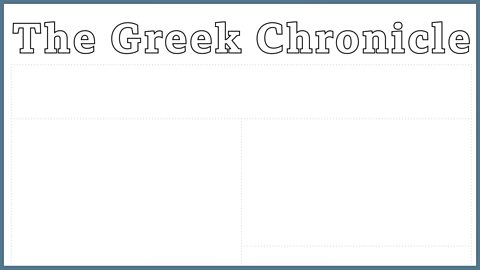
- Read all about it! Ask children to write a newspaper report based on an element of the video. This might be Kronos killing his father or eating his children, or it might focus on the war between the Titans and the Olympians and the reasons for it. Remind pupils of the features of a newspaper report and the need for an attention-grabbing headline! A template is provided for the report.
- Create a comic. This video is presented much like a comic strip, complete with jagged-edged bubbles for shouts, screams and loud noises! Ask children to use their newspaper report as the basis for their own comic strip. A template and checklist of the features of a comic strip is provided for this.
- Hades’ helmet. The Hecatoncheires present Hades with an invisibility helmet. Ask children to complete a piece of narrative writing in which they have the power to become invisible. What would they do with this power?
Resources - Teacher Notes from Teachit
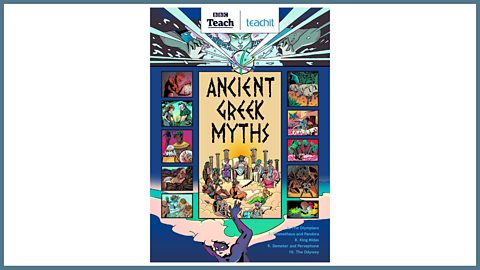
Ancient Greek myths. document
Comprehensive Teacher Notes covering episodes 6 to 10, including worksheets and activities.
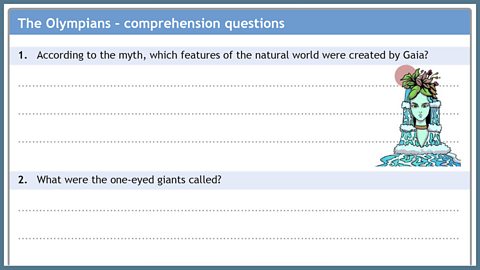
Comprehension questions. document
Click to display the worksheet full-size or print it (taken from the Teacher Notes).
Ancient Greece newspaper template. document
Click to display the worksheet full-size or print it (taken from the Teacher Notes).
The Teacher Notes for this series have been prepared in partnership with Teachit.
Other resources
Episode illustrated transcript
The Olympians - main characters from the story
BBC Teach: Tales from Ancient Greece - audio versions of more popular Ancient Greek myths