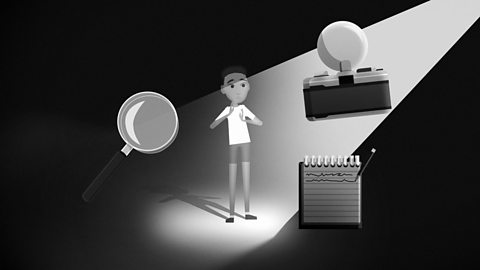
Due to the sensitive nature of the subject matter, we strongly advise teacher viewing before watching with your pupils. Careful preparation should be undertaken to prepare pupils before playing them this potentially traumatic and triggering personal story. Please note that Amara's name has been changed and her words voiced by an actor, to protect her identity.
AMARA:I'm Amara and I have an afro. I grew up in a single parent household. So I live with my dad. My white dad. I grew up in a very urban environment. There wasn't any segregation of sorts. Because of that, it was lovely. It was diverse. The haircare or hair styles that are done take place in the home. You know, your mum does your hair. But of course I wasn't living with my mum.
My dad did not know how to approach my hair at all. He was clueless, completely clueless. I couldn't tell you how many salons I went to trying to find anyone who could do my hair. They all said that they couldn't do black hair. We did find one place. It was the only place for miles that was run by black women, who'd been doing hair for over thirty years. They were very kind to me. They understood how ignorant my dad was. They supported me for a very long time. But unfortunately they couldn't pay the rent anymore because the area was being gentrified. So we lost them. And my dad decided to take matters into his own hands.
We walk into the chemist and we look for the hair section for black hair. It was in this kind of little corner next to other haircare products. There was just so many on offer to those with straight hair. So we go up to the aisle and there's nothing but empty shelves and one item in the centre of it all. It was green, it had a black woman on the cover. Her hair was bone straight. That's when my hair was relaxed. Afro hair with a treatment that usually takes about like two hours or so and burns can turn into straight hair. You could burn your hair, your scalp, if it's left on for too long. But then the longer you leave it on the straighter the hair becomes.
When I was around the age of eight, I began to transition out of my relaxed hair. Around that time my hair was a lot more noticeable. It was a lot bigger. A lot of people thought it was beautiful and I myself was coming to like my hair. A lot of people would ask if they could touch my hair and I would say "yeah" out of politeness. Who really wants someone's hand, like, in their scalp, you know? Things started to change when my hair got too popular.
So I was sitting in class and a lot of people were playing with my hair. And my teacher turned around to me and said that my hair was inappropriate, that I should change it because it was distracting other students. I didn't think my hair was distracting. I thought my hair was and that others decided to distract themselves with it. But of course, when you're in primary school, you're told that you listen to your teachers and I listened. In that word 'inappropriate', I heard 'not good enough'. I became more protective of myself. I had quite strong reflexes. I could swipe a hand away before it was even raised. When people would go to hug me, I'd be cautious that they didn't try to touch my hair. I was always on guard and I was always ready to tell someone off. There was a point, after years of people just touching my hair without permission, despite me asking them not to, and I just remember shouting "stop touching me!" And I said to them, "It's been years of people touching my hair without permission. How would you like it?"
I typed in how to do black hair and videos came up! I was so surprised and excited that videos came up. The natural hair movement was this influx of information about black haircare and understanding that we do not have to conform to Eurocentric standards of beauty. I was able to learn from other people who had the exact same texture of hair as mine. My hair is beautiful. I mean, it defies gravity. Because you pull it and it bounces back. Until I decide otherwise, that's not gonna change.
Video summary
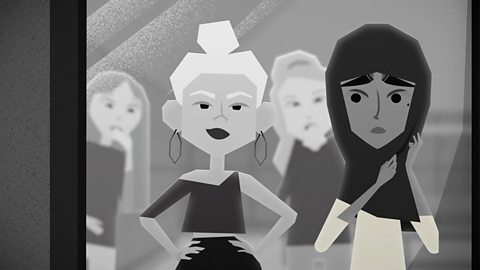
In this short animated film Amara (not her real name), speaks frankly about her experience of growing up with afro-textured hair, and of having people intrusively touching her hair.
The film maps out her relationship with her hair and how it is affected by broader external factors, many of which reflect a societal focus on ‘Eurocentric’ hair and hair styles over black hair.
Growing up, Amara struggles to care for her afro hair. Her experience is defined by a lack of choice; her white father has no experience or knowledge of textured hair and salons and products in shops primarily cater to other hair types.
Eventually she has her hair relaxed, chemically changed to become straight. Due to her age and the circumstances, this feels like a very passive decision, one that is made due to a lack of knowledge and a feeling that there are no alternatives.
Later, when transitioning out of her relaxed hair, she has many peers touching her hair, both with and without asking permission.
There are many reasons why hair touching is inappropriate; it is often described as intrusive and dehumanising. Even if the person touching the hair believes their interest is complimentary, their interest in the hair can easily be felt as ‘othering’ or ‘exotifying’ by the person being touched.
Amara feels she has to become confrontational to stop others touching her hair.
Amara talks about discovering the natural hair movement online, a movement focused on teaching about, and celebrating, afro-textured hair. It becomes a turning point for her, helping her feel confident and ready to make decisions about her hair on her terms.
This short film is from the BBC Teach series, The Colour of my Skin.
Please note that Amara's name has been changed and her words voiced by an actor, to protect her identity.
Due to the sensitive nature of the subject matter, we strongly advise teacher viewing before watching with your pupils. Careful preparation should be undertaken to prepare pupils before playing them this potentially traumatic and triggering personal story.
Teacher Notes
Questions/points for discussion
Before watching:
- You may want to have a class discussion about consent and what students think it applies to. This could also be done with boundaries - explore if students know how to give consent or set boundaries.
- Ask students whether they think a lack of something/seeing only a few of something (for example, not seeing women astronauts/male ballet dancers/trans sportspeople) creates a narrative that people then follow.
- How important is your hair to you? You could get your students to think about various hairstyles they have had over the years, different products used or the process they go through to create a hairstyle. Now, what if you weren’t able to do your hair yourself? What if there were no hairdressers or family friends to do your hair?
During the film/at the end:
- Do you agree that Amara’s dad is ignorant? What does ignorant mean? Was he trying to be supportive towards Amara?
- What message is Amara receiving from the supermarket’s placement of products for hair like hers? Do you think this affected her at all? Was this unconsciously reinforcing her ‘otherness’?
- How important were the women in the salon to Amara’s identity? Did she lose something when they had to leave?
- Gentrification happens when a poor urban area is changed by wealthier people and their business moving in. Do you think this process affects diverse identities and communities more?
- Amara has her hair relaxed at a very young age. What do you think about relaxing afro hair at such a young age? Is there such a thing as a ‘professional’ hairstyle? Is this view ignorant?
- Why do you think Amara’s hair was so popular when she wore it natural?
- What is the problem with asking people with afro hair if you can touch it? Did those that touched her hair care about Amara and her feelings? Did they forget she was an equal person?
- Would you be okay with someone touching your hair in this same way?
- What are synonyms for the word ‘inappropriate’? What message do you think Amara inferred from the teacher’s use of the word?
- Why do you think Amara was excited when she found the online hair care videos? What do you think Amara means by “until I choose otherwise” at the end?
- What might Amara’s story reveal to us about how young people of colour feel about the pressure to conform to majority UK society?
Following on/activities
Debate and discuss this:
- Many non-black people copy/try to style their hair in a black hair style. Is this an example of cultural appropriation? (For example, Adele at Notting Hill Carnival, braids, locs/dreads/dreadlocks as an example)
Research the natural hair movement together and discuss the impact this will have on young people and their self-esteem and feeling of belonging. Explore what is meant by ‘Eurocentric’ standards of beauty and provide examples.
Access some representational literature featuring girls with afro hair – read them and discuss the impact and importance of being able to ‘see yourself’. We have created this short film with Christina Shingler, a writer who decided to do something about the lack of black characters in children's literature.
Please note that the discussion around hair should be treated sensitively as your students may have personal experience.
This short film is suitable for teaching KS3 and KS4 students. It can be used alongside the other Colour of My Skin BBC Teach films below, or independently.
It would fit as part of the PSHE curriculum or within wider personal development work exploring challenges of adolescence, identity and managing diverse relationships within society. It explores respectful relationships, values, and lack thereof. It also allows for students to reflect on the impact of being reactive and how that affects and changes emotions, behaviour, and wellbeing.
This video highlights the impact of profiling and hate-filled preconceptions on victims of racism. It would support discussion about protected characteristics and hate crime.
It could also fit within KS4 sociology, as it explores social stratification including power and factors affecting life chances. Within KS4 citizenship the film could be used to illustrate the role of society, public institutions, and community. This video explores the systemic aspects that can influence biases and stereotypes that reinforce, for example, institutional racism and white privilege.
Learning aims or objectives
England, PHSE and RSE
From the PSHE Association programme of study:
- R5. the legal rights, responsibilities and protections provided by the Equality Act 2010.
- R31. to recognise the importance of self-respect and how this can affect their thoughts and feelings about themselves; that everyone, including them, should expect to be treated politely and with respect by others (including when online and/or anonymous) in school and in wider society; strategies to improve or support courteous, respectful relationships (KS2).
- R34. strategies to challenge all forms of prejudice and discrimination.
- R38. to recognise bullying, and its impact, in all its forms; the skills and strategies to manage being targeted or witnessing others being bullied.
- R39. the impact of stereotyping, prejudice and discrimination on individuals and relationships.
- R40. about the unacceptability of prejudice-based language and behaviour, offline and online, including sexism, homophobia, biphobia, transphobia, racism, ableism and faith-based prejudice.
- H2. how self-confidence self-esteem, and mental health are affected positively and negatively by internal and external influences and ways of managing this.
- L9. about stereotypes; how they can negatively influence behaviours and attitudes towards others; strategies for challenging stereotypes (KS2).
- L10. about prejudice; how to recognise behaviours/actions which discriminate against others; ways of responding to it if witnessed or experienced (KS2).
Northern Ireland, PD&MU
From the Northern Ireland curriculum for Personal Development and Mutual Understanding:
Investigate factors, including religious and political factors, that influence individual and group identity. Investigate the principles of social responsibility and the role of individuals, society, and government in promoting these.
- Investigate why different rights must be limited or balanced in our society.
- Investigate the principles of social responsibility and the role of individuals, society and government in promoting these.
Scotland, PSE
From the Curriculum for Excellence Health and Wellbeing Experiences and Outcomes:
- Acknowledge diversity and understand that it is everyone’s responsibility to challenge discrimination.
Wales, PSE
- How to recognise and challenge effectively expressions of prejudice, racism and stereotyping.
Ami's Story. video
In this short animated film Ami talks honestly about how negative experiences with the police and her school made her feel angry and unsafe, putting her on a rebellious path.
Celine's Story. video
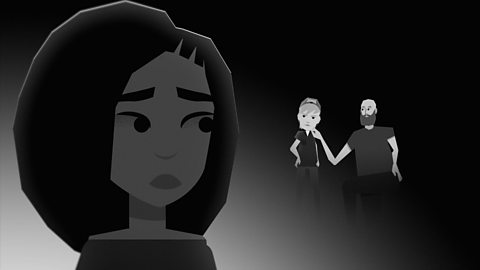
In this short animated film Celine (not her real name), speaks openly about how the hostility she experienced from her local community made her feel unsafe, and how she reached out to her school for support.
Jack's Story. video
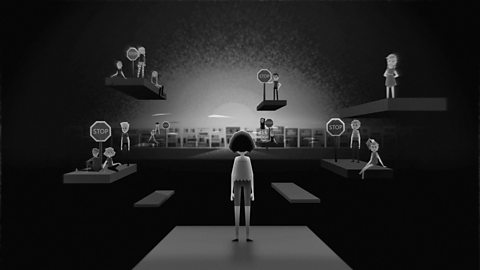
In this short animated film Jack talks candidly about how the aggressive behaviour he experienced from his peers, and the general sense of being ‘different’ he felt, contributed to feelings of depression and anxiety.
Shazmeen's Story. video
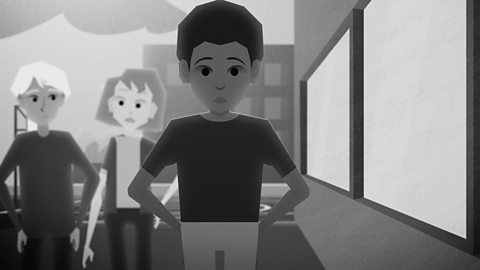
In this short animated film Shazmeen explains how her experiences of racism and Islamophobia at school, and her desire to fit in, made her feel torn between her family and culture.
Tyrek's Story. video
In this short animated film Tyrek recounts his negative experiences with the police and with his peers at school, and how these experiences have made him feel like an outsider and not listened to.