Due to the sensitive nature of the subject matter, we strongly advise teacher viewing before watching with your pupils. Careful preparation should be undertaken to prepare pupils before playing them this potentially traumatic and triggering personal story.
JACK:My name is Jack and I have experienced racism.
Me and my mum have always been close. We've always spent a lot of time together. We've always gone shopping, cooking, whatever together. Growing up, my dad really loved my mum. My mum really loved my dad.
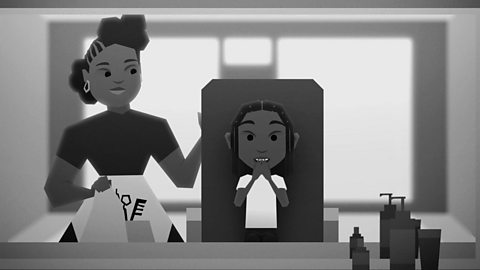
Initially, I was at a primary school that I had to leave because I was being bullied. I think it came from a place of me being different. The way that I spoke was different. The way that I looked was different. People would talk about my hair, try and put their fingers through my hair, things like this, which is a recurring thing. I felt out of place a lot of the time. We told the school about it. The school was reluctant to do anything. They just said, "Well, does he want to move school?"
The second school that I went to, they were very welcoming. Everybody there was very friendly. But I think because of what I went through, even at such a young age, I thought, I'm never going to allow that to happen again. It's given me this kind of, this slight reserve. I do worry that people will judge me before they meet me or before they've actually interacted with me, based on purely what they see.
Secondary school, I was one of the only black or biracial people in my year. Whenever it came to a topic or subject that concerned black people, it'd be everyone would look at you.
There was a teacher. He put myself and three other Asian people on a table together. We couldn't speak. We couldn't look at anyone. We couldn't do anything. And he just had this anger towards me and the other people in the class who weren't white. My mum brought it up in a teachers' meeting and the school was very, very resistant to the idea that anything was going on.
When I was maybe fourteen, I was sitting in a lesson, it was a French lesson, and I remember having this note passed to me and it's a picture of me over a shark tank with, like, eels around it. There were knives, pointing at me, I was hanging, there was blood dripping from me. Seeing that and then looking back and seeing the individuals that drew it, laughing, was incredibly traumatic for me.
I was at a party with my best friend at the time. There was a group of boys, all rugby boys, all white and they really, really hated me.It was only at this point that I realised it was racial when from behind me I hear someone call me the N word and in comes my friend whose party it was. And he's like, "All these people like want you to leave, they're like not happy that you're here. Like, I don't know what to do. You're like one of my best friends and I don't want you to feel unwelcome, but I don't know what to do." And I was like, "Look, it's fine. I'll go. It's not that deep."
As I'm leaving, someone's tried to kick me down the stairs. Someone's tried to spit on me. I've had a can thrown at my head. I've had people call me the N word all of that kind of stuff and trying my best not to care. Of course you care. Of course, what people say affects you. And of course it has an impact and I think… I didn't know how to deal with that. I suffered with depression. I suffered with anxiety, suicidal thoughts consistently.
That's when I started self harming and I started really getting awful towards myself. I just got to a point where I was like. Why am I doing this to myself, like, why are you allowing other people's hatred for you, making you hate yourself. I can't expect everybody to like me. Even if nobody likes me, I can still like me.
It's not black people bringing racism upon themselves. It's racist people deciding that they feel like you are not worth it and you are not enough. It's coming from a place where they have such a disgust for the colour of your skin that the only way they can express it is by just being awful.
When it comes to racism you have to just reject it.
Video summary
In this short animated film Jack talks candidly about how the aggressive behaviour he experienced from his peers, and the general sense of being ‘different’ he felt, contributed to feelings of depression and anxiety.
Growing up, Jack attends a school with a hostile environment; he believes he was singled out by bullies for being different. He remembers people would talk about his hair, intrusively touching it.
Even once he leaves the school to attend another, he feels himself withdrawing from his peers, despite them being welcoming and friendly.
Jack is left with a strong worry that others make presumptions about him based on his appearance, without interacting with him. This feeling affects how he behaves and is compounded when a teacher is noticeably stricter with the students who are not white.
Later, when attending a party, he encounters a group that are consistently aggressive towards him. He only realises the hostility has a racial element when he hears them use the N word behind him. He ends up leaving the party after the host, a good friend of his, explains that people are complaining about him attending.
Jack talks openly about how this bullying impacted his mental health; he believes it contributed to depression and anxiety, with him even having suicidal thoughts.
The turning point for Jack was the realisation that he can like himself, regardless of how others feel about him. This doesn’t mean that racism doesn’t have an impact, but rather that racist hostility is not a reflection of the victim; they did not bring the abuse on themselves. This attitude is liberating, as he feels able to separate his worth from how others perceive him.
This short film is from the BBC Teach series, The Colour of my Skin.
Due to the sensitive nature of the subject matter, we strongly advise teacher viewing before watching with your pupils. Careful preparation should be undertaken to prepare pupils before playing them this potentially traumatic and triggering personal story.
Teacher Notes
Questions/points for discussion
Before watching:
- To what extent can someone’s behaviour be attributed to prior traumatic events in their lives?
- What does the word ‘different’ mean? Consider how you answered this question, why were your answers positive/negative?
- What are microaggressions – are they serious?
During the film/at the end:
- What do you think about what happened at the party? Could it be argued that Jack was dealing with a gang?
- Was Jack’s friend wrong to ask him to leave the party? What do you think happened to their friendship?
- What might Jack’s story reveal to us about the long term risks to young people’s mental health as a result of unchallenged racism?
- Multiple young people said there was a common occurrence of feeling in the spotlight when discussing books or topics about black experience. How might schools prevent this spotlight feeling from happening?
- Jack felt that he was racially grouped and segregated by his teacher, how do you think the students at that table felt? If that was happening in our school, what should you do?
- Jack uses the phrase, "It’s not that deep" – 'what do you think led Jack to explain away his hurt in this situation? What do you think he was really feeling?'
Following on/activities
Possibly link with masculinity, talking and metal health – linking to self-care strategies and suicide prevention. We've created this series of short films that focus on mental health. In each film we hear from a different person who discusses how their mental health has been affected in different ways and how they look after their mental wellbeing. In some of the films, the person discusses their mental health with HRH The Duke of Cambridge.
Explore aspects of imposter syndrome and how that might lead to someone feeling small.
This short film is suitable for teaching KS3 and KS4 students. It can be used alongside the other Colour of My Skin BBC Teach films below or independently.
It would fit as part of the PSHE curriculum or within wider personal development work exploring challenges of adolescence, identity and managing diverse relationships within society. It explores respectful relationships, values, and lack thereof. It also allows for students to reflect on the impact of being reactive and how that affects and changes emotions, behaviour, and wellbeing.
This video highlights the impact of constant and relentless racism. It shares the mental and physical toll of experiencing traumatic and hate-filled preconceptions on victims of racism. It would support discussion about protected characteristics and internalising hatred being toxic and destructive.
It could also fit within KS4 sociology, as it explores social stratification including power and factors affecting life chances. Within KS4 citizenship the film could be used to illustrate the role of society and public institutions. This video explores the systemic aspects that can influence biases and stereotypes that reinforce, for example, institutional racism and white privilege.
Learning aims or objectives
England, PHSE and RSE
From the PSHE Association programme of study:
- R5. the legal rights, responsibilities and protections provided by the Equality Act 2010.
- R7. how the media portrays relationships and the potential impact of this on people’s expectations of relationships.
- R10. the importance of trust in relationships and the behaviours that can undermine or build trust.
- R31. to recognise the importance of self-respect and how this can affect their thoughts and feelings about themselves; that everyone, including them, should expect to be treated politely and with respect by others (including when online and/or anonymous) in school and in wider society; strategies to improve or support courteous, respectful relationships (KS2).
- R34. strategies to challenge all forms of prejudice and discrimination.
- R39. the impact of stereotyping, prejudice and discrimination on individuals and relationships.
- R41. the need to promote inclusion and challenge discrimination, and how to do so safely, including online.
- H2. how self-confidence self-esteem, and mental health are affected positively and negatively by internal and external influences and ways of managing this.
- H5. to recognise and manage internal and external influences on decisions which affect health and wellbeing.
- L10. about prejudice; how to recognise behaviours/actions which discriminate against others; ways of responding to it if witnessed or experienced (KS2).
Northern Ireland, PD&MU
From the Northern Ireland curriculum for Personal Development and Mutual Understanding:
- Investigate why different rights must be limited or balanced in our society.
- Investigate the principles of social responsibility and the role of individuals, society and government in promoting these.
- Explore how inequalities can arise in society, including how and why some people may experience inequality or discrimination on the basis of their group identity.
Scotland, PSE
From the Curriculum for Excellence Health and Wellbeing Experiences and Outcomes:
- Develop my self-awareness, self-worth and respect for others.
- Acknowledge diversity and understand that it is everyone’s responsibility to challenge discrimination.
Wales, PSE
- How to recognise and challenge effectively expressions of prejudice, racism and stereotyping.
Ami's Story. video
In this short animated film Ami talks honestly about how negative experiences with the police and her school made her feel angry and unsafe, putting her on a rebellious path.
Celine's Story. video
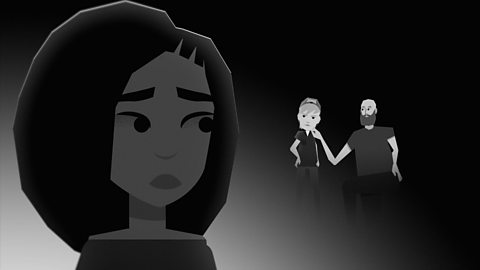
In this short animated film Celine (not her real name), speaks openly about how the hostility she experienced from her local community made her feel unsafe, and how she reached out to her school for support.
Shazmeen's Story. video
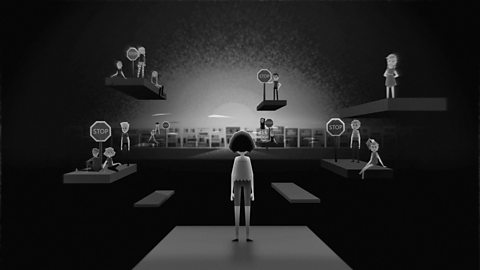
In this short animated film Shazmeen explains how her experiences of racism and Islamophobia at school, and her desire to fit in, made her feel torn between her family and culture.
Tyrek's Story. video
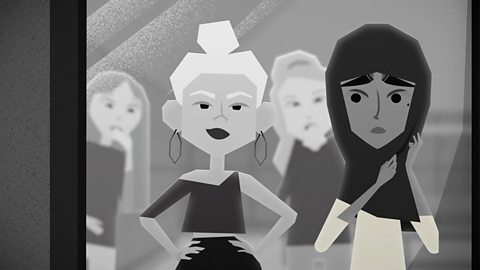
In this short animated film Tyrek recounts his negative experiences with the police and with his peers at school, and how these experiences have made him feel like an outsider and not listened to.
Amara's Story. video
In this short animated film Amara (not her real name), speaks frankly about her experience of growing up with afro-textured hair, and of having people intrusively touching her hair.