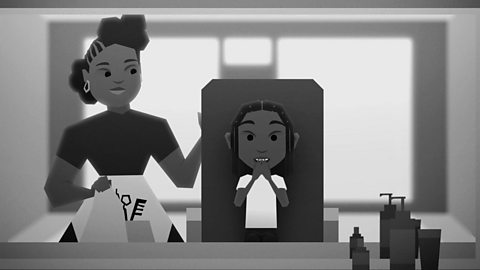
Due to the sensitive nature of the subject matter, we strongly advise teacher viewing before watching with your pupils. Careful preparation should be undertaken to prepare pupils before playing them this potentially traumatic and triggering personal story. This is Tyrek's story in his own words, and it includes his description of the social media abuse he experienced when a boy, previously his friend, called him a "slave".
TYREK:I was always one of the kids who always in the top classes, but always a bit of a class clown. I like to make a little joke here and there. Obviously I knew I was black. Background's Jamaican. And like I'm not like all the other kids. But as I grew up. I became more aware of the fact that I was an outsider and that I was quite different.
I was on the way home from school with my childminder. We'd have to walk up this small, like, little hill. Back when I was younger, it looked like the biggest hill in the world, but you know it's not that big. Walking up this hill, I would walk past these garages. And there was police, like, just stood there. They literally immediately, like, ran to me. And stopped me. They were like, "Stop." And started questioning my childminder, like, "Do you know how long this kid's been here? Blah blah blah. What's this kid doing? Blah blah blah."And she was like, "I literally just got him from school. Why are you stopping him?" The police were like, "Well, we've had reports that he was running around, jumping up and down on these garages, causing damage, vandalising this." And my childminder was like, "Well, that's impossible because I literally just picked him up from school. He's an eight year old child. What's the description of the person who you're on about?" And they were like, "Oh, well, it was a fifteen year old black male."
I knew that wouldn't happen to any of my white friends. I knew that wouldn't happen. I think it came to year nine. There was this one kid who I got on like a house on fire at the start school. And then he started hanging out with other people and I was like, "OK, cool. Still got my group of friends." So I didn't think anything of it. And I'd just found out you could get Facebook at the age of thirteen and so got it immediately. He came onto one of my profile pictures and was just being rude. He was trying to annoy me and wind me up and obviously I bit and argued back and said, "Leave me alone." And then the last thing that he said, "Stay on the ground where you belong. You dirty little slave."
I remember shaking behind my screen and fuming. And all my friends coming in and saying you know, "that's disgusting, that's horrible." But he didn't, didn't delete the comments. He just played along with it a bit more, he was just saying even worse things. Called me the 'N' word again. These kind of things and I was like, "Right, what do I do now?"
One of my close friends told his mum. His mum then told my mum and she reported it straight to the school. The school. They had me going, write about ten different statements. It feels like a police interrogation. "Did you ever provoke him?" What do you mean, did I provoke him? For someone to react that way and be that racist. It shouldn't even be a thing of you asking if I provoked him or not. That's disgusting.
He was in isolation for three days. Isolation just means you're out of lessons. You're just sat doing work. Nothing strenuous that you're doing. So he just really and truly got a slap on the wrist and you know from that day the school just kind of forgot about it and moved on and everyone was friends with him straight afterwards again. I felt like an outsider, a lot. I just felt like it's me and there's them.
At the end of year nine, at the end of the year there was this kid, another kid. Me and him just didn't get along and this one lunchtime he kept throwing stones at me and calling me the 'N' word. So I went inside, asked the canteen people for a hot chocolate. Came outside and threw it over this kid. Hot chocolate all over his uniform so he looked like a mess so he couldn't go into class. But he wasn't hurt. The teachers found out and we ended up getting the same punishment at school. We both got an after school detention. We got a phone call home. His parents were telling him how horrible I was for throwing a hot chocolate over him. Obviously they knew about what he was doing and what racist things he was saying but they didn't really care. I remember his parents just looked at me like I was just a piece of dirt.
I think what protected me the most was knowing that I have my mum and I have my sister. I have my siblings, I have my brothers, I have my grandma. I have family and I have my close friends and I think that was the thing that always, that always was my safety net. That was almost my blanket of protection. I knew that no matter what I've always got these guys and these guys will always be there for me and look after me. I don't care if I'm not the most popular person in the world anymore. I've always got them tolook after me.
In this short animated film Tyrek recounts his negative experiences with the police and with his peers at school, and how these experiences have made him feel like an outsider and not listened to.
The film explores the demands that can be made on young people when they face prejudice or racist bullying, with Tyrek often being given specific hurdles or having specific behaviour expected of him in the face of discrimination. He is left feeling frustrated, especially at the comparative treatment his peers, including his bullies, receive.
One early experience of this disparity is when he is stopped by the police aged eight, along with his childminder.
Having received complaints about a fifteen-year-old black male in the area, the police feel justified in stopping him and treating him with suspicion, even after his childminder confirms his young age. Throughout the interaction Tyrek is treated as older than he is, placing him in an unfair position of responsibility; he is sure his peers would not have been stopped and questioned in this way.
When older, he experiences racist abuse online, from a boy who was previously a friend. Once his school becomes aware, he is asked to fill in lots of different reports and is even asked, “Did you do anything to provoke him?” This question frustrates Tyrek.
By trying to create a narrative of escalation, the teacher has ignored Tyrek’s reality, that some people have the capacity to respond badly to him with no provocation because of a racist ideology. The question places Tyrek, the victim, in the position of potential aggressor and suggests there is action Tyrek could have taken to warrant the unacceptable behaviour or, alternatively, behaviour he could have changed to not have the abuse directed at him.
Tyrek is disgusted by this line of questioning and by the punishment finally given to the boy, which he doesn’t feel is adequate.
Tyrek feels similarly let down by the school’s response to another altercation, which begins with a boy being racially aggressive towards him and ends with him throwing a hot chocolate over the perpetrator as revenge; the drink wasn’t hot so the aim was ruin his uniform rather than cause physical harm.
This short film is from the BBC Teach series, The Colour of my Skin.
Due to the sensitive nature of the subject matter, we strongly advise teacher viewing before watching with your pupils. Careful preparation should be undertaken to prepare pupils before playing them this potentially traumatic and triggering personal story. This is Tyrek's story in his own words, and it includes his description of the social media abuse he experienced when a boy, previously his friend, called him a "slave".
Teacher Notes
Questions/points for discussion
Before watching:
- Who are your advocates, your support network? What are the behaviours and lessons they have taught you? Do they shape and protect you?
- What is profiling? What impact does it have on someone who knows they ‘fit’ stereotypical/prejudicial profiles?
- How would you feel if you knew people looked at you with suspicion?
During the film/at the end:
- Is it right that Tyrek expected to face barriers and challenges simply because of the colour of his skin?
- When the police stopped Tyrek and his childminder, they only spoke to the childminder – what do you feel about that? What lasting impact do you think being questioned by the police will have on him growing up?
- Tyrek was aged eight but the police mistake him for a fifteen-year-old boy. How likely do you think that is? Is this fair?
- Why is the use of the 'N' word more significant than other slurs? As a school community what could be done to better educate students on this word?
- How would you have felt reading horrible comments on your social media page? What action would you take? How would you react to being called a ‘slave’?
- When the teacher questioned Tyrek, what did this do to their relationship and Tyrek’s trust in justice? By doing this, was Tyrek’s reality and hurt ignored?
- Is the word ‘provoke’ toxic in this situation? How else could that conversation have gone?
- Was Tyrek ever treated like a victim?
- What do you think of both pupils getting a detention?
Following on/activities
Explore and research hate crime law in the UK – what is it, what is the sentence and what does it mean you should do when it happens. Look at legislation to prosecute racist and religious crime. Was the law followed in Tyrek’s story?
Look at the most recent government stop and search data – does this back up Tyrek’s story?
This short film is suitable for teaching KS3 and KS4 students. It can be used alongside the other Colour of My Skin BBC Teach films below, or independently.
It would fit as part of the PSHE curriculum or within wider personal development work exploring challenges of adolescence, identity and managing diverse relationships within society. It explores respectful relationships, values, and lack thereof. It also allows for students to reflect on the impact of being reactive and how that affects and changes emotions, behaviour, and wellbeing.
This video highlights the impact of profiling and hate-filled preconceptions on victims of racism. It would support discussion about protected characteristics and hate crime.
It could also fit within KS4 sociology, as it explores social stratification including power and factors affecting life chances. Within KS4 citizenship the film could be used to illustrate the role of society, public institutions, and community. This video explores the systemic aspects that can influence biases and stereotypes that reinforce, for example, institutional racism and white privilege.
Learning aims or objectives
England, PHSE and RSE
From the PSHE Association programme of study:
- R5. the legal rights, responsibilities and protections provided by the Equality Act 2010.
- R31. to recognise the importance of self-respect and how this can affect their thoughts and feelings about themselves; that everyone, including them, should expect to be treated politely and with respect by others (including when online and/or anonymous) in school and in wider society; strategies to improve or support courteous, respectful relationships (KS2).
- R34. strategies to challenge all forms of prejudice and discrimination.
- R38. to recognise bullying, and its impact, in all its forms; the skills and strategies to manage being targeted or witnessing others being bullied.
- R39. the impact of stereotyping, prejudice and discrimination on individuals and relationships.
- R40. about the unacceptability of prejudice-based language and behaviour, offline and online, including sexism, homophobia, biphobia, transphobia, racism, ableism and faith-based prejudice.
- H2. how self-confidence self-esteem, and mental health are affected positively and negatively by internal and external influences and ways of managing this.
- L9. about stereotypes; how they can negatively influence behaviours and attitudes towards others; strategies for challenging stereotypes (KS2).
- L10. about prejudice; how to recognise behaviours/actions which discriminate against others; ways of responding to it if witnessed or experienced (KS2).
Northern Ireland, PD&MU
From the Northern Ireland curriculum for Personal Development and Mutual Understanding:
Investigate factors, including religious and political factors, that influence individual and group identity. Investigate the principles of social responsibility and the role of individuals, society, and government in promoting these.
- Investigate why different rights must be limited or balanced in our society.
- Investigate the principles of social responsibility and the role of individuals, society and government in promoting these.
Scotland, PSE
From the Curriculum for Excellence Health and Wellbeing Experiences and Outcomes:
- Acknowledge diversity and understand that it is everyone’s responsibility to challenge discrimination.
Wales, PSE
- How to recognise and challenge effectively expressions of prejudice, racism and stereotyping.

Ami's Story. video
In this short animated film Ami talks honestly about how negative experiences with the police and her school made her feel angry and unsafe, putting her on a rebellious path.
Celine's Story. video
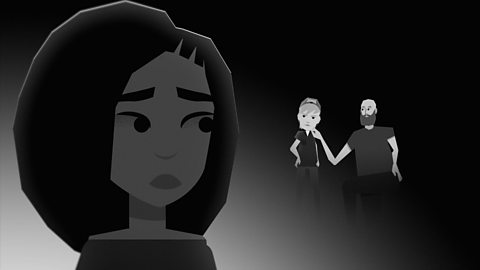
In this short animated film Celine (not her real name), speaks openly about how the hostility she experienced from her local community made her feel unsafe, and how she reached out to her school for support.
Jack's Story. video
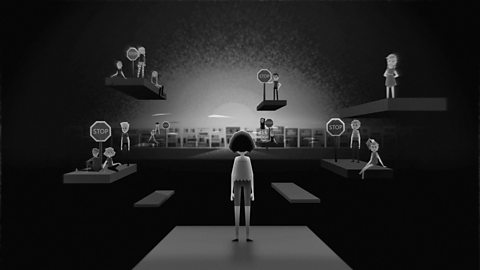
In this short animated film Jack talks candidly about how the aggressive behaviour he experienced from his peers, and the general sense of being ‘different’ he felt, contributed to feelings of depression and anxiety.
Shazmeen's Story. video
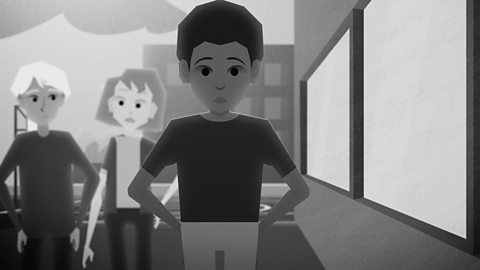
In this short animated film Shazmeen explains how her experiences of racism and Islamophobia at school, and her desire to fit in, made her feel torn between her family and culture.
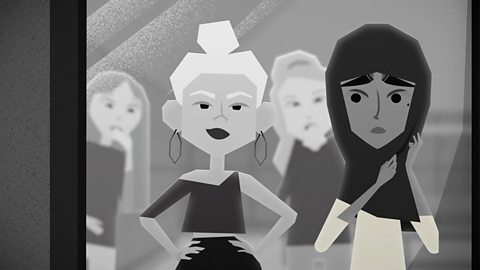
Amara's Story. video
In this short animated film Amara (not her real name), speaks frankly about her experience of growing up with afro-textured hair, and of having people intrusively touching her hair.