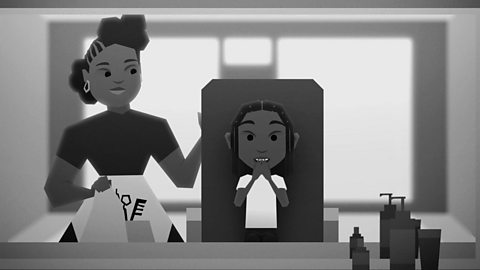
Due to the sensitive nature of the subject matter, we strongly advise teacher viewing before watching with your pupils. Careful preparation should be undertaken to prepare pupils before playing them this potentially traumatic and triggering personal story. This is Shazmeen's story in her own words, and it includes her description of two incidents in which she is racially abused. Shazmeen quotes a racial slur three times - which is an extremely offensive and derogatory word - and it's uncensored in this film. The word is included because these incidents represent turning points in Shazmeen's experience, and we wanted to allow her to tell her own story in her own words.
SHAZMEEN:I'm Shazmeen and I've experienced racism and Islamophobia throughout my school life.
I grew up in a very white, middle class area. So I lived in a small town. My parents and my grandparents were from immigrant backgrounds. I always knew that kind of like I had a different culture just because everyone around me was white. I don't think I kind of noticed cultural differences in a way that kind of isolated me. I think the first time I did notice was probably in year two or three. I had a friend at school. A girl who I would play with every single day. You know your kind of best buddy in the playground. One day she came up to me and she said, "I can't play with you today. I can't play with you because my mum said I can't play with Pakis." I think that was the first time I'd heard that word used directly to me. I immediately associated it as something bad and something that was bad about me.
At school, I would kind of erase parts of myself. I would pretend I didn't speak another language or I think I only listened to English music. And if my mom wanted me to watch an Asian movie or something I'd be like, "Well, no, I don't understand that." I wanted to be a kid, have a friendship group and do what all the other girls in my year were doing.
When I was in year nine, this was at the start of high school and this was kind of, I think this was towards the end of me kind of rejecting myself and rejecting my culture. We were in a history lesson learning about 9/11. We were watching a documentary. There was a boy who sat next to me. I remember him saying really loudly that 9/11 happened, "because of people like you." For someone to tell me that it was my fault that a terrorist attack had happened and that hundreds of people died.
There were other times that stuff like that happened as well in the classroom and I'd just really not want to say anything because I didn't want the hassle. I knew that the times that I had said something to a teacher, they hadn't really responded or done anything about it. So it didn't feel like I had anyone to talk to about it. I would always have this choking feeling in my throat so when I would try to speak, I would feel like there was a lump, but it's because I was stopping myself from crying a lot of the time.
After my first year in high school, I think in year ten or 11, I started wearing my headscarf at school. There's no point in me pretending to be someone else because it's not helping me. It's not making me face any less abuse where I am. I think at that point I kind of wanted to be closer to my faith. And I remember being in the changing rooms. There was this girl and one particular incident was we had just finished PE and she was next to me. She was doing her make up in the mirror and her friends were all stood behind her. And she leaned into the mirror and looked at me through the mirror and said, "Do you think when I wear this much fake tan, I look like a Paki?" And they all laughed. Because they laughed, it kind of egged her on further and then she was like, "Actually do you think people will be friends with me if I was a Paki?" I think I just left crying and that was the first time I think I cried in front of people and just let it out.
I think when I got sort of like sixth form one of my teachers. He kind of was aware of the difficulties that I had and he would leave his classroom door unlocked, so that I could use it to go pray, so that I could use it if I was upset and if I just wanted to be away from people. It helped me kind of feel comfortable. I didn't like to talk. I guess it was confusing because I would write so much. And I. You know, I had such a great knowledge of vocabulary and I was great at English, but I hated talking. I thought that, "when I open my mouth, I'm going to cry."
I think over time, especially when I started blogging and writing and writing poetry, it was kind of an outlet and to confront all of the messed up things that happened in school. So that was kind of like me crying onto my page.
Video summary
In this short animated film Shazmeen explains how her experiences of racism and Islamophobia at school, and her desire to fit in, made her feel torn between her family and culture.
The film explores how hostility towards a culture or a race can leave young people feeling confused and upset about their identity. It looks at how important a strong sense of identity can be to a young person, as well as how vital it is to accept and celebrate different cultures within a community.
At a young age, Shazmeen is told by a friend that they can’t play together anymore; the girl’s mum has forbidden it, referring to Shazmeen by a racial slur. Despite her young age, Shazmeen feels an instant sense of shame, internalising a sense of her being at fault.
As she becomes older, she makes an effort to fit in with her peers, at the expense of her engaging with her parents’ culture. She pretends she can’t speak a second language and stops watching films with her mother; she describes this as ‘erasing parts of herself’, attempting to ignore the reality of her experiences, as she feels this would make her unacceptable to her peers.
Regardless, she is still bullied, with one boy explicitly telling her 9/11 was “her fault”.
When older, in high school, she makes the personal decision to start wearing a hijab. She sees this as a turning point; she is seeking identity outside of her peers’ expectations, not “pretending to be someone else”. For Shazmeen, accepting herself means engaging with her cultural and religious background; she wants to feel closer to her faith, especially in the face of the abuse.
Throughout school, Shazmeen struggles to speak out loud, but she starts to use writing as a way to express herself. With the support of a teacher, she finds space to reflect and learns to use her voice with confidence, both to reflect on her past experiences and to explore who she is as a person.
This short film is from the BBC Teach series, The Colour of my Skin.
Due to the sensitive nature of the subject matter, we strongly advise teacher viewing before watching with your pupils. Careful preparation should be undertaken to prepare pupils before playing them this potentially traumatic and triggering personal story. This is Shazmeen's story in her own words, and it includes her description of two incidents in which she is racially abused. Shazmeen quotes a racial slur three times - which is an extremely offensive and derogatory word - and it's uncensored in this film. The word is included because these incidents represent turning points in Shazmeen's experience, and we wanted to allow her to tell her own story in her own words.
Teacher Notes
Questions/points for discussion
Before watching:
- Some young people have slurs directed at them before they know their meaning. Is it possible to feel shame even when you hear something for the first time? How is it that we ‘get a feeling’?
- Is it right to blame everyone for the actions of someone?
- Is there an impact when we try to fit in? Is there anything to lose?
- What does it mean to be an advocate?
During the film/at the end:
- Can you give examples of how someone might erase parts of their identity? What might they do?
- Why do people blame tragedies perpetrated by a small number of individuals on a whole group of people?
- How can schools/how can our school help tackle racism and promote inclusivity?
- How did Shazmeen’s shame change her? What was the impact?
- How can we stand up to discrimination like this?
- Were the girls laughing in the background as much to blame for the racial abuse as the girl at the mirror?
- Shazmeen uses blogging and poetry to help her process her experiences. How did poetry help Shazmeen? What other strategies for self-care and expression might others use?
- Is it rude to ask someone about their cultural background? Is it okay to ask questions to understand more?
- How does your relationship with your family and culture build on your relationship with yourself?
- Contrast the different role of teachers within Shazmeen’s story. What can we take away from this? How do we better become an ally for others?
Following on/activities
Do an activity where students don’t have a voice, like charades/Pictionary, exploring words linked to this video (identity, shame, erasing, acceptance, hiding, bullying.) Make it harder by not allowing students to lift the pen off the page.
Explore Shazmeen’s decision to start wearing the hijab and that being a powerful reinforcer of her identity. Compare her experience to the proposed French law, which would ban all young women under the age of 18, like Shazmeen, from wearing a hijab in public. For her, it’s a personal decision which defies the expectation of those around her, specifically her peers.
Explore ‘the right to cultural identity’ in Article 27 of the Universal Declaration of Human Rights:
“Everyone has the right freely to participate in the cultural life of the community, to enjoy the arts and to share in scientific advancement and its benefits.”
The UN website says:
“Everyone has a cultural identity, of which they are often unconscious because it is so much a part of them.”
Discuss why cultural identity is important and how dominant groups can impinge on this right.
This short film is suitable for teaching KS3 and KS4 students. It can be used alongside the other Colour of My Skin BBC Teach films below or independently.
It would fit as part of the PSHE curriculum or within wider personal development work exploring challenges of adolescence, identity and managing diverse relationships within society. It explores respectful relationships, values, and lack thereof. It also allows for students to reflect on the impact of being reactive and how that affects and changes emotions, behaviour, and wellbeing.
This video highlights the impact of profiling and hate-filled preconceptions on victims of racism. It would support discussion about protected characteristics and hate crime. This video explicitly discusses Islamophobia and how extreme views are often perpetuated and directed at innocent people.
It could fit within KS4 sociology, as it explores social stratification including power and factors affecting life chances. Within KS4 citizenship the film could be used to illustrate the role of society, public institutions, and community. This video explores the systemic aspects that can influence biases and stereotypes that reinforce, for example, institutional racism and white privilege.
Learning aims or objectives
England, PHSE and RSE
From the PSHE Association programme of study:
- R3. about the similarities, differences, and diversity among people of different race, culture, ability, sex, gender identity, age and sexual orientation.
- R5. the legal rights, responsibilities and protections provided by the Equality Act 2010.
- R31. to recognise the importance of self-respect and how this can affect their thoughts and feelings about themselves; that everyone, including them, should expect to be treated politely and with respect by others (including when online and/or anonymous) in school and in wider society; strategies to improve or support courteous, respectful relationships (KS2).
- R34. strategies to challenge all forms of prejudice and discrimination.
- R38. to recognise bullying, and its impact, in all its forms; the skills and strategies to manage being targeted or witnessing others being bullied.
- R39. the impact of stereotyping, prejudice and discrimination on individuals and relationships.
- R40. about the unacceptability of prejudice-based language and behaviour, offline and online, including sexism, homophobia, biphobia, transphobia, racism, ableism and faith-based prejudice.
- H2. how self-confidence self-esteem, and mental health are affected positively and negatively by internal and external influences and ways of managing this.
- H5. to recognise and manage internal and external influences on decisions which affect health and wellbeing.
- H25. about personal identity; what contributes to who we are (e.g. ethnicity, family, gender, faith, culture, hobbies, likes/dislikes (KS2).
- L9. about stereotypes; how they can negatively influence behaviours and attitudes towards others; strategies for challenging stereotypes (KS2).
- L10. about prejudice; how to recognise behaviours/actions which discriminate against others; ways of responding to it if witnessed or experienced (KS2).
Northern Ireland, PD&MU
From the Northern Ireland curriculum for Personal Development and Mutual Understanding:
- Investigate factors, including religious and political factors, that influence individual and group identity. Investigate the principles of social responsibility and the role of individuals, society, and government in promoting these.
- Investigate why different rights must be limited or balanced in our society.
- Investigate the principles of social responsibility and the role of individuals, society and government in promoting these.
Scotland, PSE
From the Curriculum for Excellence Health and Wellbeing Experiences and Outcomes:
- Develop my self-awareness, self-worth and respect for others.
- Acknowledge diversity and understand that it is everyone’s responsibility to challenge discrimination.
Wales, PSE
- How to recognise and challenge effectively expressions of prejudice, racism and stereotyping.
- Develop respect for themselves and others.
- Value and celebrate diversity and equality of opportunity locally, nationally and globally.
Ami's Story. video
In this short animated film Ami talks honestly about how negative experiences with the police and her school made her feel angry and unsafe, putting her on a rebellious path.
Celine's Story. video
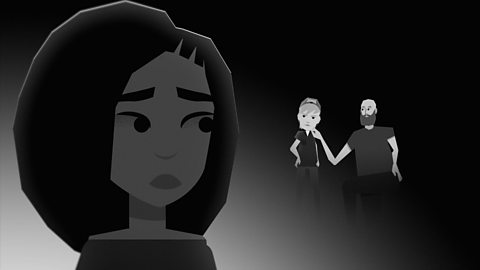
In this short animated film Celine (not her real name), speaks openly about how the hostility she experienced from her local community made her feel unsafe, and how she reached out to her school for support.
Jack's Story. video
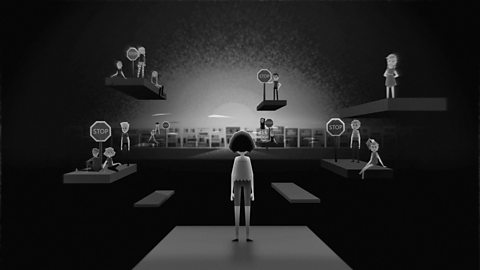
In this short animated film Jack talks candidly about how the aggressive behaviour he experienced from his peers, and the general sense of being ‘different’ he felt, contributed to feelings of depression and anxiety.
Tyrek's Story. video
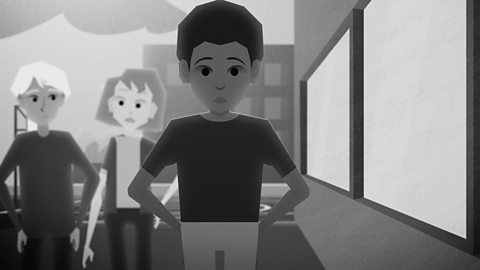
In this short animated film Tyrek recounts his negative experiences with the police and with his peers at school, and how these experiences have made him feel like an outsider and not listened to.
Amara's Story. video
In this short animated film Amara (not her real name), speaks frankly about her experience of growing up with afro-textured hair, and of having people intrusively touching her hair.