Due to the sensitive nature of the subject matter, we strongly advise teacher viewing before watching with your pupils. Careful preparation should be undertaken to prepare pupils before playing them this potentially traumatic and triggering personal story. This is Celine's story in her own words, and it includes her description of an incident on a bus in which a racial slur was used towards her. Celine quotes the word - which is an extremely offensive and derogatory word - and it's uncensored in this film. The word is included because this incident on the bus represents a turning point in Celine's experience, and we wanted to allow her to tell her own story in her own words.
CELINE:I'm Celine, I come from the north-east of England and I've faced racial discrimination in my community.
My childhood was quite normal. I played with kids on playground. I read books. Listened to music. I was a little bit different from kids because I wasn't white. I was Chinese. I mean, I am Chinese.
We always celebrated the Spring Festival. We used to go out and play at the funfair, have hot pot, and there'd be a parade of the Red Dragon floating across the streets of Chinatown. It's honestly lovely.
There was a song on the playground, and they would pull a fox eye, which is when you pull back your eyes and make fun of people with small eyes I guess. I just laughed along, I guess, until it happened a couple more times and I was really uncomfortable. There were so many occasions that this happened to me. I remember that teachers were around and they did nothing. My friends were sticking up for me. But then they would just come up with an excuse saying, "Oh, it's a joke. You should laugh along to it." I kind of felt like there must be some reason why I'm in that position. Did I do something wrong? Did my community do something wrong?
I moved house to a different area hoping it'll be more accessible to public transport for my school. I moved to a mainly white area, so we felt quite singled out there. When I was in year seven, they were in year four. They were calling us slurs, swearing at us, telling me to go back to my own country when I was born here. Making me feel overall very uncomfortable. Their parents would just stand there and act like nothing's wrong. Nothing has happened. They threw empty crisp packets. They threw empty chip boxes in our front yard. The second time they did it again. Third time they tried to throw a rock at our window. After that they triedto egg our house. It's almost like they're telling me that, "Oh, I hate you. Because you're Chinese."
Every time I go back from school at 4.30 they'll be there, just sitting there. Sometimes they would yell random slurs so it gave the impression that they were better than me, that they were looking down on me I guess. I'm always on alert. If they were to try to do something I would need to run away. I just never really went out. I never really did all the things that my classmates would do likegoing out to play in the local field or something. Like I never got to do that. And that really affected my work and like how I was, how I behaved in school. My friend suggested for me to go to the counsellor. I vented about my feelings and then she got in contact with the head teacher and they tried to sort this out. I did contact the police and I listed out all the things that they said, all the things that they'd done. I even went on the school website and found some pictures of them. But then they just randomly texted me and said that they'll drop the case because they can't identify who it was. I thought that the police in that situation just didn't care enough about racism.
I was going from school to home. We sat near the back of the bus. They were being obnoxious, they were being loud. They were screaming and it went on like this for seven stops until they said the word "chinky." I turned my head around, looked at them. They tried to justify their actions by saying, "Coronavirus came from China, therefore, all Chinese people are bad." I had enough. So I decided just to tell them to shut up. The two girls and a boy there all started screaming at me.
Everyone else was just looking at me. My friend, who was terrified, didn't dare to look back. I decided to shout at them more and they decided to shout at me more and everything was a whole mess until loads of people stepped in and the whole bus was standing up for me. My friend dragged me off the bus. We started crying and had a little hug and then we were just talking about how crazy this world is and how messed up racism is.
Friends and family are definitely one of the most important people to go to. Also school. Depends on the school but in my experience school has been one of the best helps there is.
Video summary
In this short animated film Celine (not her real name) speaks openly about how the hostility she experienced from her local community made her feel unsafe, and how she reached out to her school for support.
The film explores what support is available and how discrimination can be an unfair, knee-jerk response to current affairs or news stories (in this case, the Covid-19 pandemic).
Growing up, Celine encounters a racist song on the playground. She initially laughs along, although she was uncomfortable. Her friends speak up on her behalf, but the response is that it’s “a joke” and she should therefore not be offended.
When her family moves house, Celine encounters neighbours, especially the local children, who are openly hostile to her family. This includes using slurs and throwing things at their house.
This abuse takes a toll on her wellbeing and her schoolwork, and she ends up telling the school who are supportive and encourage her to report it to the police. However, the police don’t take it further; Celine feels let down by this.
Following the outbreak of Coronavirus, Celine gets into a verbal altercation with a group sat behind her on a bus after they use a racial slur. They try to justify the abuse, saying “Coronavirus came from China and therefore all Chinese people are bad”.
Hate crime towards British East Asian or Southeast Asian people living in the UK increased drastically following the news coverage and commentary around the Covid-19 crisis. Current affairs can suddenly change and impact how individuals are treated, regardless of their own experiences or actions; the information we consume will often shape our attitude towards others.
This makes it important to consider the quality of news stories we read and approach many with a level of independent thought.
For Celine, the encounter ended with other people on the bus stepping in to defend her as she and a friend removed herself from the situation.
This short film is from the BBC Teach series, The Colour of my Skin.
Due to the sensitive nature of the subject matter, we strongly advise teacher viewing before watching with your pupils. Careful preparation should be undertaken to prepare pupils before playing them this potentially traumatic and triggering personal story. This is Celine's story in her own words, and it includes her description of an incident on a bus in which a racial slur was used towards her. Celine quotes the word - which is an extremely offensive and derogatory word - and it's uncensored in this film. The word is included because this incident on the bus represents a turning point in Celine's experience, and we wanted to allow her to tell her own story in her own words.
Teacher Notes
Questions/points for discussion
Before watching:
- Where do you get your information about the world from? Do you trust it? How do you know if it is a good source of information?
- Why do you think people make fun of others who look different?
- ‘Go back to your own country’ – what is the impact and effect of this statement?
- Has Covid-19 brought a new community to the forefront of racism and discrimination?
During the film/at the end:
- The children in the playground say they’re joking. Is this an adequate response? Is it ever okay to explain racism away as ‘a joke’? (This can be linked to the law on racism/legality of hate crime and how it is about how the insult, slur or action is perceived by the victim.)
- If everyone is laughing at something that offends you how should you respond for a positive outcome?
- How can we empower young people to stand up to racial stereotyping and discrimination?
- Why do you think students in year 4 had such strong views and opinions on culture and race? Where do they get this information from?
- The children in Celine's local area did not attend her school. Has their lack of diverse school community brought upon their racist views? How do we help educate those living in less-diverse communities?
- Why do you think the police dropped the case? What should they have done? What are your thoughts on how the school handled the situation?
- How can we stand up for a person if someone nearby is being targeted? What is bystander intervention?
- Where do you think the children on the bus get their information from?
- How could the situation on the bus have been handled differently?
Following on/activities
Read/watch this Newsround piece in which British Chinese children talk about racism and the impact on their lives. Reflect and discuss.
Celine’s school supported her through her experiences. Students could create a guide for developing a nurturing school community like Celine’s.
Explore fake news, critical evaluation of sources and echo chambers within social networks.
Read news related to Covid-19 related crime and explore issues and actions raised.
We have also created this Teacher Support article which offers advice for anyone working within schools or educational settings on how to support students of East and South East Asian heritage.
This short film is suitable for teaching KS3 and KS4 students. It can be used alongside the other Colour of My Skin BBC Teach films below or independently.
It would fit as part of the PSHE curriculum or within wider personal development work exploring challenges of adolescence, identity and managing diverse relationships within society. It explores respectful relationships, values, and lack thereof. It also allows for students to reflect on the impact of being reactive and how that affects and changes emotions, behaviour, and wellbeing.
This video highlights the impact of projecting hate-filled preconceptions on victims of racism. It would support discussion about protected characteristics and hate crime. This video explicitly discusses racism linked to the East and Southeast Asian community in the wake of Covid 19 and how extreme views are often perpetuated and directed at innocent people as displacements of fear.In addition, this videos explores the impact of the media and the quality of our current affairs news. It explores how bystanders and responsive support can make a difference when facing adversity.
It could fit within KS4 sociology, as it explores social stratification including power and factors affecting life chances. Within KS4 citizenship the film could be used to illustrate the role of society, public institutions, and community. This video explores the systemic aspects that can influence biases and stereotypes that reinforce, for example, institutional racism and white privilege.
Learning aims or objectives
England, PHSE and RSE
From the PSHE Association programme of study:
- R3. about the similarities, differences, and diversity among people of different race, culture, ability, sex, gender identity, age and sexual orientation.
- R5. the legal rights, responsibilities and protections provided by the Equality Act 2010.
- R31. to recognise the importance of self-respect and how this can affect their thoughts and feelings about themselves; that everyone, including them, should expect to be treated politely and with respect by others (including when online and/or anonymous) in school and in wider society; strategies to improve or support courteous, respectful relationships (KS2).
- R34. strategies to challenge all forms of prejudice and discrimination.
- R38. to recognise bullying, and its impact, in all its forms; the skills and strategies to manage being targeted or witnessing others being bullied.
- R39. the impact of stereotyping, prejudice and discrimination on individuals and relationships.
- R40. about the unacceptability of prejudice-based language and behaviour, offline and online, including sexism, homophobia, biphobia, transphobia, racism, ableism and faith-based prejudice.
- H2. how self-confidence self-esteem, and mental health are affected positively and negatively by internal and external influences and ways of managing this.
- H5. to recognise and manage internal and external influences on decisions which affect health and wellbeing._
- H25. about personal identity; what contributes to who we are (e.g. ethnicity, family, gender, faith, culture, hobbies, likes/dislikes (KS2).
- L9. about stereotypes; how they can negatively influence behaviours and attitudes towards others; strategies for challenging stereotypes (KS2).
- L10. about prejudice; how to recognise behaviours/actions which discriminate against others; ways of responding to it if witnessed or experienced (KS2).
- L24. that social media may disproportionately feature exaggerated or inaccurate information about situations, or extreme viewpoints; to recognise why and how this may influence opinions and perceptions of people and events.
- L26. that on any issue there will be a range of viewpoints; to recognise the potential influence of extreme views on people’s attitudes and behaviours.
Northern Ireland, PD&MU
From the Northern Ireland curriculum for Personal Development and Mutual Understanding:
- Investigate factors, including religious and political factors, that influence individual and group identity. Investigate the principles of social responsibility and the role of individuals, society, and government in promoting these.
- Investigate why different rights must be limited or balanced in our society.
- Investigate the principles of social responsibility and the role of individuals, society and government in promoting these.
Scotland, PSE
From the Curriculum for Excellence Health and Wellbeing Experiences and Outcomes:
- Develop my self-awareness, self-worth and respect for others.
- Acknowledge diversity and understand that it is everyone’s responsibility to challenge discrimination.
Wales, PSE
- How to recognise and challenge effectively expressions of prejudice, racism and stereotyping.
- Develop respect for themselves and others.
- Value and celebrate diversity and equality of opportunity locally, nationally and globally.
Ami's Story. video
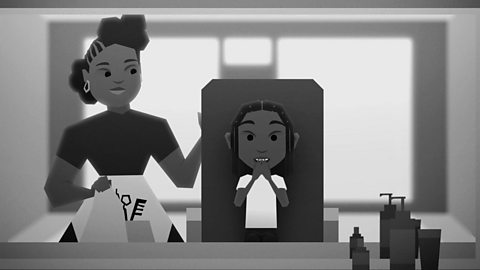
In this short animated film Ami talks honestly about how negative experiences with the police and her school made her feel angry and unsafe, putting her on a rebellious path.
Jack's Story. video
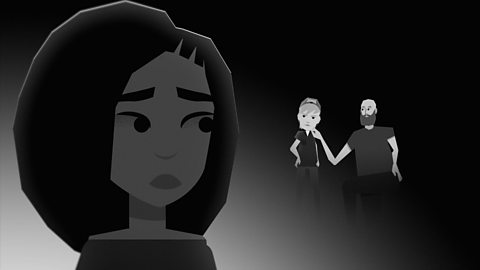
In this short animated film Jack talks candidly about how the aggressive behaviour he experienced from his peers, and the general sense of being ‘different’ he felt, contributed to feelings of depression and anxiety.
Shazmeen's Story. video
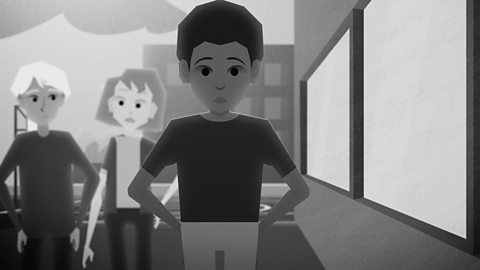
In this short animated film Shazmeen explains how her experiences of racism and Islamophobia at school, and her desire to fit in, made her feel torn between her family and culture.
Tyrek's Story. video
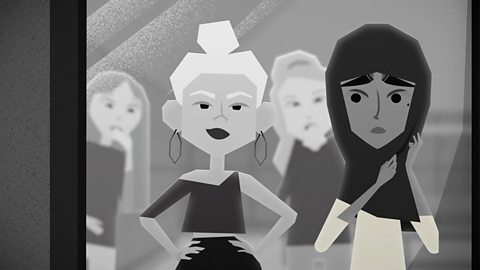
In this short animated film Tyrek recounts his negative experiences with the police and with his peers at school, and how these experiences have made him feel like an outsider and not listened to.
Amara's Story. video
In this short animated film Amara (not her real name), speaks frankly about her experience of growing up with afro-textured hair, and of having people intrusively touching her hair.