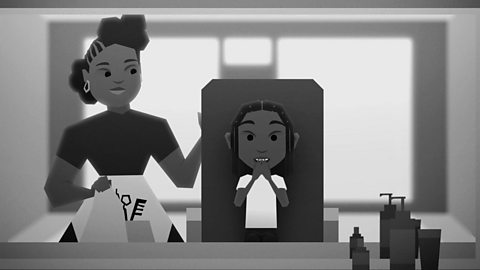
Due to the sensitive nature of the subject matter, we strongly advise teacher viewing before watching with your pupils. Careful preparation should be undertaken to prepare pupils before playing them this potentially traumatic and triggering personal story. This is Ami's story in her own words, and it includes her description of an incident in which a teacher called her a "monkey".
AMI:My name's Ami. I've been let down, singled out. I've been oppressed and, at 13, I was stopped and searched by the police.
I live with my mum and my four sisters. My family was good at celebrating, like, Eid, because I'm Muslim, so we don't really celebrate Christmas. You really got to eat. If it's not like a barbecue, it'll be like a dinner or like a house gathering. Something. Like, you have to do something.
I got in trouble in primary school with this kid. He bit me. And he didn't get punished as he should have. And my mum told me that I'm always going to have to work harder than him and if something happens to me it's not going to be the same type of reaction that people are going to give. I'm not equal with other people.
I was walking home from school. My head is down. I got my earphones in, you know. I'm just minding my business. The policeman comes out and is basically like, you know, "Where have I come from?" I told him I came from high school. He asked me where I lived. I pointed to my house. He, um, asked me, like, you know if I have anything sharp on me. Anything suspicious and then I said, "No." He asked me how old I am. I told him I'm 13 and then he just started reading me like, "I have the right to search you under this act or whatever." I took my bag off, emptied out my pockets and then he proceeded to search me.
Like, you know when you go on a rollercoaster and your heart drops. It was a bit like that. You know they're searching your arms, in between your legs and then, like, where your rib cage is and then obviously because I'm a girl, they kind of search your bra a bit. It's just so humiliating. In open public. Not like in the corner or, like, literally on the pathway to my house.
After the search, there was no, like, apology. Literally turned around and went back in his car and just like drove off. It was only a couple of years after that when I realised how violated I was. They teach you the good touch and the bad touch. That was not a good touch, it didn't feel right. I'm grown up to believe the police are good. They're here to serve and help me. Keep me safe. So whatever comes out of your mouth, I have to deem it to be true. It just created a whole trust issue with me.
But anyways. You know we were all talking, we're all talking and then he's like, "Listen to me." So, obviously, you know we're not really listening, we're ignoring him. And he said we're a pack of animals at first, that's what he said. Obviously, I retaliated back and I said, "So if we're a pack of animals, then what are you?" And then he said, "I'm Mr So And So. And you're a monkey." I was like, "You can't call me that. I will have you for that." He said, "Who's going to believe you?"
The - We used to call it 'patrol'. He came and I explained to him that teacher in there, "He just called me a monkey." And he was like, "Well, you know you need to go here. And if you want to write a report about it then you can do that."
I just told you that your colleague called me a monkey. That's your job to want the best for me. He is not the best for me or anyone else in there. And then he's just pinpointing the things that are wrong with me like, "Oh, you know, you got your trainers on, oh, you had your phone out…" And I'm thinking like, "Take the phone. Take the trainers. Are you going to do something about him?"
Wow, like. You guys just believe I don't exist, innit, until I do something towards you. But when you do something towards me, it's like I'm not even on your radar. It's like I'm not even here. If I was ever in trouble, I can't come to this school. I can't. I can't ask for help from here. I can't ask from help from the police, so what do I do?
The mental health impact affected me dearly. 'Cos it's like nothing is fair. So he kind of just put the self destruct button on the wall and then I just, everyday I was just tempted to press it. It caused me to wanna be seen more in a negative light that people put me in. Every time you get angry or you retaliate, "Oh, well you already think I'm an animal anyway, so I might as well give you what you want." I gave teachers hell. I thought that me being badly behaved and acting out, that was showing them who's boss.
I started spiralling, hanging around with the wrong people, doing the wrong things. And I'm gonna blame that on an encounter that I had with a police officer at 13 for the rest of my life? That's going to be my excuse? After I reached my lowest point, I just said this behaviour is only detrimental to me. I'm the only one that's going to lose. Then the only way was up.
Video summary
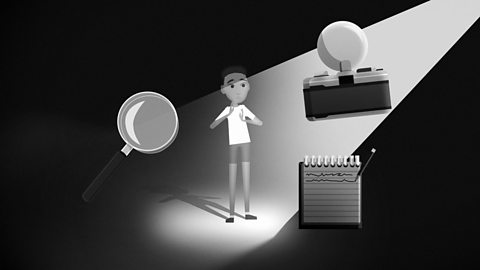
In this short animated film Ami talks honestly about how negative experiences with the police and her school made her feel angry and unsafe, putting her on a rebellious path.
The film explores how people’s relationships with institutions are built on a sense of trust, and how negative one-off experiences can leave young people feeling like they have nowhere to turn.
Ami is stopped by a male police officer aged 13 and searched. She is told they have the right to search her based on suspicions, despite her telling him her age and being in school uniform. She is very trusting of the police at that age, but feels uncomfortable throughout the search.
It’s only years later that she fully processes how violated this search made her feel.
Later, Ami has a teacher who refers to her using a racial slur: he calls her a “monkey”. This emotionally-loaded term has a history of being used to dehumanise and diminish, with links to the stripping of black human rights during slavery; a comparison being the false myth spread during the 1800s that black people have thicker skin or less sensitive nerve endings to excuse cruel treatment.
Ami feels the intent behind the word and, on encountering another member of school staff, attempts to raise it as an issue. This becomes a turning point for her relationship with both the teacher and the school, as she feels they don’t have her best interests at heart.
Ami starts to act out, feeling it’s justified after the incident; they ‘already see her as an animal anyway’. Underlying her behaviour is the unsettling thought that she cannot go to either the police or her school for help if she were to need it.
As she becomes older, she acknowledges a level of responsibility for her actions, regardless of how she was treated when she was younger; the only person her behaviour is harming is herself. She makes a conscious decision to stop living ‘reactively’. From then on, “the only way is up”.
This short film is from the BBC Teach series, The Colour of my Skin.
Due to the sensitive nature of the subject matter, we strongly advise teacher viewing before watching with your pupils. Careful preparation should be undertaken to prepare pupils before playing them this potentially traumatic and triggering personal story. This is Ami's story in her own words, and it includes her description of an incident in which a teacher called her a "monkey".
Teacher Notes
Questions/points for discussion
Before watching:
- You may want to have a class discussion about whether negative experiences can dictate behaviour.
- Ask students if they react first or think first.
- If you were stopped by the police on your way home, how might you feel? Do you know what to do in that situation? Do you know your rights?
During the film/at the end:
- To what extent can someone’s behaviour be attributed to prior traumatic events in their lives?
- Ami ends by saying, “The only way is up.” What does she mean by this? What steps can/should she take to get “up”? How can we turn negative experiences into positive outcomes?
- Ami is disappointed by the response of the ‘patrol’. What do you think this member of staff should have done when she reported this? Should his response have discouraged her from submitting a report?
- The teacher’s racial slur is dehumanising and evokes other moments in history, like the Nazis calling the Jewish population “rats”. What is dehumanisation and why is it a tactic used by violent or oppressive groups?
- Ami shares that her Mum said she’ll “always have to work harder than him”. What does she mean by this? Why does she need to work harder? Is that right? What needs to happen for this belief to change?
- Why do you think Ami was chosen to be stopped and searched? Was she profiled? What is racial profiling and is it right? What might the impact of racial profile be?
- Did you notice the racial slur before Ami highlighted its inappropriateness? Why might that be?
- What might Ami’s story reveal to us about how young people of colour feel in parts of UK society?
Following on/activities
Link to the Declaration of Human Rights and Equity. Ask students to consider if Ami was being treated equally, even if she felt she was not.
Explore the origin of the racial slur. You could compare and discuss the England football team's experiences – This BBC Sport article about Tyrone Mings and Raheem Sterling provides an example.
Discuss the concept of bias and prejudice from another perspective. Riz Ahmed (Oscar nominated British actor) has written a chapter ‘Airports and Auditions’ within ‘The Good Immigrant’ edited by Nikesh Shukla. Read together and dissect.
We've also created a series of short films for anyone working within schools or educational settings that explore the experiences of racism and discrimination faced by many black, South Asian and mixed heritage pupils. Click or tap here to watch the films on our Teacher Support site.
This short film is suitable for teaching KS3 and KS4 students. It can be used alongside the other Colour of my Skin BBC Teach films below or independently.
It would fit as part of the PSHE curriculum or within wider personal development work exploring challenges of adolescence, identity and managing diverse relationships within society. It explores respectful relationships, values, and lack thereof. It also allows for students to reflect on the impact of being reactive and how that affects and changes emotions, behaviour, and wellbeing.
The film could also fit within KS4 sociology, as it explores social stratification including power and factors affecting life chances. Within KS4 citizenship the film could be used to illustrate the role of society and public institutions. This video explores the systemic aspects that can influence biases and stereotypes that reinforce, for example, institutional racism and white privilege.
Learning aims or objectives
England, PHSE and RSEFrom the PSHE Association programme of study:
- R5. the legal rights, responsibilities and protections provided by the Equality Act 2010.
- R7. how the media portrays relationships and the potential impact of this on people’s expectations of relationships.
- R10. the importance of trust in relationships and the behaviours that can undermine or build trust.
- R39. the impact of stereotyping, prejudice and discrimination on individuals and relationships.
- R41. the need to promote inclusion and challenge discrimination, and how to do so safely, including online.
- H5. to recognise and manage internal and external influences on decisions which affect health and wellbeing.
Northern Ireland, PD&MUFrom the Northern Ireland curriculum for Personal Development and Mutual Understanding:
- Investigate why different rights must be limited or balanced in our society.
- Investigate the principles of social responsibility and the role of individuals, society and government in promoting these.
- Explore how inequalities can arise in society, including how and why some people may experience inequality or discrimination on the basis of their group identity.
Scotland, PSEFrom the Curriculum for Excellence Health and Wellbeing Experiences and Outcomes:
- Develop my self-awareness, self-worth and respect for others.
- Acknowledge diversity and understand that it is everyone’s responsibility to challenge discrimination.
Wales, PSE
- How to recognise and challenge effectively expressions of prejudice, racism and stereotyping.
Celine's Story. video
In this short animated film Celine (not her real name), speaks openly about how the hostility she experienced from her local community made her feel unsafe, and how she reached out to her school for support.
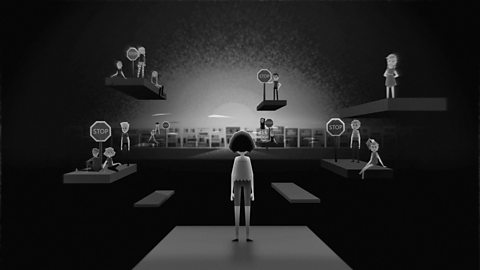
Jack's Story. video
In this short animated film Jack talks candidly about how the aggressive behaviour he experienced from his peers, and the general sense of being ‘different’ he felt, contributed to feelings of depression and anxiety.
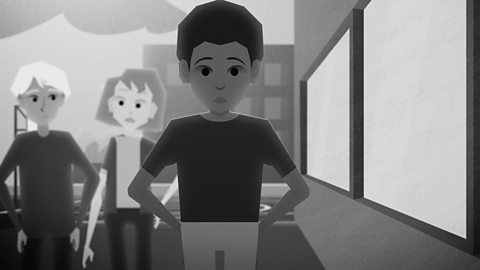
Shazmeen's Story. video
In this short animated film Shazmeen explains how her experiences of racism and Islamophobia at school, and her desire to fit in, made her feel torn between her family and culture.
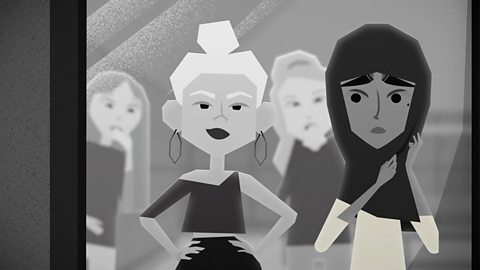
Tyrek's Story. video
In this short animated film Tyrek recounts his negative experiences with the police and with his peers at school, and how these experiences have made him feel like an outsider and not listened to.
Amara's Story. video
In this short animated film Amara (not her real name), speaks frankly about her experience of growing up with afro-textured hair, and of having people intrusively touching her hair.