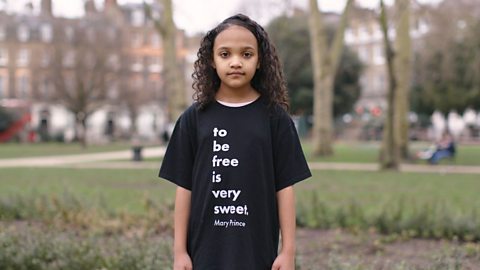
FELIX:Hi, my name is Felix, and I'm 10 years old. Over hundreds of years, the United Kingdom has been home to lots of brilliant authors and lots of brilliant books. But only a very small amount of published authors are black, and in books for young people characters arerarely black. My grandmother has loved reading all her life, but noticed this problem. When she was growing up she never read about people who looked like her and she was made fun of for her frizzy hair. So she wrote a book that was published in 2004 called Princess Katrina and the Hair Charmer.
TINA:Hello! Come in.
When I was your age, growing up black with white foster parents in a small North Yorkshire town back in the 60s had its challenges. I mean, when I went to school, I was only one of two black children. That was a strange time. I was very noticeable, people noticed me. But the thing that people seemed to notice most of all was my hair more than anything. They stared at it and they wanted to touch it. And then, of course, a lot of kids would say pretty mean things. My white foster mother, she really struggled with it and I absorbed all of this stress that she would feel around it. And I started to think that I had this beast that I would have to somehow learn to tame. And I think, in a way, what I did was escape into reading. From as young as I can remember, I used to go to the old library in Ripon. I would try and get out as many books as I could, even from being like seven or eight years old. So I was always an eager reader and I would sometimes find myself walking through the streets of Ripon, trying to imagine myself as one of those princesses in the fairy tales that I loved to read. And I would think about it, but I'd think, well, that could never be me, because whenever you saw those princesses, they had this gorgeous, sleek, blonde, long, what I used to call grade-A princess, hair. And of course, I didn't have hair like that. In fact, my little afro had no swishability about it at all. So if I was going to be saved from dragons and be courted by princes, I really had the wrong hair for it.
FELIX:So this is the new library?
TINA:That's right. This is the new library. And I have to say that I was here when it opened.
FELIX:Really?
TINA:I was. And the Prince of Wales opened it and I was working with the press on that day. So I'm part of the development of this library.
My book, Princess Katrina, was my way of addressing the balance for the wiry haired, kinky haired girls and giving them their ownprincess who celebrates the strength and beauty of her natural afro curls. Thankfully, there has been a big increase in black authors and black characters in children's books since I was a little girl back in the 60s. But, you know, we've still got a long way to go.
FELIX:I'm so glad I got to talk to my grandma and learn more about her history. Lots of black writers in Britain will have life experiences like hers, and it made me think about how much I love reading and how important it is to see characters that look like me. I like to think my grandma's book has helped encourage the increase in black characters and authors, but there's still not enough outthere. We need to change that.
Video summary
In this short film Felix, aged 10, talks to his grandmother Christina (Tina) Shingler, a writer who decided to do something about the lack of black characters in British literature.
Felix interviews Tina to find out what life was like growing up as one of the only two black children at her school in Ripon, North Yorkshire.
Tina was often teased and her ‘frizzy’ hair in particular, became a target. To deal with this, Christina lost herself in books and spent much of her time at Ripon library.
She always dreamed about was being a princess but she never found any princesses in books that looked like her. They all had “silky smooth, grade-A blonde, princess hair”; this was something that Christina could not identify with.
In 2004 Tina decided to do something about the imbalance of black characters in British literature and she wrote Princess Katrina and the Hair Charmer.
This short film is from the BBC Teach series, Black British Stories.
Teacher Notes
Before watching the film
You may want to discuss favourite authors and books with the class before watching the film. As a class/group, a list could be created of favourite books. These can then be split into books that are by white authors and authors of a different ethnicity. Pupils could also investigate how many of these books feature a white main character and how many feature a main character who is non-white.
You may want to go into details of when the first children’s books appeared in Britain and the fact that Britain was still actively involved in the transatlantic slave trade. Explore how this would impact on who were writing the books and the main characters featured. Following World War Two, many people who had lived in British colonies came to Britain to find education and work. They found that the majority of books ignored people of colour so people began writing books that addressed this inbalance.
Please note, in the film Tina says that she was one of only two black children in her class and that this left her feeling isolated. As part of your preparation you should consider the needs of any pupils in your class who may have similar lived experiences. Tina also talks about being raised by white foster parents. Again, pupils may have similar lived experiences, and discussions around interracial families or foster parents might be uncomfortable or upsetting for them. Individuals in the class should not feel any expectation to discuss their own family circumstances, although they may choose to.
Questions to consider
Depending on the focus of your lesson, you may wish to pause the short film at certain points to check for understanding, asking questions such as:
- What do you think were the challenges Tina faced, being one of the only two black children in the local community?
- Why do you think Tina did not like people staring at her hair? How do you think it made her feel? Please note, in the film Tina talks about hair discrimination and how this made her feel. This subject should be treated with sensitivity. Does your school have a policy on hair discrimination? This Newsround video provides further insight.
- Why do you think Tina spent so much time at Ripon library? What could the library offer her, that she was not getting elsewhere?
- Why do you think Tina struggled to identify with the princesses in books that she read?
- What would have helped Tina identify more with the characters in the books she was reading?
- How many children’s books can you think of that feature a person from a diverse ethnic group as a main character?
- Why do you think it is important to see people who look like you in books you read?
Activities to further explore learning
Exploring inclusive literaturePupils can research further the books in their classroom. How many are by black authors and how many feature black children as the main character? Is there still an imbalance in the literature children are exposed to today? Pupils could then write letters to publishing companies to encourage them to publish more books featuring a diverse selection of main characters.
Creating diverse charactersPupils choose a book they love. Challenge them to change the characters to make the book appeal to a more diverse audience. What would help different ethnic groups identify with the characters?
Expanding their readingIntroduce pupils to some black authors who are more recent. Challenge pupils to read a book by one of these new authors and then write a book review encouraging other pupils to read the same. Authors that they may want to consider:
- Zanib Mian
- Sita Brahmachari
- Catherine Johnson
- Polly Ho Yen
- Jasmine Richards
- Benjamn Zephaniah
- Malorie Blackman
- Verna Wilkins
- Onjali Q. Rauf
BiographiesYou could also read the Verna Wilkins Black Star Series biographies. Focus on Benjamin Zephaniah and Malorie Blackman. Explore why it is important to hear their stories. Following this you could challenge the class to write a biography for Christina Shingler.
Key Vocabulary
- Culture - A pattern of behaviour shared by a society, or group of people.
- Discrimination - The unjust or prejudicial treatment of different categories of people.
- Diversity - Differences in racial and ethnic, socioeconomic, geographic and academic backgrounds.
- Equality - When people are treated the same, regardless of what they look like or where they come from.
- Inclusion - Being a part of what everyone else is, being welcomed and embraced as a member who belongs.
- Legacy - Something we inherit from past generations and pass to our future generations.
- Prejudice - A preconceived opinion that is not based on reason or actual experience.
- Racism - The belief that people of different races or ethnic groups have different value in society, and using this against them.
This short film is suitable for teaching KS2 / 2nd level pupils and links to various areas of the curriculum including history (black history) and personal, social and relationships education (diversity and identity). The focus on children’s literature also enables a discussion around books available and expanding pupils’ experiences of different authors
IdentityThis short film raises questions about how people form their identity and the importance of seeing people in books that they can be related to.
DiversityThis short film raises questions about whether UK literature is diverse and whether or not it reflects current British society. In 2017, the Centre for Literacy in Primary Schools (CLPE) undertook a survey of ethnic representation with UK children’s literature. Out of the 9115 children’s books that were publishes during 2017, only 4% featured BAME characters and only 1% featured a BAME main character.
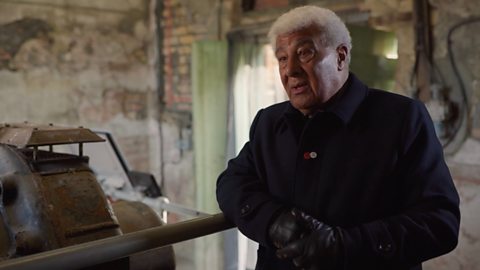
Mac Williams - Working in the coal mining industry. video
In this short film Abiodun MacDonald Williams, known to his close friends as Mac, talks to his neighbour, 11-year-old Iris, about what it was like working as a ventilation officer in County Durham in the 1960s.
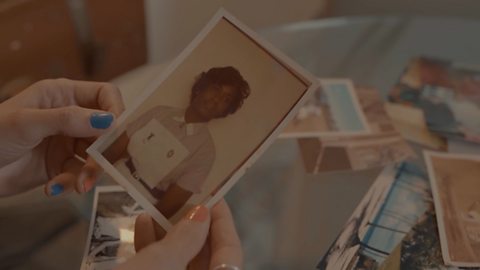
Alison Bennison - Working as a NHS nurse. video
This short film for primary schools follows Alison Bennison's journey to Britain from Barbados in 1960, to train as a nurse and work for the National Health Service. The story is told by Alison's granddaughter, Lindsey, and nine-year-old Dontay.
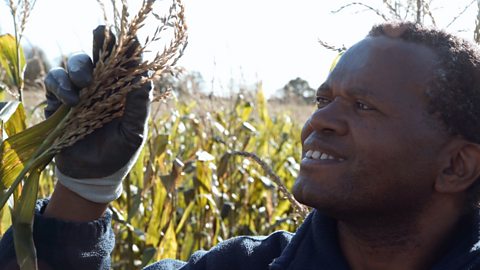
David Mwanaka - Becoming a farmer in Britain. video
In this short film 11-year-old Anashe meets David Mwanaka, and finds out about his journey from Zimbabwe to becoming a farmer in Britain.
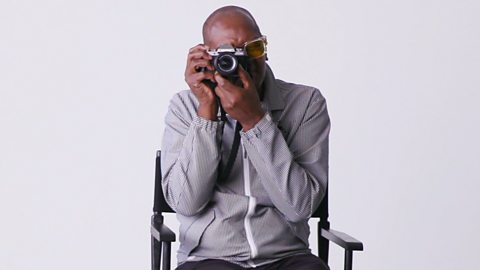
Dennis Morris - Becoming a photographer. video
This short film tells the story of Dennis Morris, a well-known photographer from London, originally from Jamaica, who photographed famous musicians including Bob Marley.
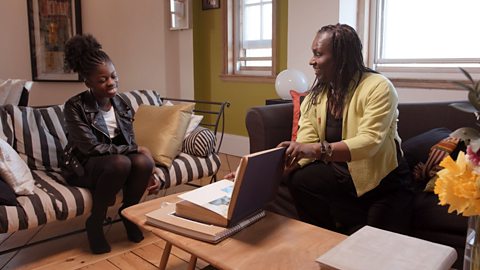
Elsie Owusu - Becoming an architect in Britain. video
In this short film 11-year-old Kendra meets Elsie Owusu, who moved from Ghana to the UK as a child and became an architect, and dealt with the challenges of working in a white, male-dominated profession.
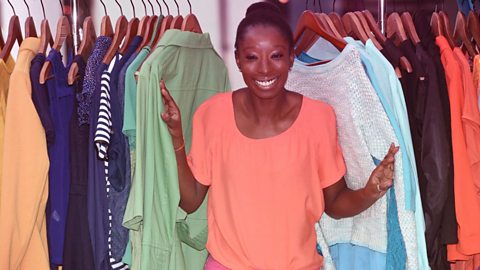
Eunice Olumide - Breaking into the fashion business. video
In this short film 12-year-old Lore meets Eunice Olumide, a second generation Nigerian who was born and grew up in Scotland and become a professional model.
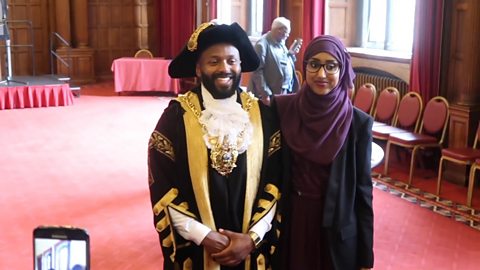
Magid Magid - Becoming the youngest ever Lord Mayor of Sheffield. video
In this short film 14-year-old Abdirahman meets Magid Magid, a Somali-British activist and politician who served as the youngest ever Lord Mayor of Sheffield from May 2018 - May 2019.
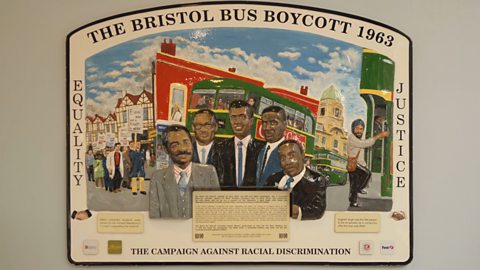
Vernon Samuels - The Bristol Bus Boycott of 1963. video
In this short film 13-year-old Amelia and Vernon Samuels, who represented Great Britain in the 1988 Olympics, tell the story of the Bristol Bus Boycott and Vernon's father, who was the first black bus driver in Bristol.
Yesha Townsend - A Bermudian poet in London. video
This short film tells the story of Yesha Townsend, a Bermudian poet who currently lives and works in London, and how she has been influenced by Mary Prince, a black woman who escaped from slavery.