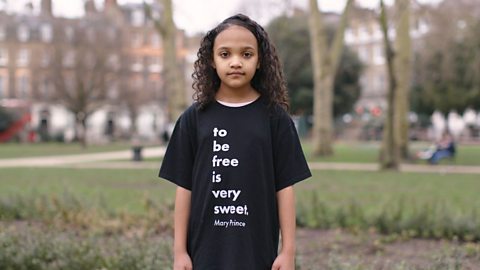
AMELIA:Hi, my name's Amelia and I'm 13 years old. I've lived my whole life in Bristol. It's a city that, like others in the UK, has a complicatedhistory. In 2020, Bristol was in the news a lot because protesters pulled down a statue of one of the city's most famous residents,Edward Colston. They did that because, over 300 years ago, he made a lot of money from the slave trade and slavery ruined millions of black people's lives all across the world. In 1963, there was another protest against the bad treatment of black people. It was called the Bristol Bus Boycott, and it led to changes in the law. A boycott is when people refuse to use a company until it changes arule which is unfair. I'm meeting with Vernon, who has his own story to tell about the Bristol Bus Boycott.
VERNON:My father was a bus driver. In fact, he was the first black bus driver in Bristol. And this was made possible thanks to the Bristol Bus Boycott that happened back in 1963. We had a bus company in Bristol called the Bristol Omnibus Company, and they decided that they would have in place a thing called colour bar. That is workplace discrimination where basically they would not allow people who were Asian or black to be part of the bus crews. That was bus drivers or bus conductors. So there was a chap called Paul Stephenson, who was actually from Essex, of African Caribbean descent. So what he wanted to do was to really prove that this colour bar was a reality and that people should really stand with him against it. He had met somebody in Bristol by the name of Guy Reid-Bailey and had arranged for an interview to apply for a job as part of the bus crew. And when he arrived at the bus company and they realised he was black, he was told that the job had been filled and there was no vacancy, which was actually not true. Paul was able to expose this as colour bar, to show racial discrimination that was taking place. And it actually got people to rise up, so to speak, and to make a stand and protest against this practice of colour bar. So the boycott was organized by Paul, Paul Stephenson, and four other local activists. One particular day they met outside of the bus company station with their placards and they marched all the way to the bus company union.
AMELIA:So what has the bus company union got to do with this?
VERNON:The union, which looks after bus drivers in the workplace, were accused of creating the colour bar. They were the ones who had the power, essentially, and with the pressure that was brought to them by the people who gathered, the politicians and the four activists who led the protests, the colour bar was taken away. It was also the time that my dad kind of joins this story, and here's a little picture of him that I'd like to show.
AMELIA:Oh wow, is that him?
VERNON:Yeah, that's my dad there. So he was an immigrant from Jamaica, from the Caribbean, who came to Britain in 1960. He asked himself, what can I do? He didn't feel comfortable with just protesting, he wanted to do something else. So he decided to put himself forward to apply for a position as a bus driver. So in 1964, my dad became the very first black bus driver in Bristol. And that was the same day that I was born. My father proved that black people were just as capable as white people in the workplace. Soon after the boycott, the law was changed. It became illegal for any company to discriminate against people of colour, making jobs available to everybody. Not only was my father quite courageous in his own right, but he also inspired me as a youngster to aim high and to really push as far as as I could. And he told me to be passionate and to have excellence in everything that I did. And I'm glad to say that those words of passion and excellence carried me forward all the way to the point where I represented Great Britain at the Olympic Games, which I'm very proud of, back in 1998. Today I continue my activism like the people who started the Bus Boycott and my father, too. I am a black British Bristolian and I never forget my African and Caribbean roots.
AMELIA:The Bristol Bus Boycott worked because of the bravery of lots of different people standing up for what they believed in and inspiredfuture generations like Vernon, and now me, to do the same.
Video summary
In this short film 13-year-old Amelia and Vernon Samuels, who represented Great Britain in the 1988 Olympics, tell the story of the Bristol Bus Boycott and Vernon's father, who was the first black bus driver in Bristol.
Vernon, who was born and grew up in Bristol, tells Amelia, also from Bristol, of the courage his father demonstrated and how it has inspired him to always strive for excellence in his life and stand up for what he believes in.
This short film is from the BBC Teach series, Black British Stories.
Teacher Notes
Before watching the film
This short film starts by briefly mentioning the statue of Edward Colston in Bristol, and how it was pulled down in 2020 by protesters as part of the Black Lives Matter global movement for racial equality and justice. You may wish to explore a history of protest in the UK (e.g. the Peterloo massacre in Manchester, 16 August 1819; the Suffragette movement; the Battle of Cable Street London, 4 October 1936 and the Tolpuddle Martyrs Dorset, 1833-1834), and how people have been actively seeking civil rights, employment, fair pay, the rights to vote, and gender equality for hundreds of years.
You may wish to look at the word 'discrimination', types of discrimination and what that means to the pupils. Pupils could explore the different reasons why people feel discriminated against and why it is important to make a stand in order to make a change for future generations. This could include gender discrimination which, although different, might aid pupil understanding of discrimination. These discussions could lead to definitions of hate crime, and explaining how the type of discrimination seen in this short film is now illegal in the UK. Please note, preparation is necessary for any pupils who may have experienced discrimination. It may be at this point that pupils disclose information or share stories. Discussions of this nature can be upsetting for pupils – it may be that pupils are hearing this information for the first time, or it may remind them of more recent examples such as racism in football. Individuals in the class should not feel any expectation to discuss their own family circumstances, although they may choose to.
You may also wish to focus on the history of black civil rights worldwide, and in Britain, and how it is really only since the 1960s that many important changes began to take place. Links can also be made to Martin Luther King, Rosa Parks and the activism in America at the same time.
If conducting a local history study in Bristol, you could further explore the murals that we see Amelia walking by in the film. These are the Seven Saints of St Pauls and include Roy Hackett, who played a key role in the Bristol Bus Boycott.
Questions to consider
Depending on the focus of your lesson, you may wish to pause this short film at certain points to check for understanding, asking questions such as:
- Why do you think protestors felt it was important to them to pull the statue of Edward Colston down?
- Why do you think Paul Stephenson felt he needed to ‘trick’ the bus company?
- Do you think a boycott is an effective form of protest?
- Why do you think the boycott was successful?
- Why do you think Norman Samuels wanted to do more than join the protest?
- How do you think Norman felt becoming the first black bus driver in Bristol?
- How do you think Norman showed courage?
- What do you think being an activist means?
- How can people continue activism today?
Activities to further explore learning
Researching the Bristol Bus BoycottThe Bristol Bus Boycott was a turning point in British history and soon after this, it became illegal to have a colour bar in the workplace. Pupils can research the event and present this in the form of a non-chronological report, a digital presentation such as a PowerPoint presentation or information leaflet. Pupils should also look at the impact it had on the future of fair and equal workplaces. As well as Vernon’s father – Norman Samuels – pupils should be aware of other people’s contributions, such as Guy Bailey, Paul Stephenson and Roy Hackett.
DebatePupils could research the history of Edward Colston and his connection with the transatlantic slave trade. They could then have an open discussion on why the statue has divided the city of Bristol and whether they think the protestors should have been allowed to pull down the statue of Edward Colston or not. Bristol Council now have the statue in storage but what should happen to the statue? Is it important for understanding? If so why/why not?
Courage and standing up for what you believePupils could look at different types of courage and what they think defines courage. Pupils could explore the six types of courage (physical, social, moral, emotional, intellectual and spiritual). They could then decide on what type of courage Norman Samuels had to show when he became the first black bus driver. Pupils could then be presented with different scenarios which need different types of courage and match the types of courage needed to each one.
“I Have A Dream”In 1963, at the same time as the Bristol Boycott, Martin Luther King was giving his famous dream speech. Challenge the pupils to think of something that they are passionate about and ask them to write their own dream speech. Pupils could then be filmed using a green screen giving their speech in front of pictures of either the Bristol Bus Boycott or the Lincoln Memorial, Washington DC, USA.
Key Vocabulary
- Activist - Someone who does something to make a change, or stop a change, in society.
- Boycott - To refuse to buy, use, or go to, in order to make a protest or bring about a change.
- Colour bar - A system that does not allow black or Asian people to do the same things as white people.
- Civil rights - The rights of citizens to equality.
- Discrimination - The unjust or prejudicial treatment of different categories of people.
- Diversity - Differences in racial and ethnic, socioeconomic, geographic, and academic backgrounds.
- Immigrant - A person who comes to a country to take up permanent residence.
- Immigration - The process of moving to a new country, with plans to live there permanently.
- Prejudice - A preconceived opinion that is not based on reason or actual experience.
- Racism - The belief that people of different races or ethnic groups have different value in society, and using this against them.
This short film is suitable for teaching KS2 / 2nd level pupils and links to various areas of the curriculum including to history (black history) and personal, social and relationships education (diversity and community). The focus on the power of the written word, specifically autobiographies and poetry, also provides a link with the English curriculum.
Cultural heritageThis short film raises questions about what makes up your cultural heritage and how this connects a community.
Inspiring changeThis short film raise questions about what inspires change today. Links can be made to movements that are current (Black Lives Matter, Extinction Rebellion, etc.), and how these movements have been inspired and developed.
Mac Williams - Working in the coal mining industry. video
In this short film Abiodun MacDonald Williams, known to his close friends as Mac, talks to his neighbour, 11-year-old Iris, about what it was like working as a ventilation officer in County Durham in the 1960s.
Alison Bennison - Working as a NHS nurse. video
This short film for primary schools follows Alison Bennison's journey to Britain from Barbados in 1960, to train as a nurse and work for the National Health Service. The story is told by Alison's granddaughter, Lindsey, and nine-year-old Dontay.
Christina Shingler - Becoming an author of children's literature. video
In this short film Felix, aged 10, talks to his grandmother Christina (Tina) Shingler, a writer who decided to do something about the lack of black characters in British literature.
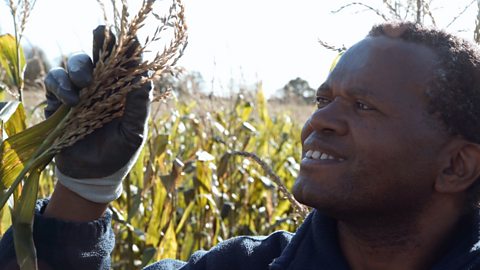
David Mwanaka - Becoming a farmer in Britain. video
In this short film 11-year-old Anashe meets David Mwanaka, and finds out about his journey from Zimbabwe to becoming a farmer in Britain.
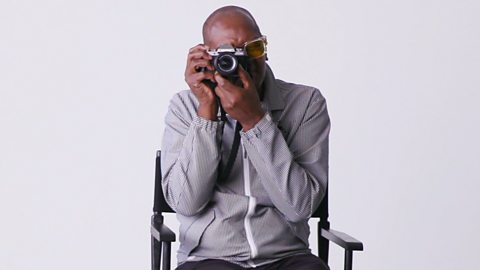
Dennis Morris - Becoming a photographer. video
This short film tells the story of Dennis Morris, a well-known photographer from London, originally from Jamaica, who photographed famous musicians including Bob Marley.
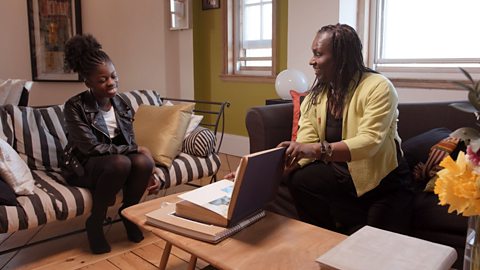
Elsie Owusu - Becoming an architect in Britain. video
In this short film 11-year-old Kendra meets Elsie Owusu, who moved from Ghana to the UK as a child and became an architect, and dealt with the challenges of working in a white, male-dominated profession.
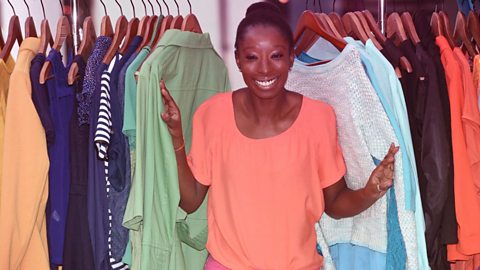
Eunice Olumide - Breaking into the fashion business. video
In this short film 12-year-old Lore meets Eunice Olumide, a second generation Nigerian who was born and grew up in Scotland and become a professional model.
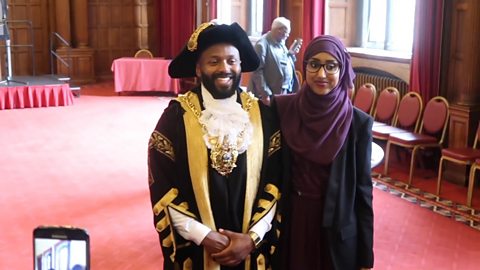
Magid Magid - Becoming the youngest ever Lord Mayor of Sheffield. video
In this short film 14-year-old Abdirahman meets Magid Magid, a Somali-British activist and politician who served as the youngest ever Lord Mayor of Sheffield from May 2018 - May 2019.
Yesha Townsend - A Bermudian poet in London. video
This short film tells the story of Yesha Townsend, a Bermudian poet who currently lives and works in London, and how she has been influenced by Mary Prince, a black woman who escaped from slavery.