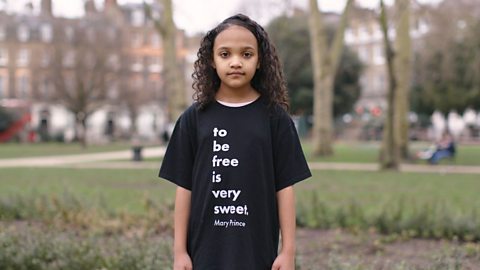
KENDRA:Hi, my name is Kendra. I'm 11 years old and my family is originally from Ghana. Ghana is a country in Western Africa. Most people from Ghana who moved to the UK arrived between 1960s to 1980s after the country was given its independence from the British Empire. Today, it's estimated that around 114,000 Ghanaians live in the UK. I'm on my way to meet Elsie, who's from Ghana, just like my family. Elsie's an architect and has designed some amazing buildings all over the world, including in London and parts of Africa.
ELSIE:Hi, Kendra. Do come in. Lovely to meet you.
KENDRA:What was it like growing up in Ghana?
ELSIE:Oh, it was fantastic. I mean, I had a really lovely childhood, lived in a nice house, went to a lovely school. So my memories of it are very good. Ghana was the first sub-Saharan African country to become independent. So there was a gradual progression from being part of the British Empire to being an independent country. And Ghana became fully independent in 1957. Independence meant a lot to Ghana because it was actually policy to separate black people from white people and make sure that all the white people had a better life. But I think that was the shift in independence was that the colour bar, as it was called, no longer existed.
KENDRA:Why did you come to the UK?
ELSIE:I came to the UK because my father was a diplomat in London. We arrived, I think it was the 2nd of November in 1962, which was one of the coldest winters on record. And my mother still to laughs to herself about the fact that I got to the top of the steps on the aeroplane and then refused to move and said, "I am not going out there. It's too cold."
The other thing is that because my father had quite a high status job, he didn't have to do things like going shopping and going to markets and stuff. And my mother did, so my mother was kind of confronting racism, and my father was saying, "No, it doesn't exist, it doesn't happen."
So as a child, I remember this kind of pushing and pulling between my mother and my father about whether racism really existed and what it was and how they both experienced it.
KENDRA:When did the UK feel like home?
ELSIE:Well, the UK always felt like home because when you grow up in the Empire, you're told that the UK is the mother country. And so when you come to the UK, you're coming home to mother. The fact that you weren't welcome at home is then something else, you know, that you then have to come to terms with.
KENDRA:What's it like being an architect?
ELSIE:Being an architect is a fantastic job. What you do is you start off with a little sketch, or drawing like that, and then somebody puts one brick on top of the other and they turn your little drawing, your little idea, into a big building that people can live in. And then it's magic because when it's all finished and you go in the building, it's like walking inside your own drawing. I went into architecture thinking that you can do all sorts of things to make the world a better place. I've worked on the Supreme Court and if you're thinking about making the world a better place, I think that the Supreme Court is an example of how fantastic it is to be able to make that contribution, especially when you see those rooms that you've designed. People believe in it. You know, they believe that this is a place where you can get justice. And I've also worked on Green Park station. But I've worked on lots and lots of conversions, houses, developments, all sorts of things.
KENDRA:What were some of the challenges you faced being an architect?
ELSIE:There are lots of challenges, obviously, because it was always, and has always been, a profession for white men. Walking into the room as a black female, you just have this sense of the heads all turn and people say, what are you doing here? Well, I'm the architect and I'm in charge of you lot. And it's this thing about holding your nerve, you know, because people will test you in all sorts of ways. And it's horrible, lots of times it's horrible and lots of times it's unfair. But you learn a huge amount, very, very fast. And actually what we need, as both as females and as black people, is to be in charge so that we can train other females, young women, and we can train other people from diverse backgrounds because otherwise their talent is going to go to waste.
KENDRA:What makes it worth it?
ELSIE:I would say talking to lovely people like you, Kendra. But mostly I have the skills now to help to make the world a better place. I'mbuilding transport links in Ghana and through my charity work there, I'm working to make the UK a better place too. I work with kids from all family backgrounds to help them see that they can be whatever they want to be when they grow up.
KENDRA:Elsie's stories really inspiring. She helps build the world that we walk in every day, both through her architecture and charity work. Her story shows that with hard work and determination, people can achieve great things.
Video summary
In this short film 11-year-old Kendra meets Elsie Owusu, who moved from Ghana to the UK as a child and became an architect.
Elsie tells Kendra, who is Ghanaian, how she dealt with the challenges of working in a white, male-dominated profession.
The film introduces the idea of challenging stereotypes in the workplace and moving towards a more diverse representation of modern Britain.
This short film is from the BBC Teach series, Black British Stories.
Teacher Notes
Before watching the film
You may want to discuss the British Empire and how the majority of its African colonies gained independence after World War Two.
This is also a good opportunity to discuss the colour bar and how it must have felt growing up in Ghana with segregation dividing white British and black African people. There was also a great deal of racial discrimination taking place across the rest of the world during this time, including in America and the UK.
You may want to start exploring the workplace and gender stereotypes that are present in certain professions.
Please note, Elsie’s story of moving to the UK as a child, and feeling unwelcome, may be upsetting for pupils who have experienced discrimination as a result of their race or religion.
Questions to consider
Depending on the focus of your lesson, you may wish to pause this short film at certain points to check for understanding, asking questions such as:
- How do you think Elsie’s experience of growing up in Ghana might have been different from other people’s?
- Why do you think people wanted to celebrate independence from the British Empire?
- How do you think Elsie felt about moving from Ghana to Britain at the age of nine?
- What do you think was different about living in Ghana and England?
- How did Elsie’s mother and father’s experiences differ when living in London?
- Why do you think Elsie said she did not feel welcome in the UK?
- How can designing buildings make the world a better place?
- Why do you think it might be a challenge being one of the only black women working in a company?
- Why do you think it is important to have more women, black people or people from diverse backgrounds in charge in the workplace?
Activities to further explore learning
Diverse communitiesElsie stated that even though the UK was thought to be the “mother country” of Ghana, they did not feel that ‘mother’ was welcoming them when they arrived in 1962. Challenge the pupils to consider what they could do to make someone who was new to the school and wider community feel welcome. Pupils could write a welcome letter to any new pupils arriving at their school.
Designing for diversityElsie has said that the buildings in Britain are often not representative of the diverse communities they serve. Challenge the pupils to look at the different buildings in their communities. Do they represent the different cultures and needs of their communities? Pupils could design a new building for the community (possibly a school or library), which incorporates some of the various cultures and languages that need to be represented in their communities. Pupils should also be mindful of how people with disabilities use and access buildings.
Challenging stereotypesShow pupils a number of pictures of different people and a number of jobs (e.g. nurse, bus driver, fire fighter, child minder, engineer, cleaner, astronaut, etc.). Ask pupils to match the job to the person and say why they think that they are a match. Pupils can then openly discuss why they think certain jobs have stereotypes attached to them. How do they think it feels being in that job and not fitting that stereotype? If possible, invite some people in who are challenging these stereotypes to be interviewed by the pupils. Please note, this activity should be approached with careful planning and sensitivity. Pupils may be more inclined to talk about stereotypes that they have witnessed or experienced in their communities (perhaps they may have heard a family member talking about something). Pupils may also talk about their own lived experiences so support should be offered and systems in place for these disclosures. Individuals in the class should not feel any expectation to discuss their own family circumstances, although they may choose to.
Key Vocabulary
- Activist - Someone who does something to make a change, or stop a change, in society.
- Colony - An area of land that is occupied and in control by settlers from another country.
- Colour bar - A system that does not allow black or Asian people to do the same things as white people.
- Community - A group of people living in a particular area or working together for a particular aim or goal.
- Culture - A pattern of behaviour shared by a society, or group of people.
- Decolonisation - Typically refers to the withdrawal of political, military and governmental rule of a colonised land by its invaders. In the case of the British Empire, this is the return of colonised lands to native inhabitants. As Elsie states in the film, Ghana became fully independent in 1957.
- Diplomat - An official of a country, representing that country abroad. In the film Elsie says that her father was a diplomat working in London.
- Discrimination - The unjust or prejudicial treatment of different categories of people.
- Diversity - Differences in racial and ethnic, socioeconomic, geographic, and academic backgrounds.
- Empire - Lands or regions that are controlled by one ruler or government.
- Equality - When people are treated the same, regardless of what they look like or where they come from.
- Immigrant - A person who comes to a country to take up permanent residence.
- Intersectionality - Used to describe how multiple forms of disadvantage or inequality (e.g. a person’s race, gender or class), overlap with one another. In the film Elsie talks about her profession (architecture) being dominated by white men. So for her, being black and a women were two disadvantages that overlapped.
- Motherland - For people living in colonies of the British Empire, Britain was often referred to as the Motherland or Mother Country. In the film, Elsie says that the UK always felt like home because she was told that the UK was the Mother Country and that this gave the impression that she would be welcomed.
- Prejudice - A preconceived opinion that is not based on reason or actual experience.
- Racism - The belief that people of different races or ethnic groups have different value in society, and using this against them.
This short film is suitable for teaching KS2 / 2nd level pupils and links to various areas of the curriculum including history (black history) and personal, social and relationships education (diversity and stereotypes in the workplace)
Diversity in the workplaceThe film raises issues of current diversity in the workplace. Elsie works in a white, male-dominated profession and has to ‘fight’ for her place as a black woman.
Prejudice and discriminationThe film raises questions about how we treat people who have characteristics that are different from us with respect. Elsie remembers a time where the colour bar was used to separate black and white people and, even though this is no longer the case, Elsie has still had many experiences of being treated differently because of the colour of her skin and her gender.
AspirationElsie challenges us to dream big and to use our talents and passions to make a difference in the future.
Mac Williams - Working in the coal mining industry. video
In this short film Abiodun MacDonald Williams, known to his close friends as Mac, talks to his neighbour, 11-year-old Iris, about what it was like working as a ventilation officer in County Durham in the 1960s.
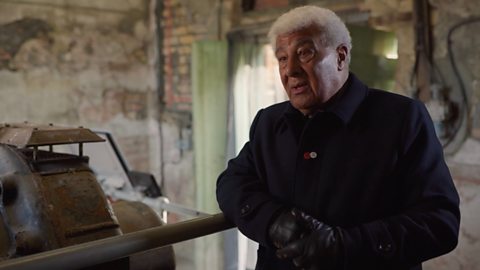
Alison Bennison - Working as a NHS nurse. video
This short film for primary schools follows Alison Bennison's journey to Britain from Barbados in 1960, to train as a nurse and work for the National Health Service. The story is told by Alison's granddaughter, Lindsey, and nine-year-old Dontay.
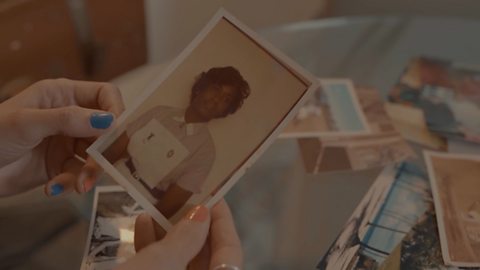
Christina Shingler - Becoming an author of children's literature. video
In this short film Felix, aged 10, talks to his grandmother Christina (Tina) Shingler, a writer who decided to do something about the lack of black characters in British literature.
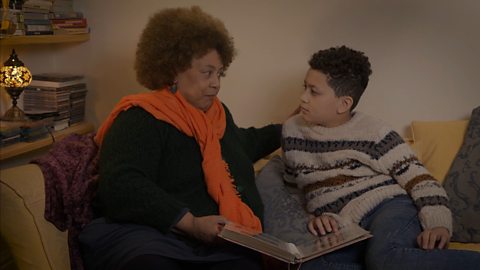
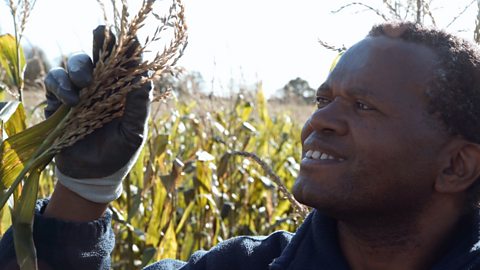
David Mwanaka - Becoming a farmer in Britain. video
In this short film 11-year-old Anashe meets David Mwanaka, and finds out about his journey from Zimbabwe to becoming a farmer in Britain.
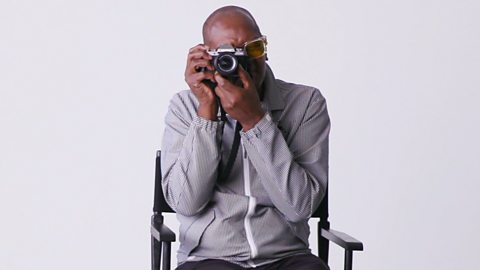
Dennis Morris - Becoming a photographer. video
This short film tells the story of Dennis Morris, a well-known photographer from London, originally from Jamaica, who photographed famous musicians including Bob Marley.
Eunice Olumide - Breaking into the fashion business. video
In this short film 12-year-old Lore meets Eunice Olumide, a second generation Nigerian who was born and grew up in Scotland and become a professional model.

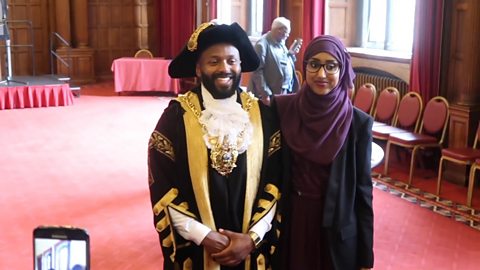
Magid Magid - Becoming the youngest ever Lord Mayor of Sheffield. video
In this short film 14-year-old Abdirahman meets Magid Magid, a Somali-British activist and politician who served as the youngest ever Lord Mayor of Sheffield from May 2018 - May 2019.
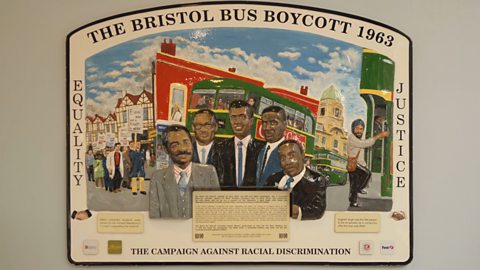
Vernon Samuels - The Bristol Bus Boycott of 1963. video
In this short film 13-year-old Amelia and Vernon Samuels, who represented Great Britain in the 1988 Olympics, tell the story of the Bristol Bus Boycott and Vernon's father, who was the first black bus driver in Bristol.
Yesha Townsend - A Bermudian poet in London. video
This short film tells the story of Yesha Townsend, a Bermudian poet who currently lives and works in London, and how she has been influenced by Mary Prince, a black woman who escaped from slavery.