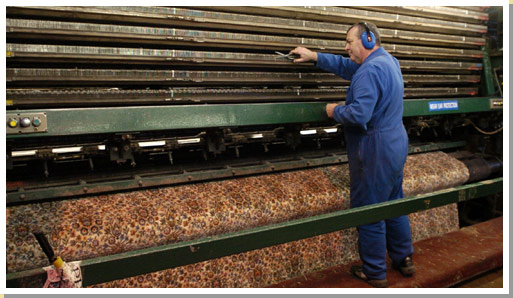
| WagesRobert Docherty "Well the way the wages goes is; it goes by the size of the loom you were on. The bigger the loom the wider the carpet is and you would get paid by the yardage that you wove every day. You had a pay book and you wrote your production down. You could do about a maximum of three yards an hour. That's how you got paid; you got paid by the yardage you wove. You didn't get paid by the hour. If your loom was working, running all day the more money you would make. But if you had a bad loom, or a bad tuner, it means your loom would be off and you weren't earning then. You had what they called a fall back rate, they called waiting time, so while your loom was getting repaired your wage would drop to a minimum; the waiting time was only a fraction of your wages. Your loom could be off a week waiting for a part and you would be sitting there on waiting time." |  | |
|