A brief history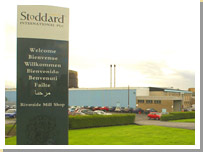 | Stoddard carpet factory in Kilmarnock 2004 |
Scotland's carpet industry had grown since the mid nineteenth century. Manufacturers had access to large markets throughout the British Empire and the rest of the world. The home market was also growing. Scotland's carpet factories were able use top quality raw materials such as wool, coloured dyes and jute, all available at low cost. Manufacturers were constantly taking advantage of new technology.
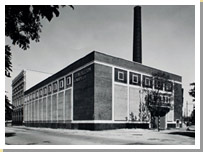 | Templeton carpet factory, Glasgow Green 1965 |
Between the end of the Second World War and 1979, circumstances changed and the industry began to decline. The process of change began after 1945. Foreign markets became more difficult as countries, like Australia, developed their own industries. A different kind of carpet had captured the market; made from synthetic materials, produced by new technology and cheaper to buy. Changing fashions meant there were fewer customers for the quality carpets produced in Scotland using traditional methods. Scottish companies suffered from poor industrial relations. Working conditions were not good. New manufacturing methods were introduced. Sometimes these involved paying workers less and this often provoked industrial action. The carpet industry's problems were hidden by a post war manufacturing boom. In the 1950s and the first half of the 1960s, the government began an export drive to reduce unemployment and make sure that Britain sold more than it bought from abroad. But, by the late 1960s and 1970s, the decline of Scotland's carpet industry had become obvious. There were mergers and takeovers and some factories closed. | 



