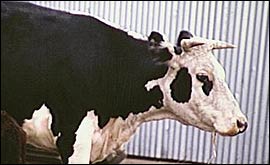
During the 1990s millions of cows had to be killed in the UK because they had mad cow disease, or BSE. BSE is an illness which spreads through cows from infected feed - it affects their brains and eventually kills them. At the time, many people believed it was unsafe for humans to eat beef because some scientists said people could die from a human form of the disease called vCJD. So how and why did people decide if it was safe to eat beef and how do people form their opinions on important issues? The Centre for Environmental Risk (CER) at the University of East Anglia, tries to find the answers questions like these. The CER, was established in 1986. Since 2001 it has been working on a programme called Understanding Risk, where experts study how the public in Britain view scientific information and how they decide if something is unsafe. The scientists are looking at five different areas of research:  |  | Genetically modified foods | | | | Radioactive waste | | | | Climate change | | | | Mobile phones | | | | Developments in the human genome |
Today there is a big debate about whether genetically modified food is safe to eat. Scientists at CER will be keeping a close eye on how the public react this debate. Recommended reading
By Sheila McKeown, a librarian at the Millennium Library in Norwich. Genetically Modified Food, by Nigel Hawkes. Watts 2000. ISBN 0749637196. Climate in Crisis, by Steve Parker. Heinemann 2003, ISBN 0431182930. You can get hold of these books through your local library. |
More A-Z: Go to S» | 

































 View
View