|  |
01 April 2004 1405 BST
 | |
| 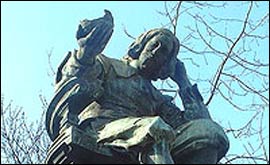
The statue of Sir Thomas Browne | | A statue of Sir Thomas Browne stands in the Haymarket in the centre of Norwich. He was a doctor in the city in the 17th century. |
|
| |
Sir Thomas Browne, 1605-1682 Sir Thomas Browne was born in London in 1605 and studied at Winchester College and Pembroke College in Oxford. Browne came to Norwich in 1637 where he practised as a doctor for 46 years. He also married and had as many as 12 children. He is best-known for his book Religio Medici featuring his thought on God, man and nature. 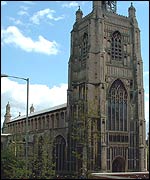
St Peter Mancroft church where Sir Browne was buried.
|
He also wrote a book correcting many popular beliefs and superstitions, known as Browne's Vulgar Errors, as well as several books about antiquities. In 1664 Browne was made an honorary fellow of College of Physicians and in 1671 he received his knighthood from King Charles II at St Andrews Hall in Norwich. He was a keen naturalist and made numerous notes on nature in Norfolk. He died in 1682 and was buried in the church of St Peter Mancroft, Norwich. Recommended reading
By Sheila McKeown, a librarian at the Millennium Library in Norwich. Sick! Bloody Moments in the History of Medicine, by Gael Jennings. Watts 2000. ISBN 0749639954. A Doctor's Life: A Visual History of Doctors and Nurses Through the Ages, by Rod Storring. Heinemann 1999, ISBN 0431022984. You can get hold of these books through your local library. |
More A-Z: Go to Q» | | | |
|
|
































 View
View