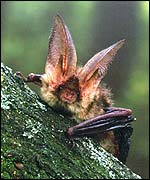
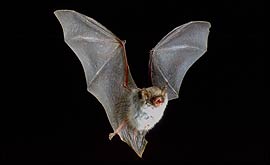
Their secretive nocturnal habits and hidden daytime roosting sites, coupled with the fact that they spend almost half the year hibernating, makes them a difficult group of animals to study. The Natterers Bat is thought to be our fourth most common species and can be found all over Britain. They live in the summer in cracks and joints in the timbers of old barns and churches and occasionally in wells and house roofs. In the winter they hide away in sites such as chalk caves, tunnels, ice houses and lime kilns. The Norfolk Bat Group aims to increase our knowledge of these misunderstood animals. For more than 30 years, Norfolk's bat man, John Goldsmith has gone out looking for bats in the evenings and at the weekends. Members of the bat group get involved with bat conservation activities such as making bat boxes, visiting people who have bats in their homes and digging out some of the underground tunnels that bats may want to hibernate in. Everyone is encouraged to help with this task by reporting any found or seen, and helping the conservation of known roosting sites. Bats and their roosts are fully protected under the Wildlife and Countryside Act 1981. Pictures courtesy of the Norfolk Bat Group Recommended reading
By Sheila McKeown, a librarian at the Millennium Library in Norwich. The Secret World of Bats, by Theresa Greenaway. Raintree 2003, ISBN 1844215849. Bat and Bird by Rod Theodorou. Heinemann 1996, ISBN 0431063702. You can get hold of these books through your local library. |
Read more: Norfolk's Bat Man is batty about bats»
More A-Z: Go to O» | 


































 View
View