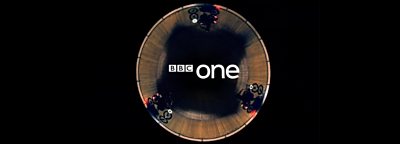
In 1997, a new pan-BBC brand was introduced - the BBC blocks were straightened up and the various logos and brand styles used across the Corporation were replaced by a single brand based on the new logo and the Gills Sans typeface.
BBC1 was rebranded as BBC One, and a new set of idents were, quite literally, launched.
The Balloon takes flight
The BBC globe made its final appearance in a set of idents launched in 1997, bringing it into the real world by printing the globe onto a hot air balloon and filming it flying at locations all over the UK, from the London Docklands to Dunluce Castle in Northern Ireland. The idents were shot in widescreen in readiness for the transition to 16:9 broadcasting which began in 1998.
The balloon idents were hugely popular with viewers. The initial batch of twelve idents were filmed on location in the summer of 1997, with later additions digitally inserting the balloon into pre-filmed location footage.
As a result, the balloon could be seen floating above locations where a balloon might not ordinarily be seen, such as from underwater to introduce Blue Planet (2001) and even in a prehistoric landscape to introduce Walking With Dinosaurs (1999).
The balloon era also saw the last set of BBC on-screen clocks - the "digital delay" caused by a variety of different digital receivers meant that the clock was no longer guaranteed to be accurate.
Rhythm and Movement
By 2002, a new channel controller, Lorraine Heggessey, was at the helm and it was all change; the balloons and the globes were out. In came a people-focussed theme known as Rhythm and Movement.
Designed to reflect life in contemporary Britain, the idents were short films featuring diverse groups of people dancing, often in unexpected locations; styles included capoeira, hip-hop and Bollywood. These were accompanied by variations on the same musical motif, arranged to fit the mood or style of the dance. The red channel branding was reflected by the dancers' costumes.
The set produced some memorable films, perhaps exemplified by the unexpectedly poetic film of skateboarders at Belfast docks, directed by Andy Margetson which used a reflective piano theme and slowed the stunts down so they became almost balletic.
For the first time, care had to be made to choose idents to fit the mood of the programme the follow; the melancholy ballet ident was rarely seen, but used for broadcasts such as the funeral of HM Elizabeth the Queen Mother.
Going full circle
2005, another channel controller and a new schedule. Peter Fincham who had taken over from Heggessey in the top job had hinted at the Edinburgh International Television Festival that the time had come to change the image of BBC One.
By 2006 Lambie-Nairn were out as producers of the idents, and BBC spin-off Red Bee Media took on the job. The result was a completely new set of moving images with ambient sound and music. These had been designed with High Definition in mind, and from 2010, they were also the idents for the simulcast BBC One HD channel.
The ident package pays reference to the BBC globe, with a circular movement consistent across all the variations, but that's where the similarity ends. The circles are made up of hippos swimming around almost catching each other's tails, children playing ring a roses, stunt riders on motorbikes, and kites flying.
Oneness
January 2017 saw a new set of idents launched called Oneness made in-house by BBC Creative.
Developed with the street photographer Martin Parr, the idents feature groups of British people doing a range of hobbies and activities shot from a single handheld camera. There is no music, with the idents relying instead on diegetic sound from the location. Launched at New Year 2017, the series has expanded to include locations around the UK.
During the Covid-19 pandemic, these were replaced by a new set of 'socially distanced' Oneness idents.
BBC idents
Early Identities
The Television Service's visual branding, 1936-1953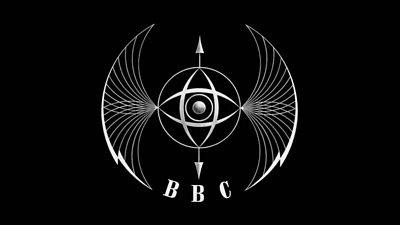
Abram Games and the Television Symbol
The story of the bat's wings logo used between 1953 and 1960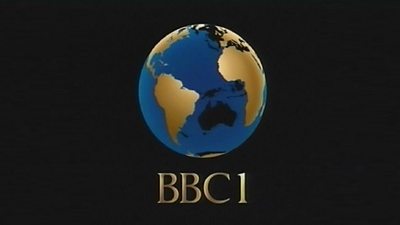
Global Ambition
BBC One's visual identity 1960-1997
Into the New Millennium
BBC One idents from 1997 to the present day
BBC Two 1991
How BBC 2 was rebranded in 1991
BBC Two 2018 idents
The first new identity for BBC Two in 20 years
BBC Christmas idents
40 years of Christmas idents on BBC One and BBC Two


BBC Motion Graphic Archive
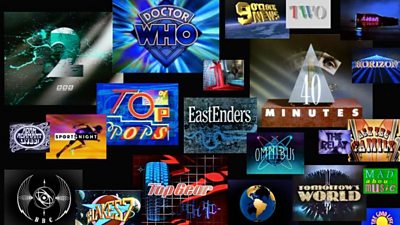
BBC Motion Graphics Archive at Ravensbourne University London
The BBC Motion Graphics Archive is a showcase of the history and development of motion graphics across the BBC and includes examples of opening titles, promotion trailers, stings, idents and programme content sequences.
