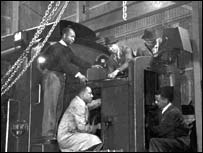
In 1956 London Transport began a recruitment programme in Barbados, and in 1966 extended this to Trinidad and Jamaica. 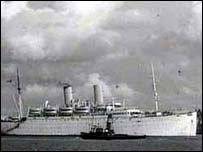 | | The SS Empire Windrush docked at Tilbury in June 1948 |
The arrival of the SS Empire Windrush in June 1948 in Tilbury Dock, with 492 passengers from Jamaica, most of whom were ex-servicemen seeking work, marked the beginning of post-war mass migration. Later, Enoch Powell, the Tory Health Minister from 1960-1963, was to invite women from the Caribbean to Britain to train as nurses. In reality the response to the call for labour was minimal and by 1958 only 125,000 workers had arrived in Britain from the Caribbean islands. However, there were also other factors at play. USA 'preferred destination' There was an increase in prosperity in the Caribbean, mainly from tourism and bauxite mining, meaning that there was more money available for the passage overseas. The USA had always been an attractive and preferred destination. The Farm Work Programme had given people from the Caribbean islands the opportunity to work for American farmers, and many wished to return when the war ended. 
In reality the response to the call for labour was minimal and by 1958 only 125,000 workers had arrived in Britain from the Caribbean islands. | | Our Untold Stories |
However, the 1952 McWarren-Walter Act passed in the USA considerably restricted the number of Caribbean people who could settle there.
With this door closed to them, many looked to Britain, which until restrictions on entry were imposed by the Commonwealth Immigrants Act of 1962, gave all Commonwealth citizens the status of British citizenship. Settlement patterns seem to suggest that people from particular Caribbean islands, and even from particular parts of those islands, often came to the same towns and cities. Pioneers
This was because they could join others who had arrived earlier and so were able to offer valuable help in finding jobs and accommodation. Many of the early 'pioneers'were also able to provide financial assistance for the overseas passage. Those who arrived on the Empire Windrush in 1948 had been housed in Clapham South Deep Air Raid Shelter, before being dispersed across the country to areas in which their labour was needed. In the Midlands, semi-skilled workers were needed to work in the furnaces and forges of the manufacturing industries which were expanding. The new arrivals also went to areas where the cost of living was high. There they were needed as porters, cleaners, drivers and nurses jobs paying so badly that few whites wanted them. »See 'History'
»See 'The World Wars'
»See 'Slavery and abolition' |