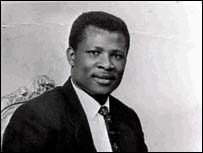
Until they found their feet, the new arrivals would meet up regularly, cooking and sharing meals, a drink and their experiences. 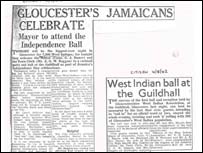 | | Gloucester's West Indians fought for their social life |
Circumstances threw them together and encouraged the development of very close friendships that are evident to this day. Most lived in rented accommodation, which provided board and lodging, with food that they found very difficult to get accustomed to. Caribbean food was hard to find It was not possible to get the food which they had eaten back home. Pudding rice was the nearest thing. Those lodging at the hostel in Brockworth enjoyed 'illegal' cook-ups on electric heaters of such delicacies as pigs' feet and rice. The first grocer to stock Caribbean food was Bob Allen in Barton Street, and later the first Black shopkeeper was 'Boysie' Harris, who owned a shop at the junction of Barton Street and Kingsbarton Street. It has been difficult to ascertain dates, but these developments were most definitely, much later, encouraged by the women of the community. Local clubs and pubs were not welcoming. Mally Hutchinson remembers being banned from two Gloucester public houses. During Christmas 1952 he went to the Raglan public house with an English couple. The landlord told his friends that under no circumstances would he serve him (Mally) in the lounge, they would have to go to bar. They left. Mallys friend did not tell him the reason until later. The other public house from which he was banned was the Beehive, on the corner of Millbrook Street and Jersey Road. He had just ordered a pint when the landlord put his hand on his shoulder, ordered him out and told him that in the future he was to get his drink from the 'Jug and Bottle'. This was a window on the outside of the pub, where people could buy their drinks, by the jug or the bottle, without entering the pub. Friendly pubs 
The English girls liked the way we dressed, the way we treated them and liked to dance with us. | | Byron Thompson |
'Friendly' pubs identified by those interviewed for Our Untold Stories included the Wellington on Tredworth Road and The Marquis of Granby on Barton Street. The landlord of the latter, whose name was Skipper, also allowed them to watch his television. They would often go to the cinema. They also took the train and went to 'rock and roll' dances in Cheltenham, at the Town Hall and at St Gregorys Hall. It was here that they became involved in a number of fights, with local Teddy Boys and with white American servicemen, who were stationed at USAF Brize Norton and Fairford. Fights often broke out when they danced with English girls.
Byron Thompson, who came to Gloucester from Jamaica in 1955, states that: "The English girls liked the way we dressed, the way we treated them and liked to dance with us." The Jamaicans were also often mistaken for black American servicemen. Back at the base, the white servicemen had to get along with the Black servicemen, but in Cheltenham at the dances there was much antagonism. Winston Shaw recalls being told: "You don't have any right to be where the whites are." This also led to a fight. Black servicemen and Jamaicans The black servicemen became friendly with the Jamaicans, and often travelled to Gloucester after the dances, spending Sunday with them. Byron recalls that after a particularly bad fight, where lots of people had been hurt, the dance organisers called a meeting. The Jamaicans were asked to send a representative. As no one attended, they were banned in their absence. 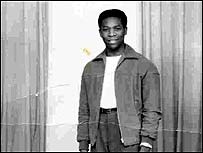 | | Winston Shaw: Gloucestershire's first Community Relations Officer |
Arriving as single young men, it was inevitable that many would form relationships with young white girls. Many of their parents, and much of society at large, did not approve. Mally recalls that the girls who dated black men were "treated like the scum of the earth". A white girlfriend of Byron Thompson was threatened with the loss of her job at Moreland Matches Factory in Bristol Road if she did not stop arriving at work in his car. Despite this opposition, many went on to marry English girls and to have successful and happy marriages. Not having many places where they could socialise in peace, they tended to create their own entertainment at home, having 'house parties'. This however led them into conflict with neighbours and the police. Winston Shaw, on returning from serving in the forces, was well known in Gloucester, particularly as a cricketer. Respected by the authorities, he was often asked to the Guildhall to speak on different issues. He recalls: "The police sometimes, when they had difficulties, ... parties or whatever, they would come to my home at night ... I would go with them to some of these parties and ask them to tone it down". He was one of a number of men in the community who, from time to time, came together to discuss issues or problems. They developed good relationships with Gloucester City Council, particularly people like councillors Harry Worrall, Frances Fitch, Jo Warlow and Tony Ayland; the Town Clerk, Andrew Boggon, and Chief Inspector Viner of the police.
The police sometimes, when they had difficulties, ...parties or whatever, they would come to my home at night... I would go with them to some of these parties and ask them to tone it down. | | Winston Shaw |
Community Relations Officer
As Gloucestershires first Community Relations Officer Winston also sat on a multitude of committees. He ran training courses for, among others, police and social workers, giving them the "immigrant perspective"; represented clients on immigration appeals and talked to pupils in local schools and colleges. He also found the time to arrange a number of social events, such as coach trips, which brought the communities together. »See 'Gloucester's first West Indian Association' |