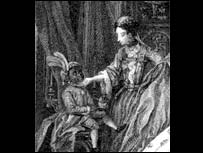
The Somerset court case in 1772 caused the names of the lawyer, Granville Sharp and the Chief Justice, Lord Mansfield, to be remembered as key figures in the abolitionist movement. 
There was also a growing problem of poverty and destitution amongst the black population, which led to the formation of the Committee for the Relief of the Black Poor. | | Our Untold Stories |
The case practically ended slavery in Britain when the court decided against a master who attempted to kidnap his runaway slave, Jonathan Strong, and forcibly return him to the Caribbean. However, the reality was that slavery continued long after the ruling. Moreover, among the free blacks in England there were also hundreds of black American slaves who had earned their freedom, and a promise of compensation, by fighting for the British during the American War of Independence. At the end of the war, these loyalists had to leave the States and many headed for Britain. Consequently, there was also a growing problem of poverty and destitution amongst the black population, which led to the formation of the Committee for the Relief of the Black Poor (later the Committee for the Black Poor) which distributed food, money and opened a hospital. Another solution it found to relieve the problem was to send three shiploads to Sierra Leone in Africa in 1787 to set up a colony and be self-supportive. Use of slaves was still common In Gloucestershire at this time, however, the use of slaves and servants was clearly still common and spread right across the county. Baptism and burial records throughout the later half of the 18th century referring in terms such as 'black slave' and 'a black negroe' have been found from Sherborne, Twyning, Stroud, Nympsfield, Tidenham and Littledean. 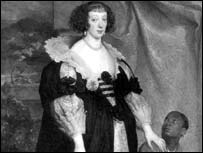 | | In Gloucestershire the use of slaves and servants was commonplace |
At Frocester on 4 November 1790 William Frocester, 'supposed to be about 11 or 12 years old, born on the island of Barbados and now a servant of Edward Bigland Esq. Residing in Jamaica,' was baptised. A gravestone inscription at Newent dated 7 October 1829 remembers Thomas Bloomsbury 'a native of Africa and for ... 55 years a faithful servant to the late Samuel Richardson Esq'. And even at the turn of the century, records suggest that new servants in some cases of a very young age - were still coming in from Africa. In Stroud on 7 May 1801 William Ellis, son of Qualquay Assedew, 'a Negro of Guinea', aged 12 years, was baptised. However some were also acquiring skills and going into professions. A testimonial from Richard Raikes dated 5 July 1815 is supporting the application of John Hart, Writing Master, to the post of master at Bisley Blue Coat School. Nevertheless, he still states: 'Unfortunately he is a Mulatto, a native of the West Indies...where so dark a complexion is not objected to, he would make a very valuable Schoolmaster... And soon mixed race relations were also known. In Tetbury on 10 March 1827 Mary Ann Elding, 'about 40 years old', was buried. Records state that she was 'a travelling woman, the wife of a man of colour'. Hard times
Many however clearly found the times hard. At Littledean on 24 March 1849 John Collins, a sailor, native of Antigua, aged 19, was sentenced to two months' hard labour for larceny. The goal register states that he 'left his home 10 years ago. Since then has been at sea in a merchant ship'. Also at Littledean on 6 September 1867 'Henry Dyson, 20, Antigua; David Hunt, 25, W. Indies; Emmanuel Davidson, 22, W. Indies; all Men of Colour together with James Kear, 24, W. Indies, Mulatto; Mariners; jointly charged with stealing a wooden bottle and a quantity of bread & cheese & cider'. They were remanded overnight. Abolition of slavery 1834
In 1834, slavery was abolished throughout the British Empire. However, immediate freedom was granted only to slaves under the age of six. Older slaves had to serve an apprenticeship of between four and six years.
A gravestone inscription at Newent dated 7 October 1829 remembers Thomas Bloomsbury 'a native of Africa and for
55 years a faithful servant to the late Samuel Richardson Esq. | | Our Untold Stories |
This scheme however became unmanageable. Eventually all British slaves were freed at midnight on 31 July, 1838. Many former slaves migrated to Britain from the various Caribbean islands, and this pattern continued until the 1930s when the Depression brought a pause to this movement. There are well-documented details of the lives, achievements and contributions made to British society by an array of people of African descent born, brought to or living and staying in Britain from the early 19th century. They cover almost every field of endeavour, from politics and medicine to sport and entertainment. Permanent feature of British life
People such as William Cuffay, a leading member of the Chartists; Mary Seacole, the Jamaican nurse who made her way out to the Crimea; the renowned Shakespearean actor Ira Aldridge; the talented composer Samuel Coleridge-Taylor and Britains first black mayor, John Archer, are but a few whose stories show the extent to which the black population had become a permanent feature of British life. 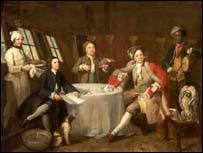 | | Unlike in the major cities and ports, the black population in rural areas such as Gloucestershire was small |
They were large in numbers, organised and fully involved in all aspects. Many were also the product of mixed heritage relationships. Ex-slaves who wrote and spoke of their lives as slaves, such as Olaudah Equiano and Mary Prince, were key figures in the British movement for the abolition of the slave trade. Unlike in the major cities and ports, the black population in rural areas such as Gloucestershire was small in numbers and so may have simply disappeared soon after the end of slavery. The reduction in the numbers arriving, the death of those living here, and the inter-racial marriages that most probably took place, meant that within a few generations, Blacks would have been rarely seen in the county. »See 'A Gloucestershire history'
»See 'Black Britain: A history'
»See 'The World Wars' |