The expert hack for slashing effort and cost in the kitchen
Whether it’s time or money (or both) that you’re looking to save in the kitchen this year, we have the solution. Here’s how to ace dinnertimes, according to a canny home cooking expert.
Sure, we all know why batch cooking makes sense: doubling up on portions and filling the freezer with leftovers is hardly a revolutionary idea.
“It saves energy as you’re switching the oven on less and it also saves on time, washing up and the need to think about dinner every night,” says recipe writer, food blogger and influencer Sarah Rossi, also known as Taming Twins.
But despite its virtues, regular batching quickly becomes dull, seeing the same meals resurface time and again over a short period. Plus, if you’re not blessed with much in the way of fridge or freezer space, it can be restrictive.
So, we challenged Rossi to come up with a meal plan that can save us money and effort without compromising on variety. She had the answer.
“I batch cook specific ingredients which can be used in different speedy dinners, making cooking much easier while also keeping meals varied.”
An example of this would be cooking a chicken and using it up in different dishes – think chicken chilli or noodle bowls – for the next few days. Perhaps on the third day you make a tomato-based sauce for the chicken – you can double up on that and then use it as a pasta sauce on day four. Those overlaps are where the magic is.
Try Sarah Rossi’s meal plans
A well-seasoned home cook who champions speed and efficiency as well as flavour and enjoyment in the kitchen, Rossi has some wisdom to share on new-wave batch cooking.
Don’t see it as meal prepping
“For me, meal prepping is just that, preparing a whole meal, packaging it up in portions and then eating it each night.
“I don’t think this works very well for feeding a family because of the practicalities of portion size and storage. Also, this is when food boredom kicks in – especially if you are catering for picky eaters.”
Instead, batch cooking specific elements of a meal allows you to be far more varied and flexible. It’s a way of getting a head start on dinner – not necessarily completing several meals at once – which means you can create lots of variety and be adaptable.
Organise your cupboards
First things first: clear out the fridge. Get rid of all that old food that has been sitting there for too long. We’re talking about the remains of that curry paste from last autumn which now resembles a science experiment. Or that container of leftover roast veg that got pushed behind other things and forgotten. Empty those containers and jars and give them a wash – you’re going to need them when you prep and cook.
Then, put the ingredients that need using soon at the front of the shelves – these are your priority foods to incorporate into your next few meals.
Write down everything left in your fridge, along with what you have in your cupboard and freezer. This will help make sure that when you do your food shop, you don’t buy anything you’ve already got. It’s also a great starting point for planning what meals you’re going to make.
Choose your key elements
Think about what foods you enjoy which are also versatile for building meals around. When coming up with her family batch cook meal plan, Rossi focussed on nutrient-dense ingredients that work well on a tight budget and are popular with the whole family. Here is what she chose to form the backbone of her recipes.
Chicken thighs: “Chicken thighs are more affordable than other cuts and they are very tender and difficult to overcook.”
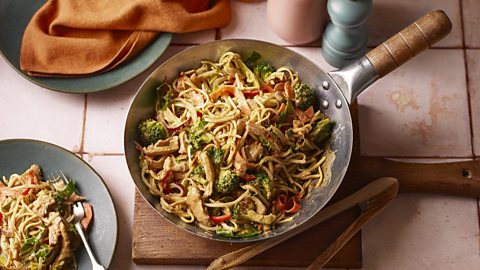
Rossi uses these in her barbecue pulled chicken buns served with sweet potato wedges, peanut chicken noodles and quick chicken chilli, all of which require minimal extra prep, given that the chicken is already cooked. Plus, there is flexibility in the dishes so you can use up ingredients already lurking in the fridge – the peanut noodles, for instance, are great for adding odds and ends of veg to.
Peanut chicken noodles
These simple chicken noodles are full of nutty flavour from a simple soy and peanut sauce
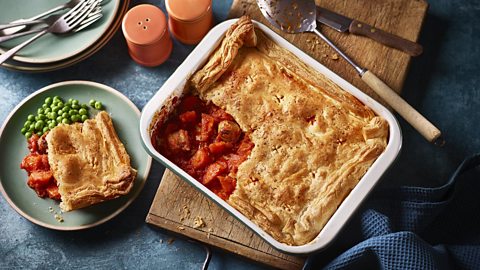
Tomato sauce: “This is easy to make using simple store cupboard ingredients and can be used in so many ways. You could add veg and lentils to boost your vitamin and fibre intake too (if you have fussy eaters at home you can always blend it to make it smooth).”
This forms the basis of Rossi’s hearty sausage and tomato pie and crowd-pleasing bacon and pea pasta bake.
Batch cooking the tomato sauce means you’re getting the nutrition of fresh vegetables with all the convenience (and none of the additives) of a shop-bought, jarred equivalent.
Potatoes: “I love a baked potato, but it seems a waste of energy to use a whole oven for just a couple of potatoes, especially as they take quite a long time to cook. Batch cooking lots at once is a brilliant way to have your baked potatoes and still be energy efficient.”
Use your stash of cooked spuds in the likes of leek and cheddar frittata (also great served cold for lunch the next day if you manage to keep any leftovers) and super speedy double-baked potatoes.
Double-baked potatoes
Mix the potato flesh with soft cheese and veg, then top with cheddar for a winter-warming treat

More batch-cook ingredients and how to use them
Roasted cauliflower:
Tomato and lentil sauce:
Roasted veg:
Originally published January 2024