New Zealand is primarily made up of the North Island and the South Island.
The latitude of New Zealand is similar to that of Portugal, but its climate is more like the West of England. It is a fairly wet country with a little more rain even than Bristol, the wettest month being July, in their winter.
The North Island has the milder temperatures and snow is very rare in the far north. Its climate changes rapidly over relatively short distances.
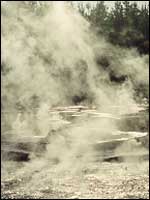 | | Mud, mud glorious mud |
The Islands are on a series of fault lines. This volcanic activity gave New Zealand its mountains and also its geothermal attractions.
Rotorua is home to many geysers and bubbling mud pools. It is one of the most popular tourist destinations, but the drawback is that the sulphur does make the town smell of rotten eggs.
It is a great place to experience Maori culture, including their nose-rubbing greetings, food and traditional dances.
The scenery in New Zealand is diverse, from mountains to rolling farmlands to coastlines. Being quite a wet island, the countryside is very lush and green.
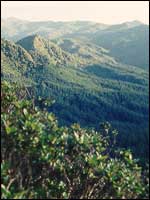 | | The beautiful Coromandel Peninsula in the east of the North Island |
It is only sparsely populated, and it is a well known fact that there are plenty more sheep than people!
In the North, the Bay of Islands, has miles of unspoiled coastline. This is where both Maoris and the Europeans first settled. It is a paradise for water sports from windsurfing to big game fishing.
The cities and the suburbs are sprawling. Auckland is the largest city, nicknamed ‘The City of Sails’ due to the number of boats and yachts in the harbour.
Despite being by far the most populated city in New Zealand, with just over one million people there are only three times as many people as in Bristol.
The capital of New Zealand is Wellington. It is a compact city with the ‘Beehive’ parliament building and all the main attractions within walking distance of each other.
 | | Downtown Auckland, New Zealand's largest city |
In January and February, the middle of the New Zealand summer, the average temperature in Auckland is 23 degrees, 73 Fahrenheit.
I was proudly told that ‘we don’t have central heating here as it doesn’t ever get cold enough’.
At the time it was July when the average temperature is 13C. That is easily cold enough for central heating in my book.
With mild winters and warm summers, the north is nearly subtropical. In the south, Wellington's average temperatures are only a little lower, but it does have very strong winds which funnel through the Cook Straits making the winters fairly unpleasant. Inland has harsher weather conditions - colder winters and hotter summers. Frost is common in the winter months, and snow lasts the whole year round on the volcanic peaks. Severe weather is rarely see anywhere on the North Island of New Zealand, which is one of the reasons for its abundance of outdoor activities. Steff Gaulter |