
Monday 9th April 2001, 1000 BST
Big weather in the Big Apple | | 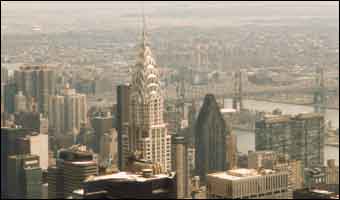 Manhattan skyline in the sunshine Manhattan skyline in the sunshine | | The Big Apple is not a destination where the weather is generally a prime consideration. For most of us the sights and shopping are the main attractions.
But in common with most cities on the eastern side of a large landmass in the northern hemisphere, New York is subject to climatic extremes.
These extremes can disrupt or inconvenience the best-laid plans for getting about the city, whether it is a winter blizzard or a summer heatwave.
Make no mistake, New York gets both, and as with most things in New York, there are no half measures with the weather.
Winter can come early to New York. Temperatures in November can fall as low as -14 Celsius from December through until mid-March, although daytime temperatures can reach around 4 Celsius (39F).
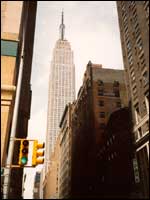 | | Empire State Building |
Nighttime temperatures are usually below freezing, but in extreme cases temperatures may drop to below Minus 20 Celsius (-3F).
Summer temperatures are not usually too unpleasant. Average daily maximum in the summer months are around 25 to 28 Celsius (77 to 82F). But hot air from the interior of the continent can bring very hot and humid weather.
Extremes of 39 Celsius (102F) have been recorded at the main airports and in the parks, and the streets are likely to be warmer!
So with rainfall fairly consistent throughout the year (between 9 and 12 wet days each month), the best time to visit is in the spring or autumn.
But even in these seasons the visitor will need to be prepared for fairly extreme conditions. Although it may be pleasantly warm by day, it can still be very cold at night.
But for many New York is such an exciting city that any time is a great time to visit one of the most brash and vibrant cities on Earth. |
|





 Motorway gridlock special
