Digital news in 28 languages: Scalable, shareable formats

Dmitry Shishkin
is digital development editor, BBC World Service Group. Twitter: @dmitryshishkin
In part two of this blog post, Dmitri Shishkin describes how BBC World Service is experimenting with digital formats to target its multilingual audiences:
Unsurprisingly, BBC journalists are constantly thinking of different ways to reach digital audiences.
Appreciating the fact that not all of our BBC World Service users will be coming to us directly - in fact, only a third of our 80 million unique monthly browsers do - we must be where the audience is. This is also important because many of our services operate in highly socially engaged markets and we only have a chance of growing there if we get our social strategy right.
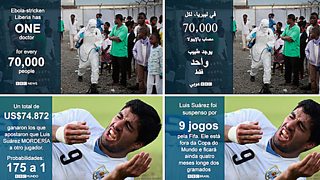
One such social project is #BBCGoFigure (above) - a daily product for social media telling a news story using one picture, one number and a link. This approach is used on various platforms and the simplicity of it means we can easily reversion our content from one language to many others quite quickly. The same goes for BBC Shorts - a 15-second video product for social media, telling important stories of the day with a few video images and subtitles. This gets reversioned to a number of languages and its popularity is growing.
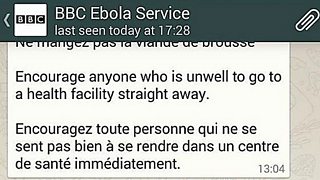
We have also probably been the first news organisation to hire a dedicated chat apps editor whose initial job was to evaluate the market globally and play around with a few platforms to see how the BBC can get its journalism to hundreds of millions of people using WhatsApp, Viber, WeChat,Mxit etc. And, yet again, we wanted to experiment with different platforms relevant to different countries to see how our findings can be reused elsewhere. The most important project we’ve done so far in this area was launching our Ebola service on WhatsApp (below).
Another good example of editorial shareability is a ‘social-first’ reporting project we have been running on Portuguese, Turkish and a few other sites. The idea behind it is simple: let’s dive really deep into the social conversation of a particular country and report on the most interesting stories, while plugging yourself into the most relevant conversation the audience has. It works really well for us. Figures for BBC Brasil, for example, have grown 40% in the last year.
My personal favourite area that gives you a great opportunity to innovate and use scale at the same time is data visualisation and interactive storytelling. I’d say, given that we try to offer such projects in as many languages as we can process, that we are probably the leaders in this sector globally.
We offer digital audiences complex data projects as well as daily news charts and maps, in 15 to 20 different languages. For the 2012 Olympic Games we managed to pull off a record of our own: offering all 27 services the same package when it came to data visualisation content.
Building new audiences in international news markets is difficult. Growing competition, the proliferation of platforms and sources, ever-changing nature of the sector - all these factors mean you always need to be on your toes, trying new things, testing new ground. While things won’t always work, you learn from your failings, as I keep telling the editors. And the next time, or the one after, you’re likely to get it right.
This is part of a slightly edited version of Dmitry Shishkin’s original Mediashift article, re-versioned here with the publisher’s kind permission. Read part one of this post: Digital news in 28 languages, driven by ‘mobile-first’: No-one said it was easy.
Blog by Dmitry Shishkin on using social media for world news
How BBC Ebola WhatsApp service is battling virus and finding great stories
Chat apps as a new source of original journalism
Our section on social media skills for journalists, including:
Engaging social media audiences
Our digital journalism section, including:
