#smsldn: Using social media for world news

Dmitry Shishkin
is digital development editor, BBC World Service Group. Twitter: @dmitryshishkin
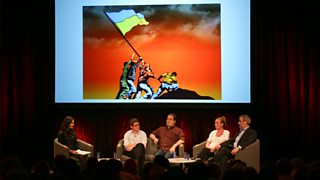
Panel (from left): Esra Dogramaci, James Montgomery, Andy Carvin, Libby Powell, Michal Broniatowski
Panellists James Montgomery from BBC News, Andy Carvin from First Look Media, Libby Powell from Radar Media and Michal Broniatowski from Espreso TV debated trends in digital journalism globally.
Opening the session, digital consultant Esra Dogramaci cited a few fresh examples where mainstream media went into new partnership with fairly recent newcomers to the market: CNN working with BuzzFeed, YouTube going into a social news space with its (now closed) CitizenTube project, NewsCorp acquiring Storyful, MSNBC working with Vocativ - the list could go on.
By what else can we all can learn from?
James Montgomery, director of digital and technology for BBC Global News, concentrated on an example of the BBC’s efforts to attract younger audiences - a project called BBC Trending. A multimedia offer, available as a blog, on social media, as a weekly radio programme and an innovative video series, BBC Trending is the corporation’s attempt to answer the question why social news is so important.
Trending, which is realised in English and some World Service languages too, aims to explain the real stories behind trending topics from social media. The team of journalists, experienced in digging up leads from social sites, is particularly interested in diving into live social conversations, listening to what’s on people’s minds globally and using journalism to make sense of it.
Trending is not the only BBC initiative in this space. Other examples include short videos created specifically for Instagram and an effort to explain news to social audiences through pictures, charts and numbers that is launching soon.
Andy Carvin, formerly of NPR and now trying to build a new type of digital media organisation embedded in investigative reporting at First Look Media, remembers how NPR stopped treating its vast listenership as simply “an audience” and more as an online community. Carvin spent seven years working with this community: “In social media years, it’s like dog years, a lifetime of evolution.”
The new approach proved especially valuable during the Arab spring when Carvin realised that “my Twitter followers wanted to work for me and debunk rumours”. So his social media role really became “online community organiser for improving our reporting”. Whereas in the past listeners donated money to NPR, now they could also donate skills.
In his new capacity at First Look, Carvin wants to create a family of sites to “go down rabbit holes and hold major corporations to account… What I am interested in at the moment is how you can take social media data and use it in the journalistic process.”
Next up was Libby Powell from Radar Media in Kenya who gave a humbling and fascinating account of the work it is doing to reach completely different audiences, living in very different circumstances: excluded groups in Africa, disadvantaged people who are being marginalised on ethnic, geographical, racial and on the grounds of disability.
Radar works with disabled Africans, teaching them how to report, how to distinguish between facts and opinion. The people it trains, who effectively live ‘off the grid’, end up reporting with very different techniques. Their stories are filed in text messages - which is another stark indication of how technology can still make a huge difference in places with low connectivity.
But make no mistake, Powell stressed: they are not disability reporters; they are reporters who happen to have a disability.
They work on feature phones or basic smartphones, becoming stringers for mainstream media. Their articles are increasingly picked up by bigger outlets, drawing attention to stories that would otherwise have been missed. “It’s important to bring in the stories of people that are off-grid, but it takes time,” said Powell, adding that journalists can learn from development agencies how to engage with such a population.
The last presentation of the session was the most related to the immediate news agenda. Michal Broniatowski from Espreso TV in Ukraine spoke about how it has been building on the strength of user-generated content it has been receiving since the start of the Maidan protests in Kiev.
Broniatowski called the emergence of his outlet a “new media revolution” in Ukraine, and said that Espreso TV, “overloaded and over-trolled”, became the main source of information about the protests. Having started as a social outlet, it turned professional in a matter of months and had now, with the new authorities in Kiev, gone mainstream.
Astonishingly, Espresso TV took YouTube by storm: achieving the biggest ever non-music transmission on YouTube with a 350,000 one-time audience at peak. It has now also started working in English, targeting the Ukrainian diaspora in the North America.
Presentations over, the panellists exchanged views on how traditional media needs to work with the public on social media. It was agreed that journalists need to be careful not to lose sight of the fact that social media doesn’t represent society at large. Andy Carvin added: “Social media reporting does not mean you are not using traditional journalism - they complement each other.”
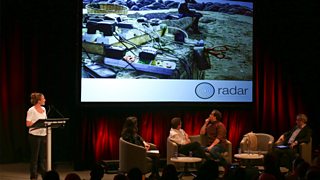
Libby Powell from Radar Media
Videos of the sessions at #smsldn will appear on our YouTube channel in the near future.
