Reporting North Korea: Be sceptical, don’t stereotype

Stephen Evans
Korea correspondent, BBC News @EvanstheAirwave
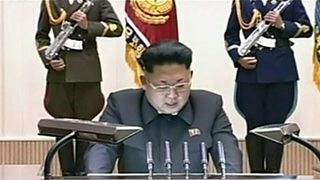
Every so often I get a call from a pastor who was imprisoned in North Korea for his Christian evangelising. There is no dispute that he was treated very harshly and that he continues to suffer great trauma. I like him. But should I trust what he says?
He tells me that camps are being cleared and that the inmates are being executed. He is certain. He says his contacts in North Korea tell him of "genocide". We must broadcast this news immediately, he says.
On the other hand, I talk to a Westerner who lived in North Korea for many years. He praises life there, saying he didn't see evidence of the horrors being described by Western media.
Another frequent visitor to Pyongyang tells me that the worshippers he saw at the Anglican church in the city must have been very good actors if they were faking their beliefs.
This contrasts completely with the views of a Christian group that Christians "are pulverised with steamrollers, used to test biological weapons, shipped off to death camps or shot in front of children".
So, how to make sense of it all. The first thing to say is that the great weight of evidence is that the regime in Pyongyang is intolerant and brutal. The people did not choose Kim Jong-un (above) as their leader (nor his father or grandfather).
The United Nations Commission of Enquiry on Human Rights in the Democratic People's Republic of Korea concluded that there was a wide array of crimes against humanity and these entailed "extermination, murder, enslavement, torture, imprisonment, rape, forced abortions and other sexual violence, persecution on political, religious, racial and gender grounds, the forcible transfer of populations, the enforced disappearance of persons and the inhumane act of knowingly causing prolonged starvation".
The enquiry, under a former Australian judge, took the testimony of more than a hundred people. The regime in Pyongyang referred to witnesses as "human scum", declining to give evidence to counter their testimonies.
But that broad conclusion of widespread human rights abuses doesn't mean that all defectors' testimony should be taken at face value. They sometimes have their own agendas.
They often struggle to make a living in South Korea. The rate of unemployment among them is high. Some campaign with defectors' groups and churches which help support them financially. Does that support tie them into the hardest lines of opposition?
Some write books and get on to the speaking circuit for sums reportedly in excess of $40,000 an event. Their critics call them ‘celebrity defectors’. In one case a defector has admitted that part of his story in a best-selling book was inaccurate.
On top of that, the internet spins rumour into apparent fact. There is no doubt that Kim Jong-un had his powerful uncle, Jang Song-thaek, executed - the North Korean media said so. But probably not by having him stripped naked and literally thrown to the dogs. This particular story whizzed around cyberspace, landing in newspapers everywhere, but probably originated on a single satirical Chinese website.
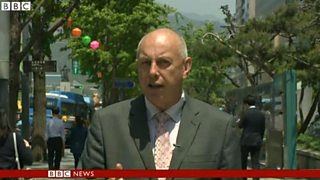
Stephen Evans reporting from Seoul: "Scepticism and intelligence are watchwords"
So the lesson is to be sceptical of big claims. They may be true, but they may not be, and there's often no way of verifying them. This presents a difficulty for journalists because big claims get big audiences and nuance doesn't.
There is a further problem which I think of as the ‘autobahn problem’: how do you cover a country with an evil regime but where some good things might happen? With caveats and context is the answer. Clearly, reporting on the Pyongyang marathon or tours by disabled musicians to Britain need context (which is what we give).
Information comes from North Korea through a variety of prisms, including outside intelligence agencies for whom deceit is a tool of the trade. So they, too, need to be treated with scepticism (though not dismissal because they know useful things).
They do, by the way, often use pretty basic methods of analysis. An agent once told me that they thought a prominent woman in Kim Jong-un's inner circle was pregnant. How did they know, I wondered. Because she's stopped wearing high-heeled shoes in official photographs came the reply. It seemed less than scientific but turned out to be true.
So there is a barrage of information of different qualities and reliability to be weighed. How, for instance, should we treat the claims of a defector (who has been out of the country for 10 years) that North Korean hackers can destroy cities?
The regime has ideological opponents on the right who see it in a Cold War light, but also fellow travellers on the left reminiscent of those intelligent fools who saw nothing wrong with the Soviet Union and who dismissed abundant evidence to the contrary as ‘Cold War propaganda’.
To my mind, the best observers recognise the brutality at the top but also describe a complex picture of a people loyal to the country itself (and maybe to the regime). These observers depict a society which is changing but whose regime does not look like collapsing any time soon.
Scepticism and intelligence are the watchwords. When we stereotype a country, we fail to understand it. And that's not what we are about.
Read Stephen Evans’s special report on Christianity in North Korea for BBC News. His recent despatch for BBC Radio 4’s Sunday programme, on the difficulty of ascertaining the truth about alleged persecution in the country, is still available.
Our section on reporting skills
