Undercover in Syria: How Sue Lloyd-Roberts became a student of Byzantium
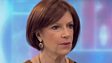
Sue Lloyd-Roberts
Investigative journalist and film-maker
We learnt with sadness this week of the death of our colleague Sue Lloyd-Roberts. Many warm tributes have rightly been paid to her by friends and colleagues. Below is a short post Sue wrote for this blog in 2011, about the techniques she used in her extraordinary and fearless determination to gain entry to places denied to journalists. On this occasion she had just made an undercover film for Newsnight in Syria:
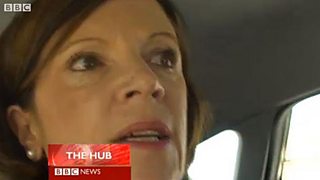
I have been working undercover in countries which are unfriendly to journalists for 20 years now and I follow a strict code of practice.
When you have been arrested and strip-searched in the course of your business (which has happened to me several times), you have to pay meticulous attention to the smallest detail.
I have posed as a twitcher in Bosnia, which meant equipping myself with binoculars and birdwatching books; a clothes manufacturer in Burma, which entailed learning technicalities of the rag trade and carrying appropriate fashion samples; a Roman Catholic church worker in Zimbabwe, clutching my rosary and Bible; and a tourist in the jungle in Burma.
It goes without saying that anything recognisable as a reporter's notebook or useful cuttings must be left behind as you enter the country, and all local contact numbers have to be carefully concealed. Lives could be at stake here.
When I went to report from Syria (above), I was a PhD student of Byzantium. The good news was that I was equipped with a letter from my 'supervisor', a genuine Professor of Byzantine Studies at Oxford University and an old friend. The bad news was that I had to be weighed down with several cumbersome volumes on the subject in order to corroborate my story.
I took a Panasonic palmcorder with which, I explained to anyone who asked, I planned to meet the requirements of the illustrated lecture I was expected to give on my return. I had spent a day in neighbouring Lebanon filling a camera cassette with pictures of Byzantine remains there; again to add credibility to my cover story.
I could not check into a hotel as I would be followed, so local contacts arranged for me to go into hiding, along with hundreds of political activists who have had to leave their home during this tense period and move to borrowed rooms and flats where the authorities have no trace of them.
On occasions, I would make my way to the tourist attractions of the Old City of Damascus to rendezvous with political activists, or they would come to collect me from my hideout in the suburbs of the city.
It was a frustrating way to report on the Syrian uprising (below), not least because it was impossible to get a camera out to record a demonstration or even a street scene. I would have been arrested immediately. Not only were foreign journalists forbidden access to Syria but there were no foreign tourists there either.
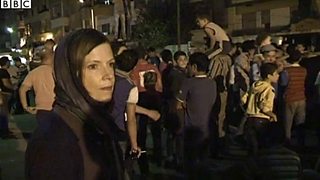
I felt horribly conspicuous. However, I did manage to interview a good cross-section of those who represent the opposition in Syria today - from opposition leaders who have been challenging the government for decades to young mothers who braved the bullets to go out on to the streets after Friday prayers simply because they wanted to change the Syria which their children would grow up in.
The most important consideration while doing this kind of work is 'am I putting others in danger?'. The worst that could have happened to me, I calculated, would have been a few days arrest and expulsion from the country. Any local caught working with me would face a long prison sentence.
I had more interviews arranged which I wanted to record but, after five days, I judged it was time to leave. It was clear that my hideout had become insecure and that I was compromising the safety of those I was working with.
I won't say how I got my material out because it is a method I may want to use another time. Suffice to say that I was fortunate in meeting many former political prisoners who have had years of practice in smuggling essentials in and out of prison. A wife of a former political prisoner prepared my camera tapes for me in such a way and it worked to perfection. I am out, and I have a story to tell. There are thousands of brave political activists still in Syria who gamble with their lives every day.
Sue Lloyd-Roberts: How did she do it?
Our section on investigative journalism
Undercover investigation goes out on a limb to expose racist letting agents
