Undercover investigation goes out on a limb to expose racist letting agents

Guy Lynn
oversees high-impact TV news investigations at BBC London. Twitter: @guy_lynn
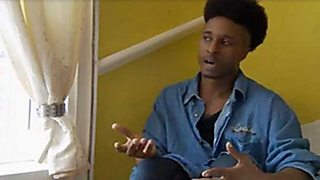
Little in your work as a TV reporter - doing ‘lives’ in dicey environments, rushing from one stressful situation to another - can prepare you for the adrenalin rush of going undercover. The strange flat I’m in in London’s Notting Hill is a property loaned to me by ‘Jenny’, a dedicated member of the public who is worried about what I’ve told her is going on in her city. I’m nervous as I’m about to have my first appointment with one of several rogue estate agents who I believe are prepared to break the most important race relations laws this country has enacted.
I’ve spoken to numerous black people, like Jumeee Bulaji (above), who believe they have been discriminated against and recount how they are often told by certain agents that the flats they are interested in letting have “gone” despite still being advertised in the window. After much persuasion, I’ve met estate agents like ‘Jay’ who have told me, off the record, what is really going on in certain parts of London. So hot is this issue that when I met Jay he asked me to leave my bag outside the room and frisked me before our meeting in a West London cafe.
I’ve had detailed conversations with housing lawyers, human rights lawyers, industry experts and landlords in West London who have all backed up what Jay is saying. In my research, the same names of the same agents have kept cropping up.
The BBC only authorises secret filming as an investigative tool when there is a strong public interest, clear prima facie evidence suggesting wrongdoing, and where secret recording is the only way to get evidence in order to prove that. In this case it is apparent that the practices I am trying to uncover are so subtle that if you had been discriminated against you would not even know it. In my career as an investigative reporter I have rarely come across a more pressing justification for secret filming.
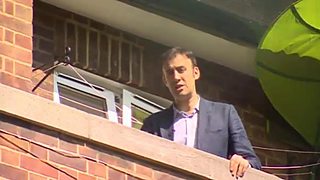
Before long, after discussing his agency fee, this agent proudly boasts how easy it is for those in his office to discriminate on behalf of a landlord against those from an African-Caribbean origin who might be interested in the property. He talks about the discriminatory techniques that are used (ignoring calls, lying and telling people in his office to ‘fob off’ those from an African-Caribbean origin) and confirms that he does this all the time. Another agent I speak to says that 99% of his landlords don’t want those from “Afro Caribbean” or other “troublesome” backgrounds.
After two days of showing agents around, the sheer number of agents who say they will do this is shocking. I am conscious, however, that there may be an element of bravado about this to clinch the deal. With saintly co-operation from the owner of the flat, BBC London TV output editor Antony Dore agrees to take the investigation on to a new level. We start arranging for the flat to be placed on the market with two of the agents and draft in the assistance of Deane (a black researcher) and Jo (a white one).
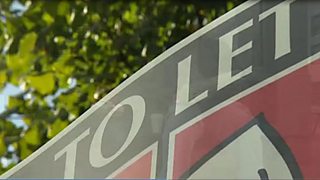
At the second agent Deane is fobbed off, told he’ll be called back, and lied to repeatedly.
Deane later told me he shed some tears after going through this because it reminded him in a strange way of the experience of his father who had suffered discrimination when he first arrived from Jamaica in the 1950s.
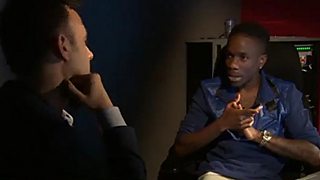
Human rights lawyers and government ministers all react with shock. The Mobo award-winning rap artist Tinchy Stryder, who has worked hard to battle discrimination, is visibly choked and speechless when we show him the footage. My diligent colleague Ed Davey uncovers shocking statistics showing one in four black Londoners believe they have suffered discrimination in housing and that the authorities have rarely investigated. Human rights lawyer Arpita Dutt draws parallels with the fact that in the 1950s and 1960s signs were posted on doors which said “no blacks, no dogs, no Irish”. Today in London it’s the same story, just a lot more subtle. Yet no-one knows about it. Until now.
The piece leads to spontaneous local protests at what was described as the ‘colour bar’ (I remember being phoned the day after to be told that a demonstration was underway in Willesden where scores of local people were marching through the streets). Hilary Benn, shadow secretary of state for communities and local government, calls for an urgent investigation.
What moved me personally were the reactions from the public and the sense that we were able to give our audience a ringside seat on an illegal activity they would never normally be able to see. The Guardian’s Joseph Harker (in one of several op-ed pieces the story received in national newspapers) concluded: “This is the true story of racism in the UK: how it is still so casual, and how it excludes and disenfranchises thousands.”
Email Guy Lynn with other topics worth investigating.
Watch the award-winning Inside Out London investigation
BBC News website: London letting agents ‘refuse black tenants’
Infra-red cameras expose hidden world of migrants at risk
Investigative journalism skills
Inside Out: Reporting Roma tensions in Sheffield
Investigative journalism blogs by web research specialist Paul Myers
