Beyond Buncefield: Lessons about duty of care

Nathan Williams
Broadcast journalist with the BBC Social News team
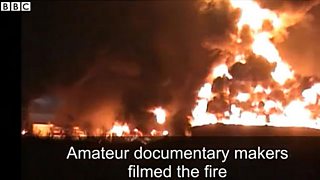
Ten years ago today the Buncefield fuel depot in Hertfordshire exploded leading to the UK’s biggest peacetime blaze.
BBC News received a huge number of pictures and video from the public - by lunchtime we had some 5,000 images.
But there was a problem. People saw our request for material on the bottom of the news story and tried to get as close as possible to the flames.
One of the videos we received was from amateur film-makers Andy Dicker and Andy Ash.
The footage shows the pair driving closer to the 200ft high flames to get a better look. They notice one of the oil tanks had yet to explode and luckily make a quick getaway – all captured on film, of course.
Since Buncefield, we have made it clear to contributors that they should not put themselves - or anyone else - in any danger when they film events around them.
We have changed the form of words we use when we ask for material. We no longer ask for people to “take” pictures and send them to us, instead we say people “can” send us photos and video.
It may seem like a small alteration, but we want people to only send material they already have. We don't want to actively commission them to take photos for us or do something dangerous. Other news organisations, such as the Guardian, have made similar subtle changes.
We have a clear set of guidelines and we tell people not to break laws or put themselves in danger in our calls to action.
And we put this into practice when we are in touch with eyewitnesses. I’ve spoken to people caught up in the moment who happily suggest they could walk closer to the action and film it for us. I simply tell them: “No”.
If we see material posted on social media where people have obviously put themselves in danger or broken laws, we won’t publish it as it could encourage others to do the same.
Now when we speak to eyewitnesses we ask about their exact location – because they could be putting themselves in danger simply by talking to us. We sometimes have to continue the conversation later when they are in a safer place.
The 2009 Green Movement in Iran and the subsequent Arab Spring threw up a whole series of issues in relation to the safety of contributors. Anti-government activists were potentially putting themselves in danger just by getting in touch with BBC News.
When we reached out to people on social media, we were careful that their accounts did not give away too many details that could reveal their identity or location – in case security agencies spotted who we were talking to.
We took the conversation offline as soon as possible, asking people to message us their contact details privately – for example via Direct Message on Twitter.
Where possible we talked to people on Skype, as it is less easy for governments to monitor than landlines or mobiles.
Terror attacks create similar perils for eyewitnesses: attention from news organisations could lead terrorists directly to those witnesses.
During November’s attacks in Paris we were careful who we tried to make contact with.
We specifically avoided reaching out to people who appeared to be in the Bataclan Theatre as the attack was taking place. Although, we did contact people who had witnessed the horror at the venue after the terror attack had taken place.
When speaking to people in such traumatic situations, duty of care extends beyond the point of first contact. We try to assess what state of mind witnesses are in, and give people the opportunity to turn down broadcast interviews if they are not ready or comfortable answering questions.
One great thing about the age of social media is that every journalist in the world can contact somebody caught up in events. This is also a problem.
A witness can be bombarded by requests from numerous news organisations for interviews. The sheer volume of requests could put someone off talking to any journalists.
This seemed to have been the case in October, when many people tried to contact one witness to a mass shooting in the US state of Oregon.
It's worth remembering that an eyewitness could well be traumatised by events, so we have to consider whether it's right to reach out to them at all.
Some have suggested that it’s time for news organisations to consider pooling social media requests when contacting vulnerable witnesses online. It’s another aspect of duty of care.
Safety issues with user generated content
How to make the most of user generated content
Our section on social media skills
#Paris: UGC can no longer be a niche newsroom skill
Eyewitness media: Newstooms must handle it better or risk losing out
