When the floods hit, a trusted voice was as vital as an update on Twitter

Mark Elliott
Managing editor, BBC Radio Cumbria
In a digital age where news and information is available and constantly updated via a seemingly infinite number of sources, you might think that good old local radio has been made redundant from its traditional role of ‘the place to turn to in a crisis’. In response, I'll say two words: "Storm Desmond".
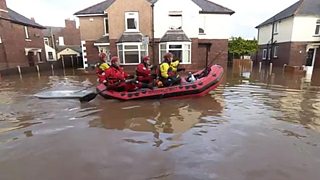
The deluge of record-breaking rainfall in Cumbria last week led to widespread and unprecedented flooding, paralysing the county's infrastructure and wrecking 5000 homes (including in Carlisle, above. Lives have been ruined and the financial cost will be counted in the weeks and months ahead.
As the full force of the storm was being felt, people were desperate for information. Many were desperate to pass on what they knew or had seen. Digital played a major role in both the gathering and broadcasting of this information, but it was a complementary role with social and traditional media working side by side to collect and then distribute the messages that people craved.
The last major floods to hit Cumbria came in 2005 and 2009. Since then, social media has become far more widely used and this was the first time I'd seen it fully ‘in action’ during a crisis. And it was awesome.
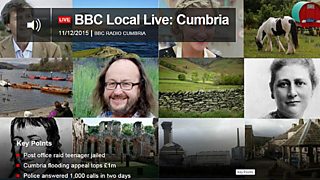
The sheer amount of information and images was mind-boggling. At the height of the storm, it was a full-time job just to see what was coming in; another to do something with it for our own digital services (including a Local Live service, below, launched only 10 days earlier); another to get it on air.
There were official releases from the emergency services and councils, videos and stills of floodwaters and damage, personal experiences, offers of help, expressions of sympathy, you name it - and it was relentless.
Decisions on what to post/retweet/ignore/investigate further had to be made instantly. What we did use was immediately retweeted by others, spreading the word, and our numbers of followers started to rise as a result - by thousands in a matter of hours. It was a fabulous way to get information out there quickly, and our followers praised us for it.
But that's only half the story. While fingers were furiously tweeting, ears were glued to the radio broadcasts - around the clock. Reading information and seeing images is one thing, but hearing what's happening from a trusted friend is quite another.
“You are ALL doing a great job, your friendly voices, keeping us all informed - can't say more!!” (Mike in Whitehaven)
“Great programme tonight, giving all the local info we need especially as we're in flood-torn Appleby which apart from the floods has had no electricity since 2.30. Thanks again.” (Alan in Appleby)
“Just want to say you have been doing a stunning job broadcasting. From listening to you on a tiny battery radio when the power was off to listening to you now digitally, you have saved our sanity!” (Wendy)
You may not get the huge wealth of information which digital allows, you may not get the video and the pictures, but getting companionship and hearing the most important messages from a friendly voice in times of trouble is still a vital need for many.
The two should not be in competition. Add them together and you have an incredibly powerful combination which can warn and inform huge numbers of people very quickly and, crucially, in the way they want to be informed.
Local reporting: Original journalism at Radio York
