Digital photography
Digital cameras use the same principle as traditional analogue cameras. Images are captured on a light-sensitive screen using a camera.
Unlike analogue cameras, digital cameras provide instant photography. Within seconds of taking a photograph you can see the captured image on the built-in LCD screen. You can then decide whether you want to keep or erase the image.
The sensor in a digital camera has millions of pixels, each of which make-up a light-sensitive photocell. This cell generates a tiny electrical current in response to light.
Types of digital cameras
There are different types of digital cameras, these include:
- DSLR (digital single lens reflex camera)
- Bridge Cameras (a combination of a DSLR and a Compact camera)
- Compact cameras
- Cameras on mobile phones
Digital files
Images are captured as digital files and stored on removable media cards. Unlike film, the cards are reusable. Once the files have been transferred elsewhere, you can erase the images from the card and reuse it again.
A digital file is data, no different to any other computer file. It can be saved to any computer storage media. The file can also be copied and recopied without any loss of quality.
Almost all newspapers, magazines, books, brochures and other printed materials are now created on computers and use digital image files for their photographs.
Digital image manipulation
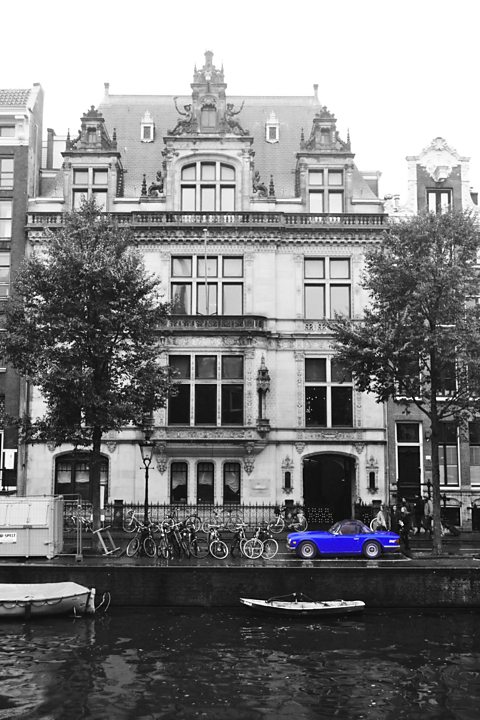
Digital photographs, images and other graphics can all be altered using computer software. A variety of software packages are available that allow you to edit and manipulate your images.
Simple editing can include cropping the image or removing errors and minor blemishes like dust spots. Underexposed areas can be lightened and washed out areas can be made to appear darker. This can be done quickly and easily.
It is also possible to make more significant changes to an image. This can be used for artistic or experimental effect.
For example, you might change the contrast, increase or decrease colour How strong or intense a hue or colour is, add blurring or mix areas of black and white and colour
