The foundation of the African American civil rights movement
Many African American leaders saw that the country’s need for a united war effort offered an opportunity to secure Rights everyone is entitled to regardless of the colour of their skin, their beliefs, sexuality, gender or other personal characteristics. These rights could include the right to vote, or the right to a good education etc. and racial equality. They supported a war against the racist ideals of Period in German History from 1933 to 1945 when the Nazis were in charge of the country. However, many African Americans also spoke of the Double V campaign, which was the idea that their efforts would mean a victory in the war but also a victory over racial To treat someone differently or unfairly because they belong to a particular group. at home.
Early civil rights campaigns
Civil rights organisations grew rapidly, with the National Association for the Advancement of Colored People The National Association for the Advancement of Colored People was created in 1909 to eliminate race-based discrimination across the United States of America. reaching almost half a million members by 1945. A new organisation, the Congress of Racial Equality An American civil rights group founded in 1942 known for its use of non-violent protest., also emerged in 1942. Both groups sought to challenge This meant that white people and black people had to live separately. The areas of society affected by segregation included churches, hospitals, theatres and schools. and help African Americans access their right to vote.
One campaigner, Philip Randolph, called for a march on Washington to challenge discrimination in the armed forces and defence industries. Sources from the time suggest that around 50,000 people attended the march. President Roosevelt listened to these demands, and in June 1941 he signed An order signed by the US president directing government departments to do certain things. Executive orders do not require approval from Congress. 8802, which banned discrimination in any company that was involved in war work for the government. Despite this, there were still examples of racism. For example, workers and managers at the Packard Motor Car company walked out after the promotion of three African Americans in 1942.
Race riots
The proportion of African Americans working in the war industry rose to around 9 per cent by 1945. Many thousands of people migrated from the South to industrial cities in the North and on the West Coast. Their wages were higher but still less than what their white colleagues earned. Racial tensions grew as there was increased competition for jobs, housing and health care. In the middle of 1943, these tensions erupted into A violent disturbance of the peace that results from racial tension and hostility. which then spread to around 47 cities in the following years.
Some of the worst violence was seen in Detroit. For two days, there were clashes between white and black youths, shops were looted, and troops had to be called in to the area. During the riots, 34 people were killed, including 25 African Americans. After this there was more emphasis on the need for racial tolerance in American society.
African Americans in the armed forces
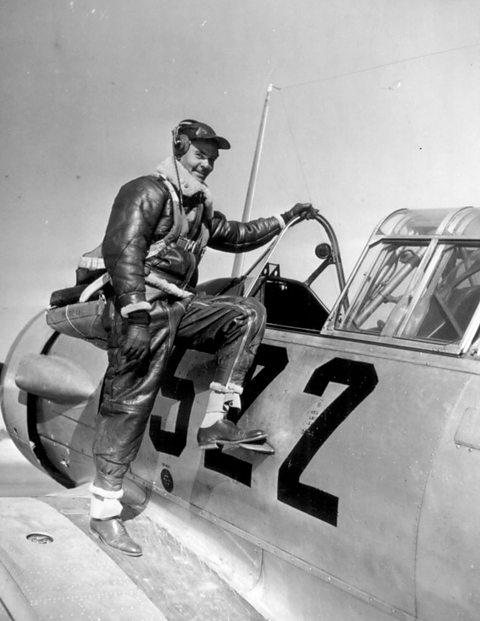
Over 1 million African Americans served in the armed forces during World War Two, although they were largely in segregated units with white officers. In the Marines, initially they were only allocated to non-combat roles, such as labouring or delivering supplies. However, from 1944, the Marines recruited black soldiers for combat roles.
African American units had many notable successes in Europe and the Pacific at well-known battles, such as the Battle of the Bulge and the Battle of Iwo Jima. The 761st Tank Battalion won awards for its work in Germany, while the 99th Pursuit Squadron and the 332nd Fighter Group, under Captain Benjamin Davis, won Distinguished Flying Crosses for their work.
There were only five black officers in the army in 1940, but this number grew to over 7,000 by 1945. There were even some Removal of laws that separate people from different races in public places and day-to-day life. units emerging by 1945. Despite this progress, the US Navy offered fewer chances for progression for African Americans. By 1945, there had been fewer than 60 black officers. The standard duty for African American sailors was loading ammunition, which was an extremely dangerous task that resulted in many accidental explosions. Recognising this, the government ordered an end to racial discrimination in the navy in February 1946, although this did not take immediate effect.
By 1948, the pressure to end segregation forced President Harry Truman to issue Executive Order 9981. This officially called for discrimination and segregation in the armed forces to end. However, racist attitudes continued. Truman dismissed the secretary of the army for refusing to implement desegregation.
