Women in the 1920s
Learn more about the lives of women in the USA in this podcast.
Listen to the full series on BBC Sounds.
New opportunities versus traditional restrictions
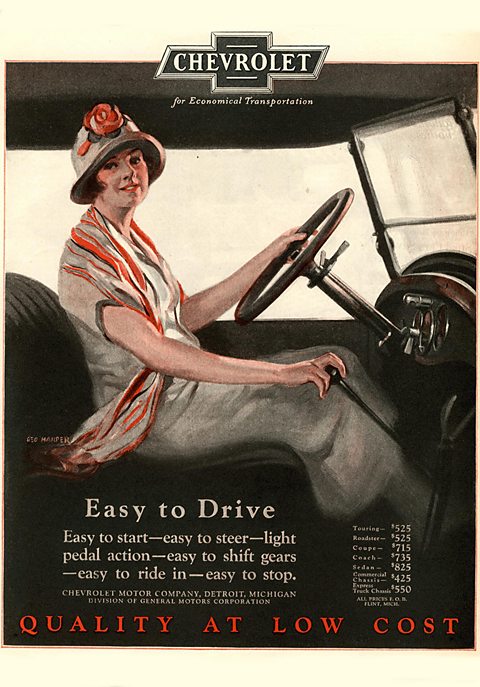
Advertisements in the 1920s showed women operating shiny new appliances or driving cars. However, the experiences of many women during this period were less positive. For example:
- Although more women joined the workforce in the 1920s, their wages were usually lower than those of men in the same jobs.
- The greater freedom promised by labour-saving devices only affected the lives of urban women. Around a third of American homes, mainly in rural areas, did not have electricity. For many other women, the traditional role of looking after the family continued alongside the need to earn a living outside the home.
- From 1920, all women had the right to vote through the 19th Amendment, which promised political freedom. However, this had little impact on their lives.
Employment opportunities
Throughout the 1920s, new employment opportunities for women opened up in factories, offices and department stores alongside the more traditional roles found in nursing and teaching. The introduction of the A series of workers and machines in a factory by which a succession of similar items is progressively assembled. brought about many new opportunities for women in factories as it reduced the physical demands of many jobs. More than 2 million women joined the workforce in the 1920s.
Few women progressed to management levels or into professions such as law. There were many reasons for this, including resistance from male employers and the continuation of the idea of the domestic sphere. There were only 151 female dentists by 1930 and fewer than 100 accountants.
Despite an increase in the number of women in the US workforce, pay remained unequal. Women’s wages remained at the lower end of the pay scale. This could be seen in the cotton industry, for example, where female weavers worked for around 26 dollars per week in contrast to the average male rate of 29 dollars per week in 1920.
Despite this, educational opportunities were increasing. By 1930, there were around 50,000 women with college degrees, which was three times more than the number of women with college degrees in 1920.
Social changes
As employment opportunities slowly grew in the 1920s, women began to see more social change. The experience of World War One had seen many question the strict codes of behaviour that had existed before 1914. Women were chaperoned, accompanied by another person, when they went out on dates. They wore long dresses, and they were encouraged to marry and start a family as early as possible.
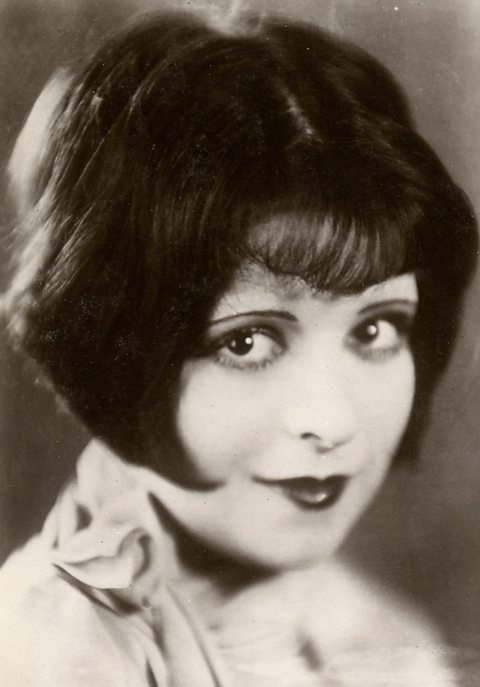
However, in the 1920s, fashion trends changed. Some women wore shorter skirts and more make-up, and many cut their hair into a shorter ‘bobbed’ style. The The term used to describe a liberated, young, fashionable woman in 1920s America whose behaviour would have been considered unconventional. was a familiar sight in towns. Women also freely smoked and drank outside the home for the first time - for example, in A bar that sold alcoholic beverages illegally during Prohibition in the 1920s. This had been frowned upon for women before the war, although not for men. There was a greater acceptance of dating and slightly more sexual freedom, with film actresses such as Clara Bow becoming icons for the rejection of pre-war values.
Despite these changes, old values continued to exist in rural areas and in the older generation of women, who disapproved of the lifestyle that flappers represented.
For many women who continued to look after the home, a bigger social change came with the invention of devices such as vacuum cleaners, refrigerators and other electric devices. These reduced the time needed to complete Takes a lot of work and time to produce. in the home. The growth of department stores meant that clothes could be bought instead of made. The 1920s also saw growth in leisure time.
However, these opportunities were mostly enjoyed by the middle and upper classes. Working-class, immigrant and African American people were unable to afford many of these devices and luxuries.
Political changes
One of the biggest changes in 1920 was that women were granted the vote through the 19th Amendment. It was hoped that this would bring about a new era where women’s rights would be on the agenda. It was also hoped that women would stand for positions of political office and raise the standard of political debate.
Additionally, the 1921 Sheppard-Towner Act promised more funding for pregnant women’s health care and more power for women in the delivery of health services. For example, it provided better maternity care and set up health clinics and trained midwives.
However, these reforms did not continue throughout the 1920s. In terms of political representation, the 1920s saw few women get involved in running for political office. By 1928 there were only 145 women in state A law-making body elected by the citizens of each state. and only a few women had served in the The House of Representatives is the lower house of the United States Congress, the Senate being the upper house. Together they compose the national legislature of the United States.
One reason for this was the fact that once the vote had been obtained, the movement for women’s suffrage broke down into many smaller groups with different priorities. These groups campaigned on many different issues, including Any form of birth control used to prevent pregnancy. and gender discrimination. One particular area of achievement was in the campaign for The banning of alcohol in the USA following the passing of the 18th amendment in 1920. where the The Woman's Christian Temperance Union was an important campaigning group that advocated temperance. was successful in pushing the cause of Refraining from alcoholic drinks.
