The failure of Prohibition
Why did Prohibition fail?
The campaign to achieve The banning of alcohol in the USA following the passing of the 18th amendment in 1920. was a success, but its enforcement was not. There were many issues that eventually forced its repeal in 1933.
Enforcement
Government information campaigns tried to encourage people to follow the law, but these had limited success. It was left to Prohibition agents such as Moe Smith and Izzy Einstein to enforce the The law passed to carry out Prohibition, as required by the 18th Amendment. These agents were in short supply and, even at the peak of their influence, there were fewer than 3,000 of them to cover the whole country. Although Einstein and Smith made more than 4,300 arrests, others were less effective. Their small annual salary of around $2,500 encouraged bribery by gangsters, who were part of a $2 billion alcohol industry. It is estimated that nearly 10 per cent of these agents were dismissed for corruption in the 1920s.
Unprotected coastline
America’s huge coastline was almost impossible to police. Smugglers found it easy to bring in alcohol by trucks across the long US borders with Canada or Mexico, or by boat from islands in the Caribbean Sea. One estimate suggested that 2,000 cases of liquor were arriving every day in Long Island, New York, alone.
Bootlegging, moonshine and speakeasies
| Factor | Explanation |
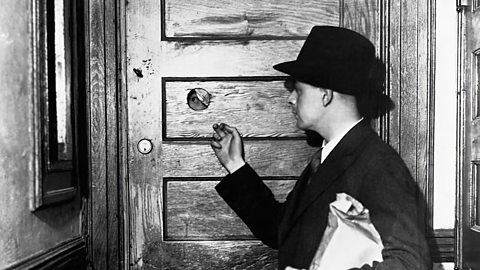
| Bootlegging | The importing and selling of illegal alcohol. Bootleggers, such as George Cassiday and Captain William McCoy, were able to take advantage of America’s vast coastline to provide alcohol, even to Congress. |
| Speakeasies | These illegal bars could be found in most cities and were incredibly popular. By the mid-1920s, it was estimated that there were more speakeasies than there had been bars before Prohibition was introduced in 1919. |
| Moonshine | Many people also made liquor at home with home brewing and distilling kits. These were readily available at relatively cheap prices. Much of what they produced, called moonshine, was made from alcohol that had legally been produced to make medicines, tonics or even cosmetics. It was not uncommon to see whole streets converted into huge production operations. Alcohol poisoning from moonshine was common. For example, 34 people died in New York in one week alone in 1928. In 1925, Prohibition agents destroyed around 172,000 illegal stills - equipment for producing alcoholic drinks. |
| Factor | Bootlegging |
|---|---|
| Explanation | The importing and selling of illegal alcohol. Bootleggers, such as George Cassiday and Captain William McCoy, were able to take advantage of America’s vast coastline to provide alcohol, even to Congress. |
| Factor | Speakeasies |
|---|---|
| Explanation | These illegal bars could be found in most cities and were incredibly popular. By the mid-1920s, it was estimated that there were more speakeasies than there had been bars before Prohibition was introduced in 1919. |
| Factor | Moonshine |
|---|---|
| Explanation | Many people also made liquor at home with home brewing and distilling kits. These were readily available at relatively cheap prices. Much of what they produced, called moonshine, was made from alcohol that had legally been produced to make medicines, tonics or even cosmetics. It was not uncommon to see whole streets converted into huge production operations. Alcohol poisoning from moonshine was common. For example, 34 people died in New York in one week alone in 1928. In 1925, Prohibition agents destroyed around 172,000 illegal stills - equipment for producing alcoholic drinks. |
Gangsters
Although there were many people producing home-made alcohol in the 1920s, gangsters soon realised that there was a huge industry that could be controlled across the USA. Many gangsters came from poorer, immigrant backgrounds. They operated across the country, largely in cities such as Chicago and New York.
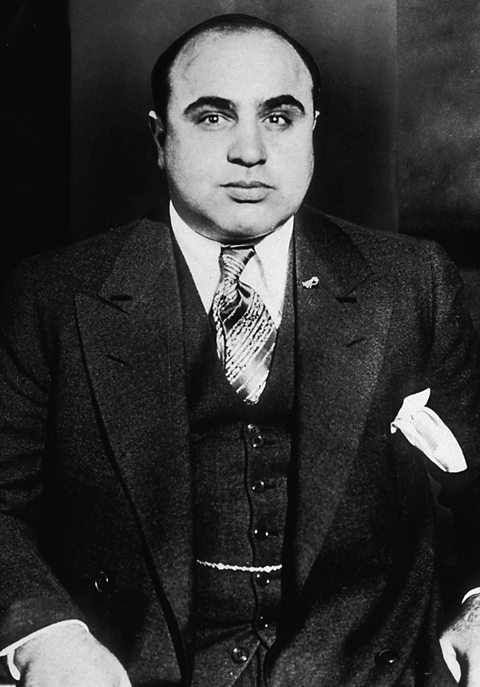
These organised crime groups hired lawyers, accountants, brewers, transport workers and armed men to take advantage of the available opportunities. Johnny Torrio and Al Capone controlled one gang in Chicago, while Lucky Luciano was New York’s most famous gangster. They acted with extreme violence to protect their operations. Capone’s men are said to have been responsible for around 300 murders, including the infamous St Valentine’s Day massacre in 1929. At this event, Capone’s men murdered seven of his rival’s men, who were disguised in fake police uniforms.
Gangsters were also keen to ensure that legal officials ignored their illegal activities. Bribery and corruption were common, with gangsters paying many officials. These included policemen, lawyers, government workers and even city mayors like Bill Thompson in Chicago, who proudly proclaimed himself a ‘Someone who was opposed to Prohibition in the USA. Supporters were known as 'dries'.’. He was known to be an associate of Al Capone.
The end of Prohibition
The 1931 Wickersham Report highlighted the difficulty of enforcing Prohibition. Many people were questioning Prohibition due to the violence and corruption plaguing American cities. Additionally, following the Wall Street Crash and subsequent Depression, it was argued that ending Prohibition would:
- raise the income the government received from tax
- create jobs
- ensure that the government wasn’t spending unnecessary amounts of money fighting against organised crime
- mean that ordinary people would no longer be punished for producing alcohol
How successful was Prohibition?
Successes
- By 1929 alcohol consumption had fallen by 30 per cent.
- Arrests for drunkenness declined. For example, in Detroit they fell by 90 per cent during Prohibition’s first year alone.
- Prohibition was supported and followed by many states in the rural areas of the Midwest. Some states continued to ban alcohol. Mississippi did not repeal Prohibition until 1966.
- Certain enforcement agents, notably Moe Smith and Izzy Einstein, made huge numbers of arrests and destroyed many alcohol production facilities.
- Deaths from cirrhosis - a disease often caused by alcohol - fell by more than a third between 1916 and 1929.
Failures
- Prohibition criminalised the ordinary practice of drinking alcohol.
- It led to powerful organised crime networks growing across American cities.
- There were more speakeasies in 1925 than there had been legal bars before Prohibition.
- The number of murders rose dramatically across American cities, with around 550 murders alone in Chicago in the 1920s . This was compounded by deaths from alcohol poisoning.
- Corruption became a national issue, with one cartoon labelling it the “National Gesture”.
