Economic growth
During World War Two, the American government spent around $250 million per day. The effects of this filtered through to businesses and ordinary people, bringing them more prosperity. There was almost full employment and wages increased. Millions of jobs were created in this industrial boom. The average earnings of the bottom 20 per cent of workers grew by around 68 per cent. The Great Depression was over.
Explore how World War Two changed America through animation and archive footage.
Business expansion
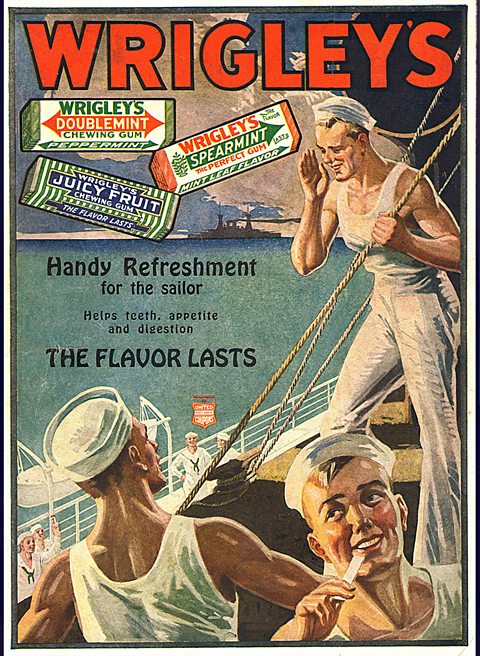
The war saw business investment increase massively. It is estimated that more than 500,000 new businesses started up during the war. Existing businesses adapted their work to support the government too. These included Ford and General Motors, which switched from producing motor cars to producing planes and tanks. Some companies even expanded abroad. Coca-Cola established production plants around the world to ensure that American soldiers were able to obtain its produce while fighting abroad. Other companies, such as Heinz, Hershey’s and Wrigley’s, produced ration packs for soldiers fighting abroad. These businesses grew enormously.
Farming
After the problems of the 1920s and 1930s, the demand for food during World War Two saw a boom for large-scale commercial farmers. These farmers became as important as big industrialists in this period.
- The price of Agriculture, or farming, is the cultivation of crops and animals to produce food and other products. produce rose. There was increased production to meet both foreign and domestic demand, as well as the demand of the army fighting overseas.
- Technology improved. There was more In industry, the process of introducing machines to carry out tasks that humans used to do. on farms and new fertilisers helped to increase production.
- Smaller farms were gradually taken over by large corporations, which bought them out.
