The American workforce and wartime production
The role of the workforce
While planning for the war was left up to industrialists, it was the physical labour of the workers that was the key to increased production. There was virtually full employment after 1942, and many people worked longer hours.
Other contributions included:
- A trade union is a type of organisation whose main purpose is to represent the interests of employees in a specific type of business. supported the war effort by agreeing that they would not call for strikes.
- Around 4 million people left farms in the rural South to work in the industrial North.
- Around 1 million African Americans served in the armed forces, though they faced racism. For example, in the army they usually served in black-only units led by white officers.
- Many African Americans moved from the rural South to cities in the industrial North, such as Chicago and Detroit. They faced prejudice and discrimination. Although their wages might roughly double in the North, they received around half of what a white worker would receive there.
Women in the workforce and armed services
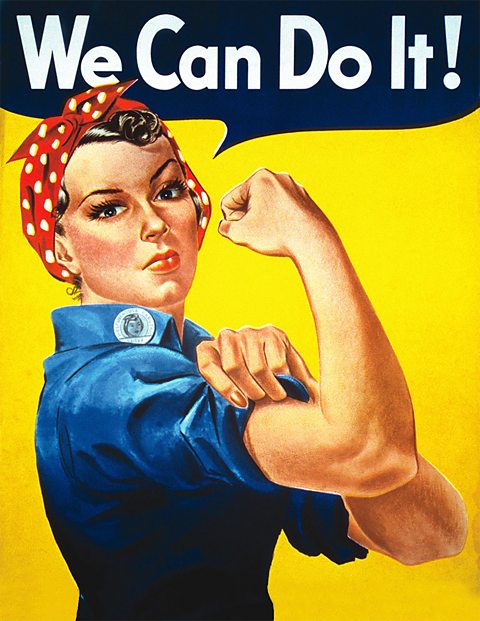
The contribution of women to industry was vast. Before the war, the majority of working women had been unmarried and their jobs had tended to be traditional ones such as nursing or teaching. However, the demand for labour meant that this gradually changed as the war continued. Women’s contribution was symbolised by the character Rosie the Riveter. She was a strong, independent woman who took on engineering jobs to help with the war effort.
Women workers often met opposition from male colleagues, who saw them as a threat. However, they were paid less than men.
Many women contributed directly to the armed forces by working in:
- the army - Women’s Army Corps (WACs)
- the navy - Women Accepted for Volunteer Emergency Service (WAVES)
- the air force - Women Airforce Service Pilots (WASPs)
They fulfilled a number of non-combat roles - that didn’t involve fighting - in the armed forces, including as engineers, radio operators and mechanics.
