Wartime production, the government and the economy
Government control of the economy
- When the war broke out in December 1941, only around 15 per cent of American industry was producing material for the war effort.
- The legislative body of the US government, made up of the Senate and the House of Representatives. passed the War Powers Act in December 1941.
- This act gave President Franklin D Roosevelt significant control over all aspects of the war.
- The government took control of the US war effort in a variety of ways.
| Government creation | Roles | Key actions |
| War Production Board | To convert industry to war production. To oversee the production of all war materials and control the industries involved in this. | Organised a national effort to collect scrap metal and managed the industries that were leading the war effort. |
| War Manpower Commission | To ensure the mobilisation of the population for the military, industry and agriculture. | Recruited workers for key government industries and ensured training for these workers was maintained. |
| Office of Price Administration (OPA) | To control prices and the inflation rate, which is the rise in the price of goods and services. | Rationed key items including rubber, fuel and some types of food from 1942. Placed limits on certain goods, including food items, to control inflation. |
| War bonds | Americans were encouraged to lend money to the government - this would be paid back with interest after the war. | Americans contributed $129 billion. |
| New or increased taxes | Taxation was increased to fund higher government expenditure during the war. | In 1942 the Victory Tax was placed on incomes and taxes were placed on luxury items including alcohol. |
| Government creation | War Production Board |
|---|---|
| Roles | To convert industry to war production. To oversee the production of all war materials and control the industries involved in this. |
| Key actions | Organised a national effort to collect scrap metal and managed the industries that were leading the war effort. |
| Government creation | War Manpower Commission |
|---|---|
| Roles | To ensure the mobilisation of the population for the military, industry and agriculture. |
| Key actions | Recruited workers for key government industries and ensured training for these workers was maintained. |
| Government creation | Office of Price Administration (OPA) |
|---|---|
| Roles | To control prices and the inflation rate, which is the rise in the price of goods and services. |
| Key actions | Rationed key items including rubber, fuel and some types of food from 1942. Placed limits on certain goods, including food items, to control inflation. |
| Government creation | War bonds |
|---|---|
| Roles | Americans were encouraged to lend money to the government - this would be paid back with interest after the war. |
| Key actions | Americans contributed $129 billion. |
| Government creation | New or increased taxes |
|---|---|
| Roles | Taxation was increased to fund higher government expenditure during the war. |
| Key actions | In 1942 the Victory Tax was placed on incomes and taxes were placed on luxury items including alcohol. |
The role of business owners
The War Production Board sought the help of private business owners to drive America’s war effort and awarded government contracts to businesses for the production of essential war materials. This was successful as it is estimated that by the end of 1942, the percentage of the American economy, involved in war production, had increased from 15 per cent to 33 per cent.
The War Production Board was led by William Knusden, an industrialist who had worked for both Ford and General Motors. He believed that organising the war effort was best left to industrialists as they had the knowledge and skills to provide the government with the goods they needed. The War Production Board gave existing companies the power to decide how best they could support the war effort. Some of these are listed below:
- General Motors shifted from the production of cars to making guns and tanks.
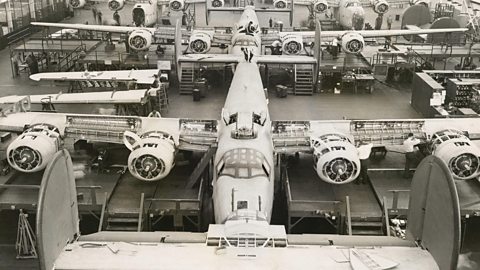
- Another car company, Ford, began to produce bomber aircraft.
- The Lionel toy train company produced compasses for warships.
- Other existing engineering companies produced bullets and other ammunition.
Some critics accused the government of favouring big companies and helping them to make lots of money. Around 80 per cent of government contracts were awarded to only about 100 companies.