Use of material properties in commercial products
There are many Associated with business and profit. products that are made from metal. These products are used daily either at home or in a Design and Technology workshop.
Cooking utensils such as knives and pans are mostly made of metal. A steel alloy with a minimum of 10.5% chromium. is the likely choice of metal for making both pans and knives. Between 10.5 per cent and 27 per cent of A hard and brittle metal alloyed with steel to make stainless steel. is added to A chemical element - when alloyed with carbon it becomes steel. to produce the An alloy is a mixture of two or more elements, at least one of which is a metal. stainless steel. The chromium produces an oxide layer on the outer surface of the steel and prevents A gradual destruction of metal due to a chemical reaction that leaves an oxide on the surface..
Pans made from stainless steel usually have a polished A protective or decorative layer added to a product such as varnish or paint. and can be classed as non-stick if they have a special Layers of a product such as paint or varnish that are applied to a surface. on the inside. A synthetic polymer used to coat pans so they become non-stick., is the coating that is most common, but other coatings such as A brittle material often used to make plates, bricks and pan linings. and An opaque or semi-transparent glossy substance that is a type of glass. are also popular.
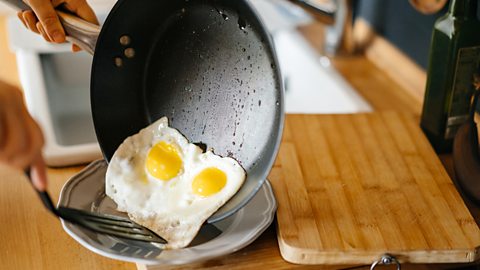
Some pans are made from A chemical element often used for making water pipes. as it conducts heat very well, but these are expensive because of the cost of copper as a Basic material that goods are made from such as crops, metals, wood and animal products such as wool and leather.. Aluminium can also be used for making pans as it heats up evenly, avoiding ‘hot spots’ on the base, with polytetrafluoroethylene (PTFE) being a common non-stick coating.
