Surface treatments and finishes
As with most materials, surface preparation is important before applying a A protective or decorative layer added to a product such as varnish or paint.. Oil and grease need to be removed before A pigment suspended in a liquid. Solid forms need to be mixed with oil or water. Paint is usually brushed or sprayed onto a surface to alter the colour of the material., and dents and scratches need to be filled and rubbed down with An abrasive cloth used for finishing and cleaning. or An abrasive paper used for finishing and cleaning..
Once the surface is smooth the painting process can start, very much like painting timber:
- a basecoat or primer is applied first, which will show blemishes that would only stand out more with paint
- rubbing down again before painting is important
- once the primer coat is perfect, a layer of paint can be brushed or sprayed on
- layers can be built up until the colour is even
- a final A finish that is applied after painting to add a gloss and protective finish. can be added so that the paint is protected, and the final finish is shiny

Heated metal is dipped into powdered or a liquid polymer so that a coating of the polymer is bonded to the metal. is a popular finish for the handles of many tools and coat hooks. It is a straightforward process:
- a piece of metal is heated up to around 250°C
- once hot, it is then dipped into a A common plastic used for packaging, bags and bottles. in powder form
- this has air blown through it so an even coating of the powder is dusted onto the hot metal, resulting in a smooth and shiny coating on the dipped metal
Polythene is available in many colours and can help improve grip when applied to tool handles.
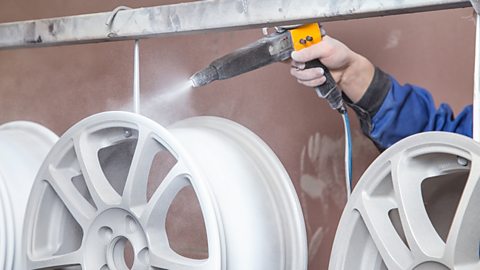
Fine granular polymer is sprayed on the surface of a metal object - the metal is heated so the polymer melts to form a smooth and normally coloured surface. is a method of attracting paint in a powder form towards an electrically charged object:
- paint that is in powder form is sprayed from a paint gun
- the paint is attracted to the electrically charged object
- a fine and even coat of powdered paint covers the surface of the product and, once heated, the powder melts and produces a ‘run free’ paint finish
Some metal products that are made from A ferrous metal composed of iron with small amounts of carbon to increase the strength., such as watering cans and lamp posts, would Iron oxide formed on iron or steel, orange coloured, flaky. if they were not protected. A common process that is used to protect such products is The process of covering metal, usually steel, with a layer of zinc plating to provide protection from rusting . Steel products are given a zinc coating by dipping them into the molten A chemical element often used to coat steel to produce galvanised steel.. For example, corrugated steel roofs of farm buildings and sheds are often made from steel that has been galvanised. After a few decades, the galvanised coating will wear because of acid in the rain and the steel will start to rust, so the roof will need replacing one day.
