Textile fibres and fabrics
Types of textiles and their uses
Textile materials can be found naturally or can be formed synthetically. They can be processed into different forms such as Flexible material wrapped around a tube or turned over and over on itself without folding., Short threads spun to form one long thread. or Single, hair-like strands that derive from either natural or synthetic sources..
Natural fibres
Natural fibres come from plants or animals. They are easily Inexhaustible and replaceable. and Material that can be broken down in the environment by microorganisms..
| Natural fibre | Physical properties | Working properties |
| Cotton | Grows on a cotton plant in a ball called a boll, fibres are combed and spun into a yarn | Takes dye well, soft, strong, absorbent, recyclable, used in clothing |
| Wool | Spun from animal fleece such as sheep and alpacas | Can be fine or thick, soft or coarse, takes dye well, warm and crease-resistant, used in clothing and carpets |
| Silk | Made from the cocoon of the silkworm, the only natural fibre that has continuous filament fibres rather than shorter staple fibres | Soft and shiny, drapes well, difficult to wash, expensive, creases easily, used in luxury clothes, underwear and bedding |
| Natural fibre | Cotton |
|---|---|
| Physical properties | Grows on a cotton plant in a ball called a boll, fibres are combed and spun into a yarn |
| Working properties | Takes dye well, soft, strong, absorbent, recyclable, used in clothing |
| Natural fibre | Wool |
|---|---|
| Physical properties | Spun from animal fleece such as sheep and alpacas |
| Working properties | Can be fine or thick, soft or coarse, takes dye well, warm and crease-resistant, used in clothing and carpets |
| Natural fibre | Silk |
|---|---|
| Physical properties | Made from the cocoon of the silkworm, the only natural fibre that has continuous filament fibres rather than shorter staple fibres |
| Working properties | Soft and shiny, drapes well, difficult to wash, expensive, creases easily, used in luxury clothes, underwear and bedding |
Synthetic fibres
Synthetic fibres are made mainly from A resource that cannot be replaced when it is used up, such as oil, natural gas or coal. coal and oil Remove unwanted substances from a substance. into A large molecule formed from many identical smaller molecules known as monomers. and do not To break down and deteriorate. easily.
| Synthetic fibre | Physical properties | Working properties |
| Polyester | Can be woven or knitted, thick or thin and available in a variety of colours, can be blended with other fibres for better properties (see polycotton) | Strong and versatile, it holds colour and washes well |
| Nylon (Polyamide) | Can be woven into many different forms, can be blended, available in a range of colours | Shiny, water resistant, hardwearing, used for parachutes, clothing and sports equipment |
| Elastane | Smooth and stretchy | Hardwearing, quick drying but not biodegradable, used in sportswear and swimsuits |
| Acrylic | Appears similar to wool, lightweight, soft and warm, comes in different colours | Easy to wash and retains its shape, good resistance to chemicals, insects and sunlight, colour remains well, used in carpets, clothing and outdoor furniture |
| Synthetic fibre | Polyester |
|---|---|
| Physical properties | Can be woven or knitted, thick or thin and available in a variety of colours, can be blended with other fibres for better properties (see polycotton) |
| Working properties | Strong and versatile, it holds colour and washes well |
| Synthetic fibre | Nylon (Polyamide) |
|---|---|
| Physical properties | Can be woven into many different forms, can be blended, available in a range of colours |
| Working properties | Shiny, water resistant, hardwearing, used for parachutes, clothing and sports equipment |
| Synthetic fibre | Elastane |
|---|---|
| Physical properties | Smooth and stretchy |
| Working properties | Hardwearing, quick drying but not biodegradable, used in sportswear and swimsuits |
| Synthetic fibre | Acrylic |
|---|---|
| Physical properties | Appears similar to wool, lightweight, soft and warm, comes in different colours |
| Working properties | Easy to wash and retains its shape, good resistance to chemicals, insects and sunlight, colour remains well, used in carpets, clothing and outdoor furniture |
Blended fibres
Blended fibres are mixtures of fibres that combine properties.
| Blended fibre | Physical properties | Working properties |
| Polycotton | Made of polyester fibres and cotton fibres, can be printed or dyed | Easy to wash, cheaper than cotton |
| Blended fibre | Polycotton |
|---|---|
| Physical properties | Made of polyester fibres and cotton fibres, can be printed or dyed |
| Working properties | Easy to wash, cheaper than cotton |
Woven fabrics
Woven fabrics use a warp and weft yarn on a loom to interlock fibres.
| Woven fabric | Physical properties | Working properties |
| Plain weave | Threads are woven in a simple under one, over one | Simple and cheap, strong and available in different thicknesses, when torn it rips in a straight line |
| Woven fabric | Plain weave |
|---|---|
| Physical properties | Threads are woven in a simple under one, over one |
| Working properties | Simple and cheap, strong and available in different thicknesses, when torn it rips in a straight line |
Non-woven fabrics
Non-woven fabrics are webs of fibres that are glued, compressed or melted together.
| Non-woven fabric | Physical properties | Working properties |
| Bonded fabrics | Fibres are visible and random, often has small holes on the surface | Does not fray as it has no grain, not strong |
| Felted fabrics | Randomly matted fibres, often wool, available in many thicknesses and colours | Formed with moisture, heat and pressure, can be shaped as it has no elasticity or drape, used for hat making |
| Non-woven fabric | Bonded fabrics |
|---|---|
| Physical properties | Fibres are visible and random, often has small holes on the surface |
| Working properties | Does not fray as it has no grain, not strong |
| Non-woven fabric | Felted fabrics |
|---|---|
| Physical properties | Randomly matted fibres, often wool, available in many thicknesses and colours |
| Working properties | Formed with moisture, heat and pressure, can be shaped as it has no elasticity or drape, used for hat making |
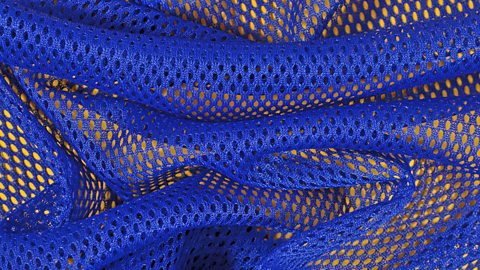
Image caption, Bonded fabric
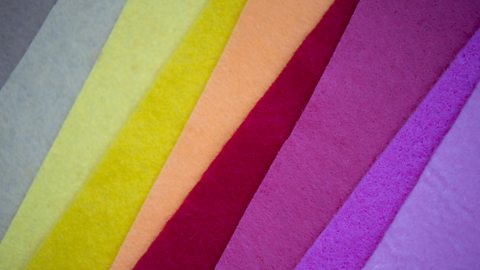
1 of 2
Knitted textiles
Knitted textiles are made from rows of interlocking loops. They can be made from a variety of fibres, not just wool.
| Knitted fabric | Physical properties | Working properties |
| Knitted fabrics | Can be warp knitted (straight lines) or weft knitted (knitted upwards), available in a variety of textures and colours, can have patterns knitted in. | Warm, stretchy and strong, tend to unravel when a hole is made, used in clothing and sportswear |
| Knitted fabric | Knitted fabrics |
|---|---|
| Physical properties | Can be warp knitted (straight lines) or weft knitted (knitted upwards), available in a variety of textures and colours, can have patterns knitted in. |
| Working properties | Warm, stretchy and strong, tend to unravel when a hole is made, used in clothing and sportswear |
Image caption, Warp knit
1 of 2
