Ferrous, non-ferrous metals and alloys
Types of metals and their uses
Metals are found naturally and are mined from the earth. Metals used in products are The process of obtaining a metal from a mineral, usually by reduction or electrolysis. from the natural A rock containing enough quantities of a mineral for extraction to be possible. using large heat furnaces.
Ferrous metals
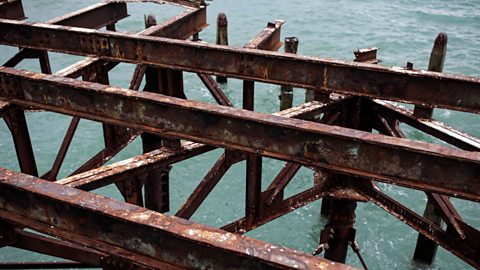
Metal containing iron. metals contain iron and are Able to be magnetised or attracted to a magnet.. They are prone to Iron oxide formed on iron or steel, orange coloured, flaky..
| Ferrous metal | Physical properties | Working properties |
| Mild steel (low-carbon steel) | An alloy that is grey and smooth, rusts if not protected | Ductile and tough, easy to form, braze and weld, versatile, useful for construction, nuts, bolts, bike frames |
| Cast iron | Dull grey, rusts easily | Brittle if thin, can be cast in a mould, used for manhole covers, pans and gates |
| Stainless steel | Ferrous metal that is silver when polished, resists rust | An alloy of chromium, nickel and manganese, hard and smooth, used for cutlery and sinks |
| Ferrous metal | Mild steel (low-carbon steel) |
|---|---|
| Physical properties | An alloy that is grey and smooth, rusts if not protected |
| Working properties | Ductile and tough, easy to form, braze and weld, versatile, useful for construction, nuts, bolts, bike frames |
| Ferrous metal | Cast iron |
|---|---|
| Physical properties | Dull grey, rusts easily |
| Working properties | Brittle if thin, can be cast in a mould, used for manhole covers, pans and gates |
| Ferrous metal | Stainless steel |
|---|---|
| Physical properties | Ferrous metal that is silver when polished, resists rust |
| Working properties | An alloy of chromium, nickel and manganese, hard and smooth, used for cutlery and sinks |
Non-ferrous metals
A metal that does not contain iron. metals do not contain iron and are not magnetic. They do not rust.
| Non-ferrous metal | Physical properties | Working properties |
| Aluminium | Light grey with a matt finish | Lightweight but strong and ductile, used for drink cans, kitchen utensils and some parts in transport |
| Copper | Rose coloured, polishes well but can oxidise to a green colour (verdigris) | Good electrical conductor, can be polished, welds easily, used for plumbing parts and electrical cable |
| Tin | Silver coloured | Soft and malleable, easy to form, used to make food cans |
| Zinc | Silvery blue with a matt finish | Brittle with average malleability and conductivity, often used to galvanise steel |
| Non-ferrous metal | Aluminium |
|---|---|
| Physical properties | Light grey with a matt finish |
| Working properties | Lightweight but strong and ductile, used for drink cans, kitchen utensils and some parts in transport |
| Non-ferrous metal | Copper |
|---|---|
| Physical properties | Rose coloured, polishes well but can oxidise to a green colour (verdigris) |
| Working properties | Good electrical conductor, can be polished, welds easily, used for plumbing parts and electrical cable |
| Non-ferrous metal | Tin |
|---|---|
| Physical properties | Silver coloured |
| Working properties | Soft and malleable, easy to form, used to make food cans |
| Non-ferrous metal | Zinc |
|---|---|
| Physical properties | Silvery blue with a matt finish |
| Working properties | Brittle with average malleability and conductivity, often used to galvanise steel |
Alloys
An alloy is a mixture of two or more elements, at least one of which is a metal. are mixtures of metal with an element to improve its properties or How something looks.. For example brass is a mixture of copper and zinc. Alloys can also be classified as ferrous or non-ferrous.
| Alloy | Physical properties | Working properties |
| Brass | Non-ferrous metal that is gold coloured and darkens when oxidised with age | An alloy of copper and zinc, can be cast and machined, used for musical instruments and ornamental hardware |
| Pewter | Non-ferrous metal that is dark grey in colour, when melted it appears a brighter shinier shade of grey | Made up of tin (approximately 90 per cent), antimony (7 per cent) and other metals such as copper or bismuth, it has a low melting point (approximately 200°C), often used to make jewellery, candlesticks, outside light fixtures or tankards |
| Solder | Grey in colour and typically comes in long reels 2 mm to 5 mm thick, although different sizes are available | An alloy of 60 per cent tin and 40 per cent lead, it has a low melting point (approximately 200°C), and is electrically conductive making it ideal for circuit manufacture |
| Alloy | Brass |
|---|---|
| Physical properties | Non-ferrous metal that is gold coloured and darkens when oxidised with age |
| Working properties | An alloy of copper and zinc, can be cast and machined, used for musical instruments and ornamental hardware |
| Alloy | Pewter |
|---|---|
| Physical properties | Non-ferrous metal that is dark grey in colour, when melted it appears a brighter shinier shade of grey |
| Working properties | Made up of tin (approximately 90 per cent), antimony (7 per cent) and other metals such as copper or bismuth, it has a low melting point (approximately 200°C), often used to make jewellery, candlesticks, outside light fixtures or tankards |
| Alloy | Solder |
|---|---|
| Physical properties | Grey in colour and typically comes in long reels 2 mm to 5 mm thick, although different sizes are available |
| Working properties | An alloy of 60 per cent tin and 40 per cent lead, it has a low melting point (approximately 200°C), and is electrically conductive making it ideal for circuit manufacture |
