Papers and boards
Types of papers and boards and their uses
Papers and boards are formed from wood pulp, which comes from trees. This squishy wood pulp is rolled out into thin sheets in paper mill factories to form the papers and boards that we use.
Paper
Papers are made from Wood fibres processed and reduced down with chemicals or mechanically broken down into smaller parts to make paper.. Their Compactness of a material. is measured by their weight, in grams per square metre (gsm) - the thinner the paper the lower the gsm.
| Paper | Physical properties | Working properties |
| Bleed proof paper | White, can be textured, thin | Coated to stop colour seeping, ink stays bright on the surface |
| Cartridge paper | Thick, textured, rough | Expensive and opaque, used for ink and watercolour |
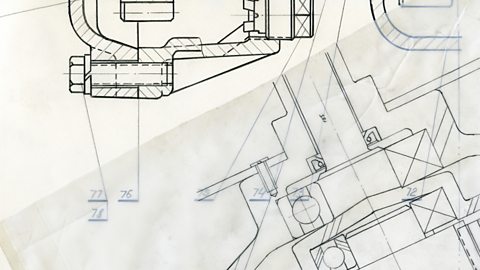
| Grid paper | White paper printed with a variety of grids, eg isometric, graph etc. | Lines are usually blue but can be darker to trace through |
| Layout paper | Smooth finish, off-white colour, translucent (see-through) | Takes most media well |
| Tracing paper | Translucent (see-through), smooth | Shiny, takes pencil well |
| Paper | Bleed proof paper |
|---|---|
| Physical properties | White, can be textured, thin |
| Working properties | Coated to stop colour seeping, ink stays bright on the surface |
| Paper | Cartridge paper |
|---|---|
| Physical properties | Thick, textured, rough |
| Working properties | Expensive and opaque, used for ink and watercolour |
| Paper | Grid paper |
|---|---|
| Physical properties | White paper printed with a variety of grids, eg isometric, graph etc. |
| Working properties | Lines are usually blue but can be darker to trace through |
| Paper | Layout paper |
|---|---|
| Physical properties | Smooth finish, off-white colour, translucent (see-through) |
| Working properties | Takes most media well |
| Paper | Tracing paper |
|---|---|
| Physical properties | Translucent (see-through), smooth |
| Working properties | Shiny, takes pencil well |
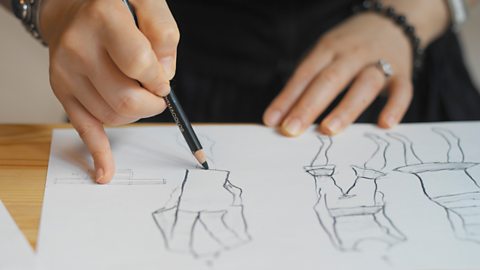
Image caption, Bleed proof paper
1 of 2
Card
Card is formed in the same way as paper but is thicker and denser, giving it higher strength and structural properties. Both paper and card can be coated with a A polymer is a large molecule formed from many identical smaller molecules (monomers). Polymers can be natural or synthetic. Plastics are long chains of polymers. to add a gloss or to create different An ability to hold a liquid such as water. properties. Card thickness is measured in microns or grams per square metre (gsm) - the thinner the card the lower the microns or gsm.
| Card | Physical properties | Working properties |
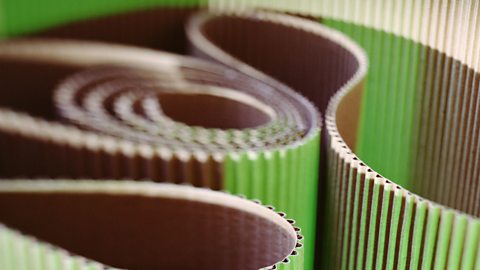
| Corrugated card | Paper bonded to the outside | Corrugations make it strong, protective and insulating; used in packaging |
| Carton board | White board, can be matt or glossy | Good compression and moisture resistance, can bend and score well without cracking, commonly used in retail packaging |
| Bleached card | White due to the bleaching process it receives | Strong and can be easily printed onto, often used on book covers and packaging for make-up |
| Card | Corrugated card |
|---|---|
| Physical properties | Paper bonded to the outside |
| Working properties | Corrugations make it strong, protective and insulating; used in packaging |
| Card | Carton board |
|---|---|
| Physical properties | White board, can be matt or glossy |
| Working properties | Good compression and moisture resistance, can bend and score well without cracking, commonly used in retail packaging |
| Card | Bleached card |
|---|---|
| Physical properties | White due to the bleaching process it receives |
| Working properties | Strong and can be easily printed onto, often used on book covers and packaging for make-up |
Board
Boards are much thicker than paper or card and are typically heavier than 220 gsm. Boards are measured in microns where one micron is equal to one thousandth of a millimetre.
| Board | Physical properties | Working properties |
| Polypropylene sheet | Thin plastic sheet in a range of colours, can be matt or gloss | Strong and flexible, excellent resistance to both impact and chemicals, used on covers of booklets or on thin plastic folders |
| Duplex board | Two layers of card bonded together | Stiff, lightweight and printable for packaging, ideal for packaging used for foods or appliances |
| Foil-lined board | White card with foil backing | Stiff and oil resistant, foil backing reflects heat, used for food containers |
| Inkjet card | Bright white and smooth on both sides | Deep colours as the photographic ink sits on the surface |
| Solid white board | Smooth on both sides | Stiff, can be cut or scored, best quality board for printing on, used for high-quality items such as hardback books |
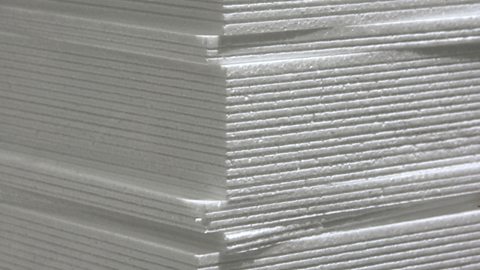
| Styrofoam board (foam-core board) | Smooth surface, laminated with white board | Thick and rigid, available in a variety of thicknesses, prone to creasing and cracking, used for models and mounting photographs |
| Board | Polypropylene sheet |
|---|---|
| Physical properties | Thin plastic sheet in a range of colours, can be matt or gloss |
| Working properties | Strong and flexible, excellent resistance to both impact and chemicals, used on covers of booklets or on thin plastic folders |
| Board | Duplex board |
|---|---|
| Physical properties | Two layers of card bonded together |
| Working properties | Stiff, lightweight and printable for packaging, ideal for packaging used for foods or appliances |
| Board | Foil-lined board |
|---|---|
| Physical properties | White card with foil backing |
| Working properties | Stiff and oil resistant, foil backing reflects heat, used for food containers |
| Board | Inkjet card |
|---|---|
| Physical properties | Bright white and smooth on both sides |
| Working properties | Deep colours as the photographic ink sits on the surface |
| Board | Solid white board |
|---|---|
| Physical properties | Smooth on both sides |
| Working properties | Stiff, can be cut or scored, best quality board for printing on, used for high-quality items such as hardback books |
| Board | Styrofoam board (foam-core board) |
|---|---|
| Physical properties | Smooth surface, laminated with white board |
| Working properties | Thick and rigid, available in a variety of thicknesses, prone to creasing and cracking, used for models and mounting photographs |
Laminated layers
Paper-based boards can be laminated to other materials. This is done to achieve functional or How something looks. effects. Examples are listed below.
| Laminated material | Physical properties | Working properties |
| Foil-based packaging | Consists of a paper-based board layer and a thin aluminium foil layer - these layers can be placed between thin polyethylene sheets | The paper-based board is easily printed onto, the thin aluminium foil ensures food freshness as it protects from bacteria, oxygen and light, ideal for food packaging and drinks cartons |
| False effect worktops | This consists of thick chipboard, paper and a thin layer of melamine formaldehyde | The chipboard is strong and low cost, the paper has the print of an expensive material such as marble or granite, the melamine formaldehyde is scratch resistant, ideal for kitchen worktops and used on dining tables and flooring |
| Laminated material | Foil-based packaging |
|---|---|
| Physical properties | Consists of a paper-based board layer and a thin aluminium foil layer - these layers can be placed between thin polyethylene sheets |
| Working properties | The paper-based board is easily printed onto, the thin aluminium foil ensures food freshness as it protects from bacteria, oxygen and light, ideal for food packaging and drinks cartons |
| Laminated material | False effect worktops |
|---|---|
| Physical properties | This consists of thick chipboard, paper and a thin layer of melamine formaldehyde |
| Working properties | The chipboard is strong and low cost, the paper has the print of an expensive material such as marble or granite, the melamine formaldehyde is scratch resistant, ideal for kitchen worktops and used on dining tables and flooring |
Tetra Pak containers are designed to protect products stored inside against light, air and moisture.
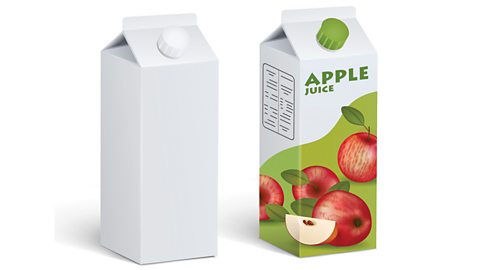
The six layers of Tetra Pak are made from board, polyethylene and foil. As a result, food products can be stored in room temperature conditions for up to a year.
