Who prospered in the 1920s?
Various groups benefited from the boom in the 1920s.
Urban workers
The growth of cities meant that life for many urban workers improved under the One of the two major American political parties. Republicans tend to hold a more conservative viewpoint on politics and society. governments. Between 1922 and 1929 annual unemployment rates were never higher than 3.7 per cent. Wages largely rose as business owners came to understand that production improved with happier workers. Working hours decreased by about 20 per cent, leaving more time for leisure.
Urban conditions improved as workers demanded a better lifestyle. This was demonstrated with the construction of new homes, public buildings and entertainment venues. Electricity had reached more than 60 per cent of households by 1925. This allowed access to a range of new Goods that are used as ends in themselves and not for the production of other goods. Examples include vacuum cleaners, fridges and radios. that contributed to increasing leisure time.
Middle classes
Industrial development not only created jobs in factories but also increased the need for managers and other professional jobs, such as accountants. These jobs were known as Clerical and professional jobs, usually based in offices, for which one normally has to dress smartly (hence the 'white collar' of a shirt). and these people generally worked in offices. Such jobs could also be found in the developing department store sector and were often occupied by a growing middle class. Many women, benefiting from growing independence after World War One, were able to move into these jobs too. This gave them a greater sense of financial independence, although their wages were lower than those of men. White-collar workers were more likely to shop in department stores or own a motor car.
Business owners
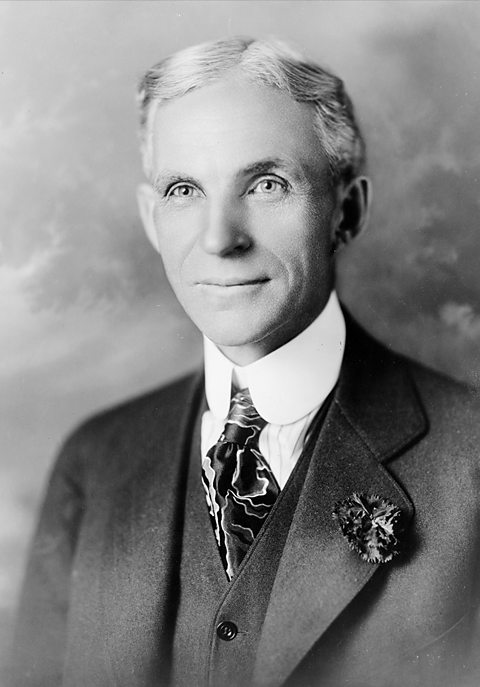
With a pro-business Republican Party in government throughout the 1920s, business owners profited from the boom. Men such as Andrew Carnegie, John D Rockefeller and Henry Ford were instantly recognisable by the US public but there were many others who profited. It is estimated that by 1930, 100 corporations controlled half of the USA’s business interests. American presidents such as Warren Harding and Calvin Coolidge would often praise these people and attended many events with them.
Bankers
The expansion of credit meant that people could buy cars and other consumer goods. This resulted in big profits for banks and shops. Also, lending money so that people could buy Financial stakes in a company or business. helped to fuel the A term which can refer to stocks and shares and stock exchange, buying and selling shares, the overall value of shares sold in a stock exchange. boom. Bankers such as JP Morgan Jnr made lots of money from the credit boom. They also lent money to troubled economies such as Germany.
Farmers
Farming did not perform particularly well in the 1920s, but A growth in the urban population, usually resulting in the extension of towns or cities. did help some farmers to prosper in this period. The introduction of refrigerators meant that the demand for fresh produce increased. Salad production was hugely successful in this period. Arizona and California saw huge increases in the production of iceberg lettuce. Similar success stories could be seen for dairy farmers, who sold more cheese and milk to the cities. However, it was mainly the richer and larger landowners who performed well during this period. Farmers who had to pay to use land by giving a proportion of their produce to the owner. commonly suffered poverty and debt.
