Making a call to the past
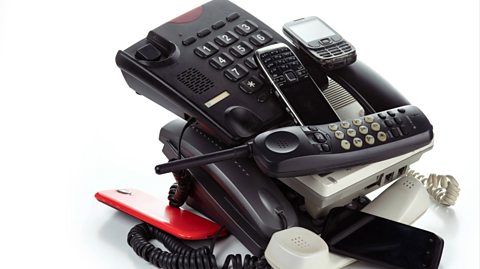
A huge part of our day-to-day lives, phones have evolved to be more than just a device to make a call on. Before texting, touch screens and apps, generations will remember the days when landlines and telephone boxes were the only phones they had, and listening to music or taking photos was something entirely separate.
Our various phones have been on quite the journey through time, but how did it all come about? Here, BBC Bitesize takes a look back in time from the first telephone call to the introduction of mobiles, smartphones and more.
You can also test your knowledge in our IYKYK quiz to see how many iconic phones of the past you recognise. And if you’re too young to remember them, they are a great window into our past!
Who invented the telephone?
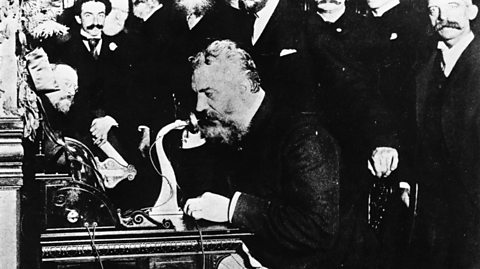
Born in Edinburgh in 1847, Alexander Graham Bell move to the United States in his 20s – but his success would soon be known across the globe. Bell had spent a lot of time experimenting with transmitting speech – sending sound from one place to another – and in 1876, his vision became a reality.
On 10 March 1876, Bell made what is deemed as the first ever phone call to his assistant. It sounds like something out of a Sherlock Holmes novel – but the first words he spoke were “Mr Watson, come here, I want to see you.”
Bell is often credited as being the inventor of the telephone, however this has long been disputed. Around the same time, the likes of Elisha Gray and Antonio Meucci were also experimenting with sound.
But, Bell was the first to patent his invention and is thus credited with patenting the first telephone. A patent is an official document stating you own an idea or invention and as a result, only you can make money from it.
Who invented the first mobile phone?
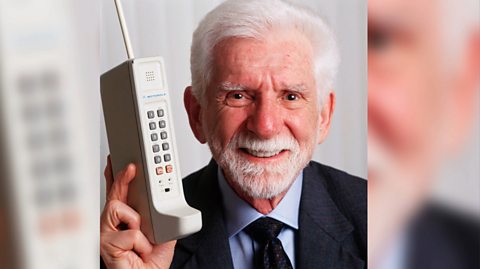
It’s now been over 50 years since the first mobile phone call was made. On 3 April 1973, American Martin 'Marty' Cooper, who worked for telecommunications firm Motorola, stood on the corner of Sixth Avenue in New York and made history.
He called a rival at competitor company, Bell Laboratories, to confirm he was calling off a “personal, handheld, portable cell phone” – which looks nothing like the mobiles we know today. The large, cream-coloured handset device had a keypad and a flexible antenna.
Around a decade later, under the name Motorola DynaTAC 8000X, the phone went on public sale. At the time, it cost $3,995, only made calls and had 30 minutes battery life.
When were the first phone calls made in the UK?
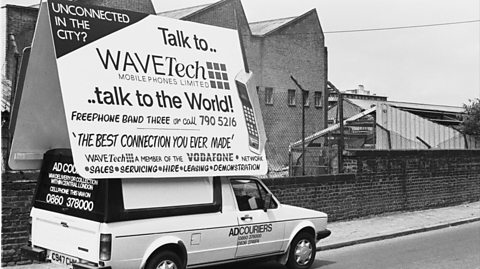
In the UK, it is widely believed that the first telephone call was made in the late 1870s at the Brown’s Hotel in Mayfair by Alexander Graham Bell while on a visit to London. However, one monumental moment in time is said to have come shortly after in 1878, when Bell demonstrated the telephone to Queen Victoria.
Over a century later, a new type of call was made in the UK – the first ever mobile phone call. Just after midnight on 1 January 1985, Michael Harrison, son of then-Vodafone chairman Ernest Harrison, called his dad to wish him a Happy New Year.
Minutes later, the first public mobile phone call in the UK was made by another famous Ernest. From St Katharine’s Dock in London, comedian Ernie Wise made the public call via mobile to the original Vodafone headquarters in Newbury.
How have phones changed through time?
How phones look and how we use them have continued to evolve through time and with such a vast history - there are so many interesting facts to mention. But here, we take a brief look at how the use of phones has changed, as well as some of the most popular devices through the decades.
Certain generations will remember the days when landlines – home telephones – were the only phones around. Landlines first appeared in the 19th century, but by the 1960s, they became more widespread and affordable across the UK.
Many will remember having a GPO - which stands for the General Post Office. The model was introduced in the late 1960s by the General Post Office and carried sole responsibility for providing telecommunication services across the country - except for Kingston upon Hull, which famously had its own independent telephone history.
Before mobiles, people would have to use landlines or even telephone boxes to make calls and often planned for things more in advance. Fast-forward to the mobiles first available to the public in the 90s, they were often compared to bricks because of their size and weight, which is nothing like the mobiles we have today.
In the 90s and 00s, various Nokia products were nicknamed bricks not only due to their shape and size, but their durability. The Nokia 3110 and Nokia 3210 are among the brand’s most iconic devices, and while they mainly made text and calls, many will remember playing games like Snake on them.
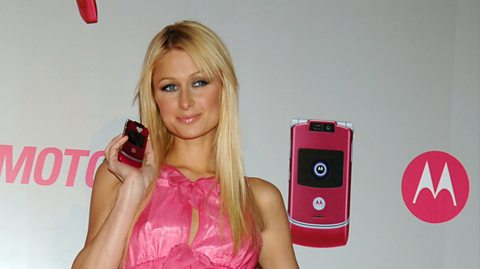
By the 00s, it became more common to have stylish phones of different shapes, sizes and colours. In the early 2000s, many famous "it girls" would have paparazzi taking pictures of them holding the likes of a Motorola Razr in their hand.
When it comes to Blackberry phones, many will remember the days of swapping batteries with a friend when your phone died, asking for a BBM (Blackberry Messenger) pin to add a contact, using the ping feature when you didn't receive a reply and sending songs to friends via Bluetooth. A Blackberry also had a QWERTY keyboard, which allowed for fast “thumb typing.”
As for touch screen phones, they actually go back further than you may think. The IBM Simon is considered to be the world's first smartphone – a phone that can do more than send texts and make calls like a normal mobile. Released in 1993, it had a black and white touchscreen and had the ability to fax and send emails.
We see them everywhere today, but it wasn't until 2007 that Steve Jobs first announced the iPhone to the public, the next generation smartphone. The touchscreen mobile introduced users to internet capabilities and a music player as well as normal calls and messages. Through the years, we've seen multiple versions and upgrades be introduced.
On a smartphone today, you can do everything from play games to watch television on various apps, take and edit photos and videos, do your online banking and much more. Some even prefer to send a voice note on certain messaging apps like WhatsApp, as opposed to making a phone call.
Can you name these iconic phones through time?
What are the pros and cons of having a phone today?

There are so many pros and cons to having a phone – particularly a smartphone where you can access most things at your fingertips. One big positive is phones make it much more convenient to stay in touch with people and access information.
There are so many apps out there to download which are also very interactive and make great tools for learning or communicating with loved ones across the globe. In recent years, social media has continued to grow, which has made it more easier to be creative and make content on numerous platforms.
However, there are a number of negatives to the technology we have today. Mobiles and smartphones can be addictive, and it can be difficult to know how to stay safe online. In some cases, apps can distract you from learning or from things that happen in your everyday life.
Some apps or websites can be expensive depending on what they offer or may require personal information which can feel invasive. But if you’re ever worried about the online world and what to do on social media, don’t worry, BBC Bitesize has you covered.
This article was written in January 2026
