Head teacher Matthew Burton gives students advice on how to stay safe online. You can watch his tips below, with written suggestions for how you can help as a parent or carer.
Headteacher's top tips for online safety
Mr Burton: Number one: be open and communicate about your mobile phone use. Mobile phones can be amazing, they can be brilliant, and you can do some fantastic things on them that even five or ten years ago would just not have been possible. However, they do have their drawbacks, and some of the things like cyber-bullying, some of the things like the haves and have nots in terms of mobile phones can be real barriers for people, real blockers for people. The internet forms such a massive part of our lives these days, and actually, the safe use of the internet is so fundamentally important.
My second tip would be: don't use them in bed. No good comes from using mobile phones in bed as far as I'm concerned. Checking your social media accounts, making sure you've spent half an hour preening and cleaning and looking at your pictures and all that sort of stuff on a morning, before you get up and the same on an evening is never, ever a good thing. You do not need to bracket your day off by looking at your social media. Don't use them in bed because the quality of sleep you'll get will be significantly worse than it would have been if you had not looked at it. Read a book, if you need to, watch the telly, do some revision whatever it may be, just please do not use that mobile phone in bed at this really crucial phase of your life.
My third tip would be: whilst mobile phones are really useful for some things, don't forget that the real world does genuinely exist out there. So many fantastic experiences can be brought from stepping outside your front door and going on experiences and trips and visits to places with people and having conversations with people. And don't forget when we get to the big wide world of getting jobs and making sure we can build careers etc. what employers are looking for are those softer skills. The ability to make eye contact, the ability to shake a hand, the ability to have a conversation that's rooted in the real world.
My next tip would be about not suffering and actually being open about the fact that you're struggling. Every single human being is fighting a battle that nobody else knows about, and as far as I'm concerned, a lot of the experiences that I see when young people in school are suffering are linked to mobile phones, are linked to social media. And those mental health problems that are more and more and more prevalent in society today with young people can often be traced back to social media, and that often is brought around by mobile phones.
My final tip would be: whatever your school's rules about mobile phones are, play by those rules. They're there for a reason. Some schools allow them for a good reason. Some schools don't allow them for a very good reason. Some schools are somewhere in the middle, whereby they'll allow them sometimes and not others. Whatever those rules are, play by the rules. And if you fall foul of them, if your mobile is confiscated for example, or you get a sanction, whatever it may be, just make sure you work with the school rather than complain about it because everybody is trying to get the best for you.
Mr Burton's top tips for keeping your child safe online
1. Be open and communicate about their mobile phone use
Smartphones are amazing machines. They help us stay in touch with each other all of the time, but this can have its downsides. Cyber-bullying through social media can be a big problem for people of all ages.
Be aware of what apps and websites your children are using, and spend some time understanding any that you aren’t already aware of.

2. Keep phones out of bed
It’s always important to get a good night’s sleep, and children need more sleep than adults. A decent rest is needed to help maintain our mood, memory and other key brain functions. Using a mobile phone when trying to drift off can delay or interrupt sleep, having a negative impact on mood and memory. This may make the school day a lot more difficult.
If they’re feeling restless, encourage them to read a book instead of going on their phone. Keeping their phone out of reach may also help reduce the temptation to use it.
3. Explore the real world
Our phones can make it seem like we’ve got the world at our fingertips, but it’s important to remember that there’s still a real world out there to be explored.
Going on trips, experiencing new places and meeting new people is plenty of fun in itself. This can also give children life skills which could be invaluable when they eventually leave school.


4. Encourage children to speak up if they’re feeling down
While the internet can cheer us up and make us laugh, it can also make us upset, anxious and worried. If you ever think your child is feeling these emotions because of their mobile phone or online activity, encourage them to talk about it.
Let them know that there’s nothing wrong with feeling those emotions, the important thing is to not keep them to themselves.
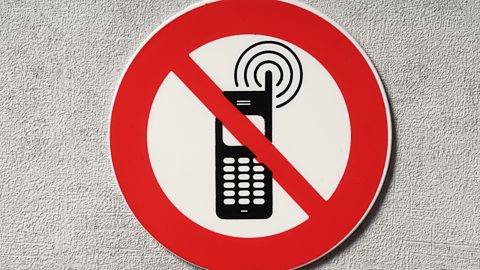
5. Play by the school’s rules
Does your child’s school confiscate mobile phones for improper use? Maybe their school doesn’t permit them. Some of these measures might seem harsh, but they are there for a reason.
Just as phones can interrupt our sleep, they can also distract from learning. While it may be frustrating for your child, these rules are there to ensure they make the most of the learning opportunities available to them.

Where can I find out more about managing my child's online safety?
Here at BBC Bitesize, we've got a whole range of resources to support you with parenting in the online world:
- BBC Bitesize Parenting: Life online
- How to manage your child’s online world without clashing
- How technology has made parenting more difficult and how to navigate it
- 5 tips on how to talk to your child about their smartphone use
- Supporting your child's device use as they start secondary school
- How to have fun and stay safe on Fortnite this summer
More from BBC Bitesize Parenting…
Bitesize Parenting
Fun activities, real-life stories, wellbeing support and loads of helpful advice - we're here for you and your child.
How to spot the signs of cyberbullying with Dr Anna Colton
Looking at the common signs of cyberbullying, and what can be done to help.
Parental survival guide & cheat sheet
Everything you'll need as a parent to survive the start of secondary school.

Preparing your child practically
Explore how you can support your child practically ahead of their move to secondary school.

Net Aware - NSPCC. External Link
Your guide to the social networks your kids use.

Starting Secondary School homepage
Free resources to help with the move to secondary school.