Mobile devices
The original mobile phone became available in 1983. It only made phone calls, had a battery life of 30 minutes, cost $3,995 and it was huge. A year after its release there were approximately 300,000 mobile phones in use.
Today’s smartphones capture and play back video and images, access the internet and run an almost unlimited number of A software program that allows a user to perform a specific task. and games.
PDAs
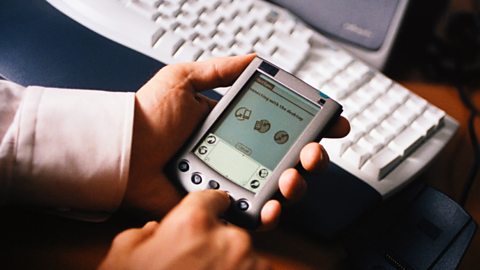
Personal digital assistants (PDAs) were developed alongside the mobile phone. They used A display screen that a user can also control by touching it with a finger or a stylus. technology and A small tool, a bit like a pencil, that can be used to control a touchscreen device.. They were aimed at business people who needed to create and edit documents on the move and access their diary and email.
Portable media players
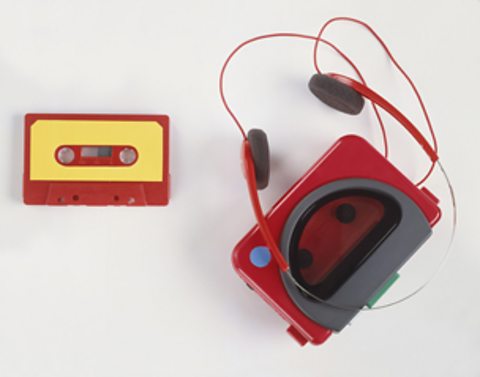
Portable media players (PMPs) began with the Sony Walkman. This played cassette tapes and later CDs. The Apple iPod provided the same level of portability as the Walkman - but was for Music stored as a computer file. This could be on a CD, a computer or on a portable device.. The latest portable media players can access the internet, play video and run applications.
Smartphones

Smartphones use touchscreen technology without the need for a A small tool, a bit like a pencil, that can be used to control a touchscreen device.. They run a wide range of applications, can access the internet and take photos and record video.
The Apple iPhone was released in 2007 running iOS. It revolutionised the smartphone industry. Google responded with its Android operating system shortly after.
Smartphones now have all of the functionality of a Personal Digital Assistant - a type of handheld mini computer. and A small, handheld device that is capable of playing video and audio.. Approximately 461 million smartphones were sold in 2010. There are more than seven billion mobile phones being used worldwide today.
Modern smartphones include the functionalities of a Personal Digital Assistant (PDA) and a Portable Media Player (PMP), effectively combining multiple devices into one. They not only serve as communication tools but also act as powerful computers that can be used for:
- Communication such as email or through social media
- Playing games
- As a calendar and diary of work set at school
- Viewing school work and notes from teachers
- Taking and editing photos and videos
- Banking
- Online shopping
- Navigation
- Document editing
In fact, there are so many things that can be done with a smartphone there are over 2 million apps available. With the advancement of technology, features like facial recognition, biometric security, and augmented reality have become common.
Tablets
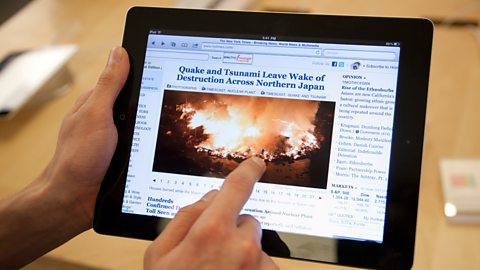
The Apple iPad was released in 2010, a touchscreen tablet with apps and internet access. Before the iPad, tablets had not been very successful. Apple’s tablet had an operating system designed for smartphones that, when scaled up, worked well on tablets too. Tablets running Google’s Android operating system include the Samsung Galaxy Tab™ and the Motorola Xoom™.
