Storage
To begin with, computers stored programs on A piece of card with holes made in specific places so that a computer can read it. This was the original way to put data and software into a computer but it is not used anymore. and later An old-fashioned magnetic storage medium used to store audio, video or raw data.. Sequences of instructions for a computer. took a long time to load and sometimes failed to load.
Storage has dramatically increased in size and decreased in price.
The floppy disk
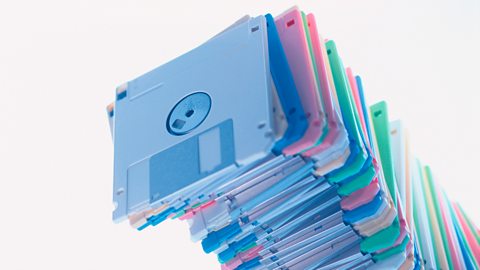
From the 1970s, programs were beginning to be loaded from floppy disk. They were also used as a portable means of storage and for backups.
The first floppy disk was easily damaged. Later versions came in a hard plastic casing. Values, typically letters or numbers. was stored on a magnetic coated plastic disk inside the casing. Computers needed a A device for reading from and writing to floppy discs. These devices are now very old fashioned and are rarely used. to read these disks. Floppy disks gradually disappeared as new technologies such as A plastic, circular disc used to store up to 700 MB of music, video or data. CDs are optical storage media, similar to DVDs and Blu-ray discs., A plastic, circular disc used to store music, video or data. DVDs are optical storage media, similar to CDs and Blu-ray discs. and A physically small storage device. It normally plugs into a USB port. They are also called USB sticks, memory sticks, thumb or flash drives. These devices use solid state memory with no moving parts. became available.
Computers no longer come with floppy disk drives.
Hard disk drive
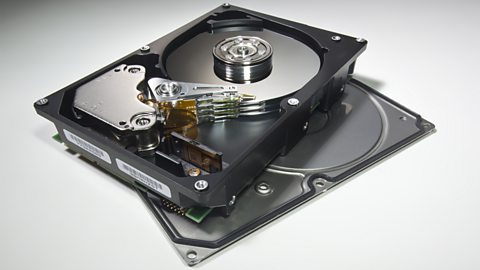
Hard disks store the The software that manages the hardware and software resources in a computer system. and Sequences of instructions for a computer.. Since their introduction in the 1980s they have remained an integral part of the computer.
Hard disks were very expensive to begin with but are significantly cheaper now.
The first hard disk on the market had a The maximum amount of storage space on a device. of 10 MB. Today a 2 TB or approximately 2000 GB hard disk can be bought for as little as £50.
Solid-state drive
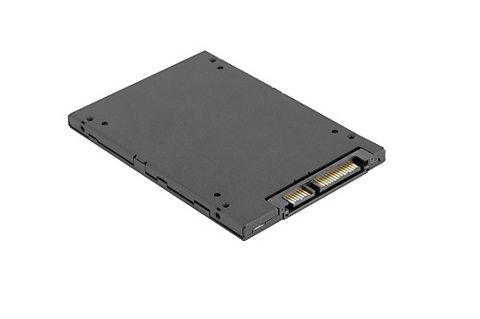
A solid-state drive (SSD) uses technology similar to that of USB drives but with significantly greater storage capacity. Unlike traditional hard disk drives (HDDs), SSDs contain no moving parts, making them small, lightweight, and highly durable. These features make SSDs particularly ideal for laptop computers. Data can be transferred to and from a solid-state drive more quickly than with any other type of storage. Today, SSDs have largely replaced hard disk drives as the primary form of storage in many devices, including laptops and desktops.
CDs, DVDs and Blu-ray
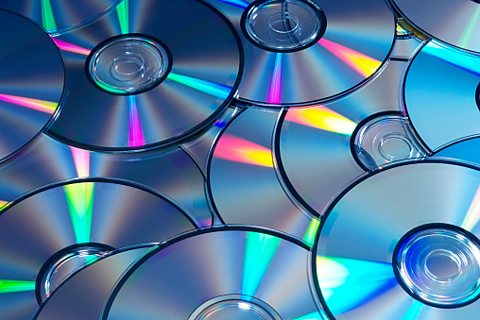
Optical drives that could read and write to CDs, and eventually to DVDs, became commonplace. CDs and DVDs took over from floppy disks as the chosen medium for storage and distributing programs. A plastic, circular disc used to store up to 50 GB of music, video or data. Blu-ray discs are optical storage media, similar to CDs and DVDs. discs share the same appearance as DVDs but they can hold up to ten times as much data. At the moment Blu-rays are used primarily for high-definition movies.
USB memory sticks and portable hard drives
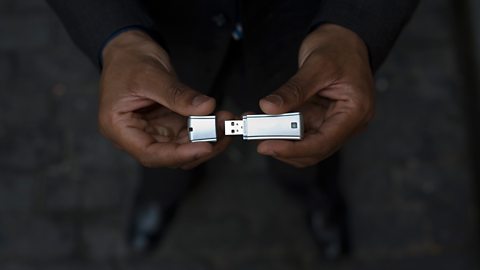
From 2000, USB memory sticks became available. They quickly competed with CDs and DVDs in terms of capacity and were far easier to write to. By 2005, USB portable hard drives were cheap and offered larger capacities compared to USB memory sticks. A USB memory stick is much smaller and can fit in a pocket or onto a key-ring. Both are still in use.
Storing data and applications in ‘the cloud’
Data and A software program that allows a user to perform a specific task. stored online are in ‘the cloud’ and they can be accessed by any device with an internet connection.

Some modern laptops takes advantage of the cloud. Virtually nothing is stored on the laptop itself.
