How to tell when spring has sprung
After months of wet weather and dark nights, spring is finally upon us, officially bringing the winter season to a close.
Whether it's waking up to the sight of a morning sun, or the joy of leaves finally returning to the trees, everyone has their own special springtime favourites, but when exactly can you expect to see them?
Well, the official start of spring is actually the subject of some debate. So, here at BBC Bitesize, we've put together this article to give you the top line on springtime. From when the season begins, to the date of the spring equinox, to the arrival of summer in its wake - this article has all you need to know about the season of spring.

When does spring start in the UK?
For many, spring will seem to have sprung on that first bright morning after the months of darkness. For others, it'll be the first warm afternoon they can spend in the great outdoors, taking in the sun with friends and family. The actual start date of spring, however, depends on which of the two springs you're referring to - the meteorological spring or the astronomical spring.
The meteorological spring - preferred by weather forecasters, like BBC Weather - begins on 1 March every year. Meteorologists define each season as a three-month segment, keeping the same dates year on year to track changes in weather over time. As such, for them, spring is defined as the period from the start of March to the end of May, at which point summertime comes into effect.
The astronomical spring, on the other hand, is preferred by astronomers, and begins on the date of the spring equinox. This year, astronomical spring begins on Friday 20 March, though the date of this can change from year to year, based on the tilt of the Earth's axis.
What is the spring equinox?
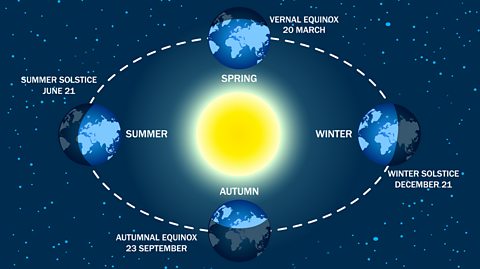
The word equinox comes from Latin, combining the words equi (equal) and nox (night). The spring equinox takes place when the Earth's axis is tilted neither towards the Sun nor away from it, giving the impression that day and night last for an equal length of time.
We experience an 'equinox' twice a year, once in March and once in September, the second of these is referred to as the autumn equinox.
Equinoxes take place simultaneously in the northern and southern hemispheres, but with the seasons reversed. So whilst we ring in the spring equinox this March, those south of the equator will be entering astronomical autumn.
For astronomers, this equinox marks the beginning of spring, whilst for others, it's simply a moment to take stock and look forward to brighter days.
Interestingly, despite its reputation, day and night don't actually get equal billing on the equinox, with light refraction meaning that some light lingers even past the sunset, adding a little bonus time to daylight hours. In spring, this means that the date when day and night are actually equal takes place a couple days before the equinox. This is called the equilux, again taken from Latin, meaning equal light.
When is the spring equinox in 2026?
In the UK, the spring equinox will take place on Friday 20 March 2026. Sometimes known as the vernal equinox, this date marks the beginning of spring on the astronomical calendar. This is the case most years, but a slight misalignment between the Earth's rotations and the Gregorian calendar means there can be some variance.
South of the equator, the seasons are reversed, so that same date will actually mark the autumn equinox.
The exact moment of equinox, when the Sun crosses the Earth's celestial equator, will take place at 14:46 GMT.
The equinox won't be the only significant event this March either, as Sunday 29 March sees the clocks move forward by one hour, signalling the beginning of British Summer Time (BST).
When does spring end in the UK?
Much like spring's beginning, its end will vary depending on which calendar you use - the meteorological calendar or the astronomical calendar.
Meteorological spring ends on 31 May, with this date remaining the same every year, in accordance with the meteorological calendar. Meteorologists split the year into four seasons, each lasting three months, which allows them to compare seasonal statistics from year to year.
Astronomical spring finishes later, coming to a close on Sunday 21 June 2026, the date of the summer solstice - the 'longest day of the year'. Whilst the summer solstice takes place almost a month into meteorological summer, it marks the beginning of summer on the astronomical calendar, and therefore brings forth the end of spring.

What can I do over spring?
As the Sun returns from its winter slumber, the choice of activity can seem almost overwhelming. Whether it's spending time in the great outdoors, or looking for some indoor fun to get through the last of the rainy days, BBC Bitesize has something for you.
If you're looking to balance learning and fun for the return of the Sun, why not check out our games section, or our primary activity packs - they're a perfect way for you to keep your brain engaged throughout the spring.
If you fancy getting out and doing some exercise, check out these Bitesize articles on how exercise can help your mental health and how gyms are helping teens relieve stress.
You can also check out our daily Sudoku page, perfect for anyone in need of a quick activity.
Free online Sudoku puzzles every weekday. quiz
Play new Sudoku games each day and practise your maths skills - learn how to solve Sudoku puzzles with easy, medium and hard options from BBC Bitesize.