What you need to know about time zones
Thousands of people travel across the globe daily and use all forms of transport to reach their desired destination. But when they get to new countries or major cities, they could find themselves in another time zone.
But what are time zones? Why do we have them, and how can we use them to tell the time around the world?
Well, BBC Bitesize has taken the time to pull together all you need to know about time zones. from New York to Sydney, stay on top of what's on the clock below!

What are time zones and why do we have them?
Time zones can seem pretty complicated - but the reason we use them is actually quite simple. The sun only shines on the side of the Earth that is facing it, leaving the other parts in darkness and shade.
As it takes the Earth a full 24 hours to rotate completely, some countries will have daylight hours while it is night time in other countries. To accommodate this, we created time zones, so that 7am in England looks pretty much the same as 7am in Australia, even if they actually take place several hours apart.
If we didn't have time zones, times would mean completely different things from country to country.
How many time zones are there?
There are 24 time zones overall, one for each hour of the day.
These are segmented by imaginary lines known as 'meridians' that break the globe up into different time zones. Meridians don't have to be straight lines, with many curving to account for different countries' borders.
At the centre of these is what we call the 'Prime Meridian', which runs through the United Kingdom. The Prime Meridian gives us a standardised time from which other countries' time can be determined.
What does GMT mean?
GMT stands for Greenwich Mean Time. GMT used to serve as the international standard for time, due to its position on the Prime Meridian - which is sometimes also known as the Greenwich Meridian.
It has since been replaced by Coordinated Universal Time (UTC), though still serves as the legal time during the winter in Britain. During the summer, however, the UK switches over to British Summer Time (BST), which runs one hour ahead of GMT.
BST is the name used in the UK when daylight savings time (DST) is observed. This is a period in summer when the clocks go forward by one hour.
When do the clocks go forward and back in the UK?
In 2026, clocks in the UK go forward at 1am on Sunday, 29 March 2026 - moving us one hour ahead of GMT into BST.
The UK clocks will go back by one hour at 2am on Sunday, 25 October 2026. This will signal the end of British Summer Time (BST), and revert UK clocks to Greenwich Mean Time (GMT).
In autumn, or fall as it's called in the United States, the clocks go back. While in spring, the clocks go forward. This gives rise to the handy phrase spring forward, fall back.
In 2027, the clocks will go forward in the UK by one hour on Sunday, 28 March and will go back Sunday, 31 October.
What does PST mean?
PST stands for Pacific Standard Time, and is used on the west coast of America, and in parts of Mexico and Canada, during the winter months.
During the summer, states using PST switch over to PDT, which stands for Pacific Daylight Time. PDT is a daylight savings time zone, much like BST in the UK.
Sometimes PST and PDT are combined and referred to as PT, which simply stands for Pacific Time. Examples of areas included in this time would be California and Washington.

What does EST mean?
EST stands for Eastern Standard Time, and is used in the winter months along the east coast of America - as well as parts of Canada, Mexico, the Caribbean and Central America.
EST transitions to EDT (Eastern Daylight Time) when daylight savings time comes into effect over the summer. Like PST and PDT, EST and EDT are occasionally fused and called simply ET, or Eastern Time.
Examples of areas that fall under EST and EDT include New York, New Jersey and Massachusetts.
What time is it in other countries?
To work out what time it is in other countries, you've first got to figure out which time zone they're in.
The Prime Meridian runs through the UK, so what time it is in other countries depends on their location relative to that line. Time in countries to the west of the Prime Meridian is always behind the time in the UK, whilst time in countries to the east of the Prime Meridian is always ahead of the time in the UK.
So, to work out the time in another country, all you do is find the time zone it's in, and add or subtract the specified number of hours from the time in the UK.
What time is it in the USA?
Due to the size of the country, America actually sits within several different time zones, depending if you're in the east, west or centre of the country.
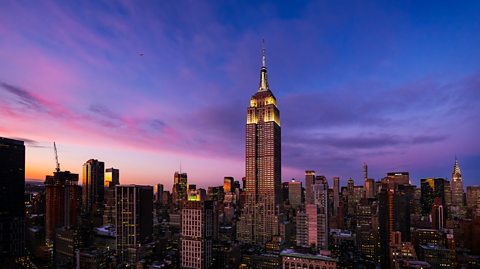
This means the time in an east coast location like New York will be very different to the time in a west coast location like Los Angeles.
New York is usually five hours behind the UK, although this can vary slightly depending on daylight saving changes. So if it's 4pm in England (or 16:00), it'll be 11am (11:00) in New York. California, on the other hand, is eight hours behind the UK, meaning 4pm UK time is actually 8am (08:00) in California.
What time is it in Australia?
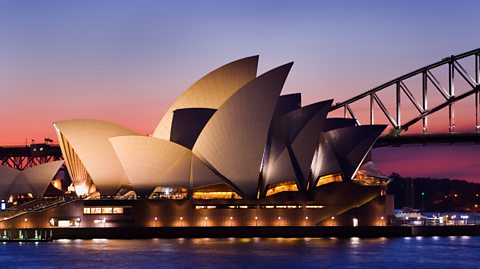
Australia, like America, is so large that different areas of the country actually sit within different time zones.
Australia is split across three separate time zones: Australian Eastern Standard Time (AEST), Australian Central Standard Time (ACST) and Australian Western Standard Time (AWST).
AEST sits about nine hours ahead of time in Britain, AWST sits about 7 hours ahead of time in Britain, whilst ACST actually sits about eight-and-a-half hours ahead of time in Britain.
This means in Melbourne, which sits under AEST, 4pm (16:00) in England would actually equate to 1am (01:00) the next day there.
For somewhere like Adelaide, which falls into ACST, 4pm in England would coincide with their midnight (0:00) - the start of the next day.
And for a place such as Perth, which is in the AWST zone, 4pm in England would mean it's 11pm (23:00) over there - the end of the same day.
There are some aspects, other than time zones, that can also affect these time differences. One of these, for example, would be whether a place observes daylight savings time.
Which country has the most time zones?
Bizarrely enough, the country with the most time zones is actually France.
This is because of all the territories France has control of outside of Europe, spreading it across a total of 12 time zones - even rising to 13 at some points of the year. America and Russia also come in close as runners-up, each having a total of 11 time zones.
This article was written in September 2025 and updated in August 2026
