Scottish rock band Travis asked 'Why Does It Always Rain On Me?' in their classic song from 1999 – a question that many people up and down the country ask around this time of year when, according to the Met Office, rainfall is at its highest. Between 1991 and 2020 records show that the UK saw an average of 123.34mm of rain in November, and 127.16mm in December making them the two wettest months of the year, with November having the most rainy days and December the most rainfall.
The debate about exactly where in the UK is the wettest can often be a contentious one, with certain cities gaining a reputation for having the most rainfall in the land. But which city can truly claim the title for being the nation's wettest? Put up your jacket hood and open your umbrella, as we're about to take a soggy look at the UK's rainiest cities!

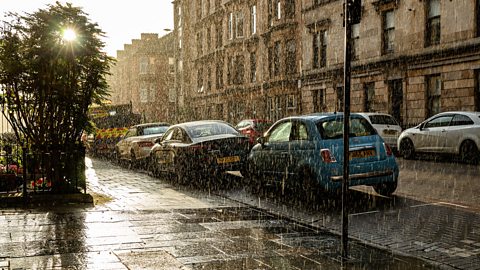
Where are the rainiest cities in the UK?
We've asked the team at BBC Weather to compile a list of the top 10 wettest cities in the UK. They've taken the data from the 1991-2020 climate average, which is the standard climate data set provided by the Met Office climate database. The cities are ordered by the average annual rainfall in that city across this period. We have also included the average amount of days where rainfall was greater than, or equal to, 1mm, which is the number in the brackets. So whilst it may have rained heavier in some places, others saw more rainy days on average. Where does your nearest city sit on the list? Do you notice anything a lot of the cities have in common? If so, then you can find out more about the science further down this page, as well as finding out where the driest city in the UK is.
- Glasgow 1370mm (181)
- Cardiff 1203mm (153)
- Manchester 1197mm (170)
- Plymouth 1038mm (148)
- Belfast 872mm (161)
- Aberdeen 832mm (142)
- Sheffield 831mm (133)
- Bristol 819mm (135)
- Edinburgh 727mm (128)
- Birmingham 708mm (127)
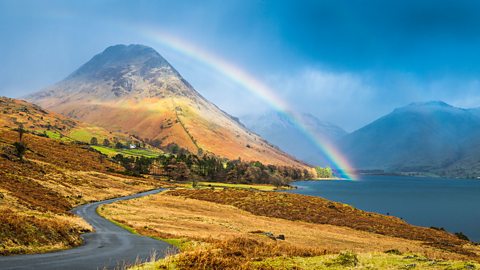
Do some places have a reputation for having high rainfall?
Some cities and areas of the UK have a reputation for being a little bit soggy, despite not being top on our list of wettest cities.
The Lake District in Cumbria is famous for its picturesque lakes including Windermere and Coniston Water, as well as its stunning mountain range that is home to England's highest peak, Scafell Pike. However, you might want to pack a brolly and waterproof jacket when you visit as the area is also renowned for having lots of rain.
In a 2023 survey by the charity ACTion with Communities in Cumbria, 12% of those surveyed who do not live in Cumbria did not want to visit the Lake District due to poor weather. But there's no smoke without fire, or no puddle without a rain shower in this case, and the rainfall in the Lakes lives up to its reputation. According to the Met Office there was a massive 2102.87mm of rainfall recorded on average at the Ambleside climate station between 1991-2020, compare this to Bognor Regis on the south coast of England which only received 733.91mm of rain on average in the same period. Continue reading to find out why mountainous areas like the Lake District are so wet.
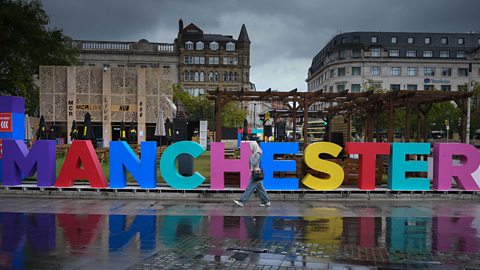
You might be surprised that Manchester isn't number one on our list, as it is somewhere that has often been lumbered with a reputation of being the rainiest in the UK. But, according to research conducted by The University of Manchester and Manchester City Council, led by geographer Dr Martin Dodge, the home of Oasis hasn't always had a rainy reputation. Dr Dodge said: "We take for granted that the British have always seen Manchester as its rainiest city, but in the 1920s this wasn't necessarily the case."
The research uncovered a 1926 council planning report for Manchester that included a rain map depicting a damp Manchester. The report was widely covered by the media at the time, which it is believed may have contributed to Manchester's reputation for wet weather. Dr Dodge says that: "the perception must have come from somewhere and this compelling map might at least partly explain it, though its intention was merely to describe the physical landscape of the region as part of a survey."
But the rainy reputation of the northern city may have its roots in the Industrial Revolution. Manchester, which was nicknamed 'Cotonopolis', was, according to the Museum of Science and Industry, the world's first industrial city and its cotton trade was booming in the 18th and 19th century. Senior Curator of Industrial Heritage at the museum, Katie Belshaw, said that: "there is a popular anecdote that Manchester's success in the cotton industry was all down to its damp weather."
This wet weather provided the ideal humidity for cotton’s processing, as cotton is more likely to snap if the atmosphere is too dry. Whilst the rain wasn't technically the defining factor for the success of Manchester’s textiles industry, it is thought to have helped, however, factory owners would still place trays of water beneath looms and inject steam from the mill engine’s boiler onto the factory floor to help create humidity.
Manchester's rainy reputation might also be partly down to artist LS Lowry, who was born in Stretford, Greater Manchester, and painted scenes of "matchstalk men and matchstalk cats and dogs", the people he painted would sometimes be holding umbrellas whilst walking amongst the gloomy streets and factories around the Manchester area.
Why do we have perceptions of what the weather is in a place?
Trevor Harley, Emeritus Professor of Psychology at the University of Dundee, and author of Head in the Clouds: How the Weather Can Affect our Psychology and Enhance Our Mental Health, to be published in May 2026, told us that: "Once a place gets a reputation it’s hard to shake it off! Humans are good at remembering certain things that are important to us, but we are prone to lots of biases. If you think a place is going to be wet, then you go there, you will remember the one wet day and not the several fine days, expectation also plays a part."
But can our perceptions of weather affect others? Trevor told us that: "If you come from London where it is relatively dry, and you go to Manchester where it’s drizzling, you might go back to London and tell your friends that Manchester was wet and damp." He continues: "people tend to trust what their friends say, so if someone visits somewhere on a rainy day and tells others about it, then they will tend to believe you, and have a perception that a place will be rainy, unless there are reasons not to believe this, such as already knowing the Met Office data for average rainfall in that area!"
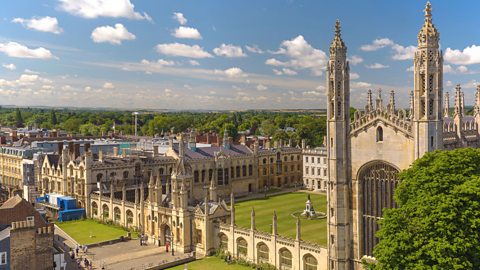
Where is the driest city in the UK?
If you don't like the rain and would prefer to live somewhere that is a little drier, then you could consider moving to Cambridge, which according to the Met Office data, is the driest UK city with an average of 559mm of annual rainfall and just 107 days where there was rainfall that was greater than or equal to 1mm.
Why does it rain more in certain places?
We spoke to BBC Weather presenter Sarah Keith-Lucas to find out why certain cities had more rain than others. Sarah told us: "The wettest parts of the UK are generally found towards the west of the country, as most of our rain-bearing low pressure systems arrive from the west. Rainfall is also heaviest over higher ground because of something called orographic or relief rainfall. Further east gets less rainfall because most of the weather systems move from west to east, and the air dries out before it reaches eastern areas. This can also be known as the rain shadow effect." So this explains why the top 10 list is dominated by cities like Glasgow, Cardiff, Manchester and Bristol, which are on the western side of the United Kingdom, and there aren't many cities from the eastern side of the country like London, Norwich, Newcastle or Hull.
This article was published in October 2025.
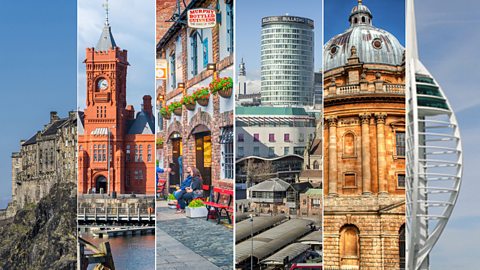
Quiz: Can you guess the UK city from its landmark?
Can you spot the towers, castles and streets that give places their unique identity?
Why we still love The Moomins - 80 years on
To learn more about where these unusual creatures sprang from, BBC Bitesize heard from Sophia Jansson, niece of Moomins’ creator Tove Jansson.

What's the wettest place in the UK - and other surprising facts about rain
Have you ever wondered why rain doesn't always fall to the ground or if raindrops are tear-shaped? Uncover some fun facts about rain.